

How to Install an ANSI Class 150 Stainless Steel Soft-Seal Gate Valve Correctly in a Horizontal Pipeline
2026-06-10
Installing an ANSI Class 150 Stainless Steel Soft-Seal Gate Valve correctly ensures leak-proof operation and long service life. At Tianhong, we recommend following a strict procedure for horizontal pipelines.
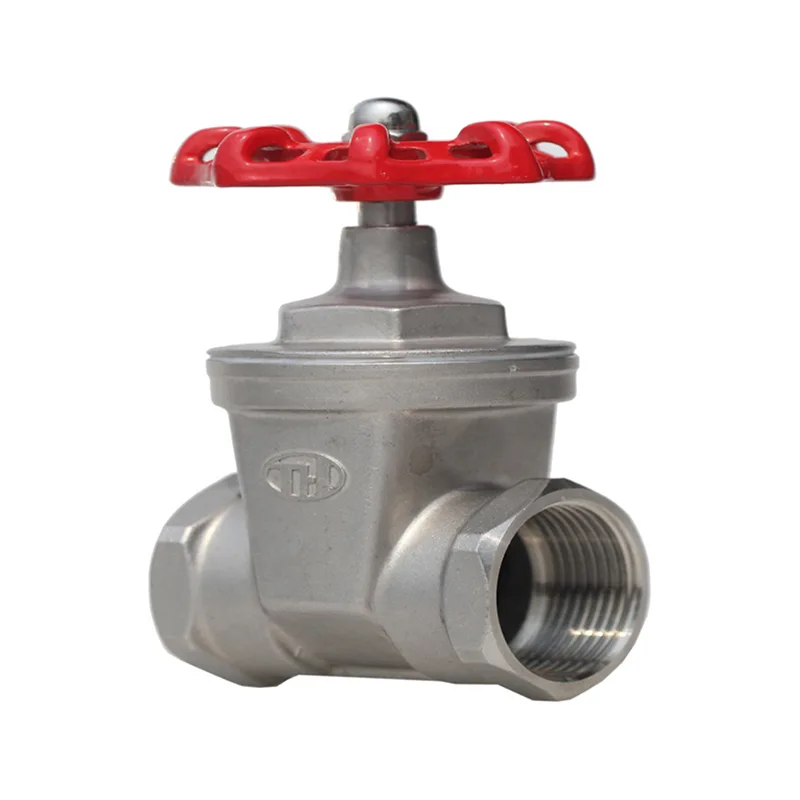
Required Tools & Preparation
| Item | Purpose |
|---|---|
| Pipe wrenches (2 pcs) | Counter-holding valve body |
| Flange gaskets (matching size) | Seal between flanges |
| Stud bolts & nuts (ASTM A193) | Secure flanged connections |
| Torque wrench | Controlled bolt tightening |
| Spirit level | Verify horizontal alignment |
Step-by-Step Installation (Horizontal Pipeline)
-
Inspect the valve – Ensure the ANSI Class 150 Stainless Steel Soft-Seal Gate Valve has no shipping damage and the soft seal is intact.
-
Clean pipe ends – Remove burrs, rust, or weld spatter. Debris will damage the soft seal.
-
Position the valve correctly – The gate must be fully closed during installation to protect the sealing surfaces. Install with the actuator or handwheel upright. Never install upside down.
-
Insert gaskets – Use new, correctly sized gaskets between flanges. Do not reuse old gaskets.
-
Align flanges – Misalignment creates stress. Maximum allowable offset: 1/16 inch.
-
Tighten bolts – Use cross-pattern sequence. Torque in three passes (30%, 70%, 100% of final torque).
-
Test operation – Open and close the ANSI Class 150 Stainless Steel Soft-Seal Gate Valve fully after installation to verify smooth movement.
Common Mistakes (Avoid These)
| Mistake | Consequence |
|---|---|
| Overtightening bolts | Flange damage, seal deformation |
| Installing with valve open | Soft seal cut by pipeline debris |
| Missing counter-wrench | Valve body rotation stresses piping |
ANSI Class 150 Stainless Steel Soft-Seal Gate Valve – FAQ
Q1: Can I install an ANSI Class 150 Stainless Steel Soft-Seal Gate Valve vertically instead of horizontally?
A1: Yes, but with restrictions. For horizontal pipelines, the valve must be installed with the stem upright (vertical position). Never install with the stem pointing downward, as debris can collect in the bonnet and damage the soft seal. For true vertical pipelines (flow moving up or down), Tianhong recommends consulting our engineering team because the gate may not seal evenly due to gravity effects on the disc.
Q2: What torque should I apply to flange bolts for an ANSI Class 150 Stainless Steel Soft-Seal Gate Valve on a 4-inch pipeline?
A2: For a 4-inch Class 150 flange, use ASTM A193 B7 studs with 7/8-inch diameter. Recommended torque range: 180–220 ft-lbs (244–298 N·m). Always tighten in a star pattern across three passes. Under-torquing causes leaks; over-torquing distorts the Tianhong valve body and compresses the soft seal unevenly. Verify with a calibrated torque wrench.
Q3: Do I need a bypass line around an ANSI Class 150 Stainless Steel Soft-Seal Gate Valve for high-flow systems?
A3: Not typically. The soft-seat design provides bubble-tight shut-off even under full differential pressure. However, Tianhong recommends a bypass line when: (a) pipeline diameter exceeds 8 inches, (b) differential pressure > 150 psi, or (c) frequent operation under load is required. Without a bypass, opening against high pressure may accelerate soft seal wear. For details, request our engineering datasheet.
Contact Us
For technical support or to order ANSI Class 150 Stainless Steel Soft-Seal Gate Valve solutions tailored to your pipeline system, contact Tianhong today. Our engineers provide free installation diagrams and torque specifications. Reach us via our website or email – we reply within 24 hours.