

How to Extend the Service Life of Your Industrial Flow Control Equipment
2026-08-14
For plant engineers and maintenance teams, the reliability of flow control components directly impacts operational uptime. Among these, the Wafer Butterfly Valve With Worm Gear stands out as a workhorse in HVAC, water treatment, and petrochemical systems. However, even the most robust Wafer Butterfly Valve With Worm Gear can suffer premature failure without a disciplined maintenance regimen. At FYL, we have spent over two decades studying valve performance across thousands of installations, and we consistently find that proactive lubrication and inspection add 3–5 years of extra service life compared to run-to-failure approaches.
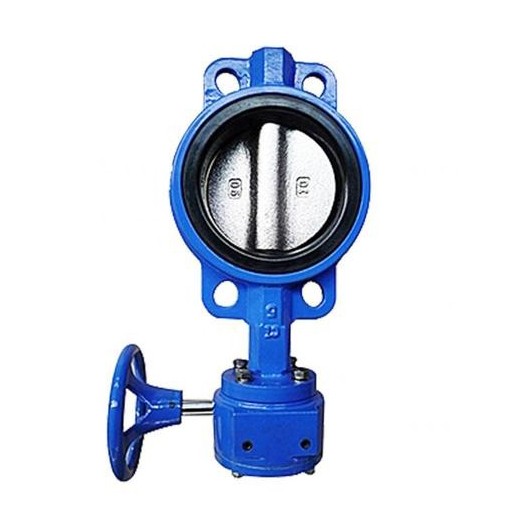
Why the Worm Gear Actuator Demands Special Attention
The worm gear mechanism is both a strength and a vulnerability. It provides mechanical advantage for tight shut-off, but its enclosed gearbox retains contaminants and loses lubricity over time. A typical Wafer Butterfly Valve With Worm Gear operates with a gear ratio between 20:1 and 60:1, meaning the worm shaft rotates dozens of times for each disc movement. Each rotation generates friction heat, which degrades standard lithium greases. FYL recommends synthetic polyurea-based greases for applications exceeding 80°C, as they maintain viscosity and resist oxidation twice as long as conventional products.
Step-by-Step Maintenance Protocol
| Step | Action | Frequency | Critical Checkpoint |
|---|---|---|---|
| 1 | Visual inspection of flange gaskets and body bolts | Monthly | Signs of weeping or rust trails |
| 2 | Gearbox breather cap cleaning | Quarterly | Clogged breather causes pressure build-up |
| 3 | Disc stroke test (full open to full close) | Bi-annually | Record torque deviation from baseline |
| 4 | Lubricant replenishment in gear housing | Annually | Dark/cloudy oil indicates metal wear |
| 5 | Stem seal packing adjustment | As needed (leakage > 10 ppm) | Avoid over-tightening – causes stem scoring |
Lubrication Best Practices (Do's & Don'ts)
-
Do use a grease gun with a pressure gauge – stop at 150 psi to avoid seal blowout.
-
Do purge old grease by running the valve through 3 full cycles after fresh lubricant injection.
-
Don't mix calcium-based and lithium-based greases – they form abrasive soap complexes.
-
Don't lubricate the disc or seat – these are self-lubricating (PTFE or EPDM) and grease attracts debris.
-
Do record each lubrication session with torque readings. FYL provides a free log template for all registered users.
For extreme low-temperature (-40°C) or high-temperature (up to 260°C) services, FYL offers customized grease formulations that match the seat material. A mismatched lubricant can swell EPDM seats or harden Viton® seals within weeks – a costly mistake we see far too often.
Troubleshooting Common Performance Degradations
| Symptom | Most Likely Cause | Recommended Fix (by FYL) |
|---|---|---|
| Stiff operation > 20% above baseline | Dried grease or worm shaft misalignment | Flush gearbox with solvent, re-lube with FYL-Synth G-7 |
| Hysteresis (closing torque ≠ opening torque) | Worn thrust bearing inside gearbox | Replace bearing kit (FYL part #WB-204) |
| External leakage from stem | Packing gland loose or degraded | Re-torque gland nuts to 15 Nm; replace packing if fibrous |
| Disc does not reach 90° fully | Limit stop shifted or debris on seat | Clean seat with soft brush, re-calibrate stop screw |
FAQ – Common Questions About Wafer Butterfly Valve With Worm Gear
Q: How often should I lubricate the worm gear box of my Wafer Butterfly Valve With Worm Gear in a 24/7 continuous operation?
A: For continuous duty (e.g., cooling water lines running 365 days), FYL advises lubricant inspection every 3 months and full replacement every 12 months. However, if your Wafer Butterfly Valve With Worm Gear cycles more than 50 times per day, shorten the interval to 6 months. Always take a small grease sample from the drain plug – if it appears milky or contains metallic glitter, schedule an immediate service regardless of the calendar. Continuous operation at high ambient temperatures (above 50°C) accelerates oxidation, so we recommend synthetic lubricants with an antioxidant additive package.
Q: Can I use general-purpose automotive grease for my Wafer Butterfly Valve With Worm Gear, or does it require a special type?
A: No – automotive greases contain extreme-pressure (EP) additives like molybdenum disulfide that are too aggressive for the bronze worm wheel inside a Wafer Butterfly Valve With Worm Gear. These additives can chemically etch the gear teeth, reducing backlash precision within 500 cycles. FYL strictly recommends NLGI Grade 2 lithium-complex or calcium-sulfonate greases with a dropping point above 190°C. For food-grade or potable water applications, you must use NSF H1-registered lubricants. When in doubt, consult the FYL lubrication selector chart – we offer 7 different grades matched to seat materials and temperature ranges.
Q: What are the clear signs that my Wafer Butterfly Valve With Worm Gear needs maintenance before a scheduled shutdown?
A: Three early warning indicators are: (1) a 15% or greater increase in handwheel turning force measured with a torque wrench; (2) audible grinding or clicking from the gearbox during the last 10° of closure – this suggests tooth wear or debris; (3) visible rust-colored oil seepage from the breather vent, which indicates water ingress and emulsion. Do not wait for the annual shutdown – a failing Wafer Butterfly Valve With Worm Gear can seize mid-stroke, causing process upset. FYL recommends installing a simple torque monitor (an analog dial indicator on the worm shaft) as a low-cost predictive maintenance tool – it pays for itself after preventing one unplanned outage.
Final Recommendation from FYL
A well-maintained Wafer Butterfly Valve With Worm Gear delivers over 20,000 cycles with less than 5% torque drift. The investment in proper lubrication, scheduled inspections, and using FYL-certified spare parts (seal kits, thrust bearings, and gear oils) typically amounts to less than 3% of the valve's replacement cost per year. We have seen plants reduce their valve-related downtime by 62% simply by adopting the monthly checklist shared above.
Ready to optimize your valve maintenance program?
Contact FYL today for a free site assessment – our engineers will review your current lubricants, cycle data, and failure history, then deliver a customised care plan tailored to your operating conditions.