

How to Choose Industrial Heavy Duty Casters for Maximum Load Efficiency?
2026-04-10
Industrial heavy duty casters are critical components in material handling systems, enabling safe, efficient, and controlled movement of extremely heavy loads across warehouses, factories, logistics centers, and industrial facilities. This article explores how to select the right casters based on load capacity, wheel material, environment, and application requirements. It also addresses common operational pain points such as floor damage, premature wear, poor maneuverability, and safety risks. The goal is to provide a structured, practical guide that helps businesses improve operational efficiency and reduce long-term maintenance costs.
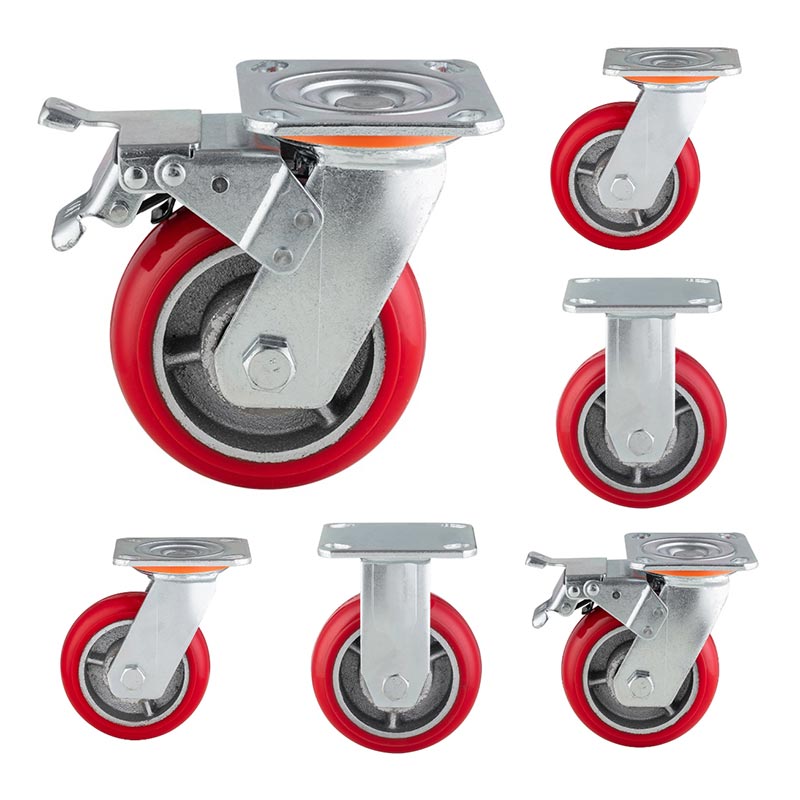
Table of Contents
- 1. Understanding Industrial Heavy Duty Casters
- 2. Common Customer Pain Points
- 3. Key Selection Criteria
- 4. Materials & Performance Comparison
- 5. Industrial Applications
- 6. Maintenance and Longevity Tips
- 7. Buying Guide and Engineering Considerations
- 8. Frequently Asked Questions
1. Understanding Industrial Heavy Duty Casters
Industrial heavy duty casters are engineered wheel assemblies designed to support and transport extremely high load capacities, often ranging from several hundred kilograms to multiple tons per unit. Unlike standard casters, they are built with reinforced brackets, precision bearings, and high-performance wheel materials to withstand continuous stress in demanding environments.
These casters are widely used in logistics platforms, automotive manufacturing lines, aerospace assembly systems, and heavy machinery transport. Their design focuses on three core performance dimensions: load-bearing capacity, durability under friction, and smooth directional control.
2. Common Customer Pain Points
Industrial buyers often encounter operational issues when selecting or using heavy duty casters. The most frequent problems include:
- Overloaded failure: Casters bending or breaking due to underestimated load requirements.
- Floor damage: Hard wheels damaging epoxy or concrete flooring.
- Poor maneuverability: Excessive resistance when moving heavy equipment.
- Noise and vibration: Inefficient rolling systems causing workplace discomfort.
- Short lifespan: Frequent replacements due to wear and tear in harsh environments.
These challenges not only increase operational costs but also pose safety risks in high-intensity industrial environments.
3. Key Selection Criteria
Selecting the right industrial heavy duty casters requires evaluating multiple engineering parameters. Below are the most important factors:
- Load Capacity: Always calculate total equipment weight and divide by number of casters, adding at least 30% safety margin.
- Wheel Material: Polyurethane, nylon, cast iron, or rubber depending on floor and load conditions.
- Bearing Type: Ball bearings for smooth motion, roller bearings for higher loads.
- Mounting Type: Plate, stem, or bolt-hole configurations based on equipment structure.
- Environmental Conditions: Temperature, moisture, chemicals, and dust exposure.
4. Materials & Performance Comparison
| Material | Load Capacity | Floor Protection | Noise Level | Best Use Case |
|---|---|---|---|---|
| Polyurethane | High | Excellent | Low | Warehouses, clean floors |
| Nylon | Very High | Moderate | Medium | Heavy machinery transport |
| Cast Iron | Extreme | Poor | High | Rough industrial environments |
| Rubber | Medium | Excellent | Very Low | Noise-sensitive environments |
5. Industrial Applications
Industrial heavy duty casters are deployed across multiple sectors where mobility and load-bearing efficiency are essential:
- Manufacturing Plants: Moving assembly line equipment and tooling stations.
- Warehousing & Logistics: Transporting pallet racks and heavy containers.
- Aerospace Industry: Handling precision components and fuselage structures.
- Automotive Sector: Supporting engine blocks and chassis systems.
- Medical Equipment: Stabilizing large diagnostic machines.
6. Maintenance and Longevity Tips
Proper maintenance significantly extends caster lifespan and ensures operational safety. Key practices include:
- Regular inspection of wheel wear and bearing condition.
- Lubrication of moving parts every 3–6 months depending on usage intensity.
- Checking bolt tightness and mounting stability.
- Avoiding overload beyond rated capacity.
- Cleaning debris and chemical residues from wheels.
Neglecting maintenance can lead to uneven wear, reduced mobility, and potential equipment failure.
7. Buying Guide and Engineering Considerations
When sourcing industrial heavy duty casters, engineering precision is critical. Buyers should consider both immediate application needs and long-term operational demands. Below are strategic purchasing considerations:
- Dynamic vs Static Load: Ensure casters are rated for movement load, not just stationary weight.
- Temperature Resistance: High-heat environments require specialized materials.
- Chemical Exposure: Select corrosion-resistant materials for chemical plants.
- Ergonomic Efficiency: Lower rolling resistance reduces operator fatigue.
- Customization Needs: Some applications require swivel locks or directional locks.
For professional-grade solutions, Foshan Chuanli Casters Manufacturing Co., Ltd. provides engineered caster systems designed to meet diverse industrial requirements with consistent performance and reliability.
Reference product overview: https://www.cmcl-casters.com/industrial-heavy-duty-casters
8. Frequently Asked Questions
Q1: How do I calculate the correct load capacity?
Divide total equipment weight by the number of casters and multiply by a safety factor of at least 1.3.
Q2: Which caster material is best for concrete floors?
Polyurethane is generally preferred due to its balance of durability and floor protection.
Q3: How often should industrial casters be replaced?
Replacement depends on usage intensity, but typically every 2–5 years in heavy-duty environments.
Q4: Can heavy duty casters be used outdoors?
Yes, but they must be corrosion-resistant and weatherproof.
Q5: What is the biggest cause of caster failure?
Overloading and insufficient maintenance are the most common causes.
Industrial mobility efficiency depends heavily on selecting the right caster system. A well-engineered solution reduces downtime, improves safety, and enhances workflow productivity across all industrial environments. Choosing the correct configuration is not just a procurement decision—it is an operational strategy.
Foshan Chuanli Casters Manufacturing Co., Ltd. specializes in providing durable, high-performance industrial caster solutions tailored for demanding applications worldwide.
For tailored solutions, technical support, or bulk procurement requirements, contact us today and discover how the right caster system can transform your industrial operations.