Abstract
Stainless steel ball valves are critical flow control components widely used in industries such as oil and gas, chemical processing, water treatment, food production, and pharmaceuticals.
Their durability, corrosion resistance, and reliable shut-off performance make them a preferred solution for demanding environments.
This article explains how stainless steel ball valves work, what they are, and why they are essential in modern industrial systems.
It also explores their structure, applications, selection criteria, and maintenance considerations to help engineers and buyers make informed decisions.
Outline
-
Definition and structural overview of stainless steel ball valves
-
Working mechanism and flow control principle
-
Core components and design variations
-
Advantages in industrial environments
-
Common use cases across industries
-
Key factors for selection and specification
-
Maintenance guidelines and operational troubleshooting
-
Role of Bolaisi in industrial valve manufacturing
Introduction
In fluid handling systems, valves play a decisive role in controlling flow, pressure, and direction. Among various valve types, stainless steel ball valves stand out due to their robustness and simple yet highly effective operating mechanism.
They are engineered to provide tight sealing and rapid shut-off capabilities, making them suitable for both high-pressure and corrosive environments.
As industries evolve toward higher efficiency and safety standards, the demand for reliable valve systems continues to grow. Stainless steel ball valves meet these requirements by combining mechanical strength with long service life.
What Are Stainless Steel Ball Valves?
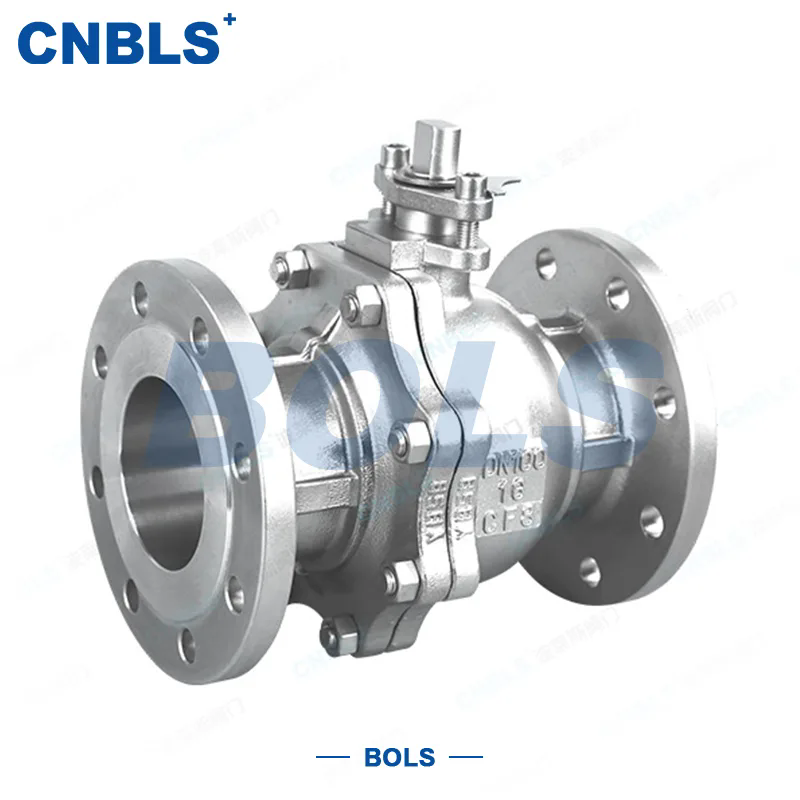
A stainless steel ball valve is a quarter-turn valve that uses a hollow, perforated, and pivoting ball to control fluid flow. When the ball’s hole aligns with the pipeline, fluid flows freely; when rotated 90 degrees, flow is completely blocked.
The stainless steel construction enhances resistance to corrosion, temperature fluctuations, and chemical exposure, making these valves ideal for harsh operating environments.
|
Feature
|
Description
|
|
Material
|
Stainless steel (304, 316, etc.)
|
|
Operation
|
Quarter-turn (90° rotation)
|
|
Sealing
|
Tight shut-off with minimal leakage
|
|
Flow Control
|
On/off or throttling in some designs
|
How Stainless Steel Ball Valves Work
The working principle of stainless steel ball valves is based on rotational motion. A handle or actuator rotates the ball inside the valve body.
-
Open position: The ball hole aligns with the pipeline, allowing unobstructed flow.
-
Closed position: The ball rotates 90 degrees, blocking the flow completely.
-
Sealing mechanism: Seats made of PTFE or other polymers ensure tight sealing around the ball surface.
This simple mechanism reduces friction, minimizes wear, and ensures fast operation, which is critical in emergency shut-off scenarios.
Key Components
Understanding the internal structure helps in selecting and maintaining the right valve system.
-
Valve Body: Houses internal components and provides structural strength.
-
Ball: Rotating sphere with a central bore controlling flow.
-
Seats: Provide sealing between ball and body.
-
Stem: Connects actuator or handle to the ball.
-
Actuator/Handle: Enables manual or automated operation.
Why Stainless Steel Ball Valves Matter
These valves are widely adopted because they solve several industrial pain points, including leakage, corrosion, and maintenance inefficiency.
-
High resistance to corrosion and oxidation
-
Excellent sealing performance under pressure
-
Fast open/close operation
-
Long operational lifespan
-
Suitable for extreme temperature conditions
Compared to traditional valve types, stainless steel ball valves significantly reduce downtime and maintenance costs.
Industrial Applications
Stainless steel ball valves are versatile and used across multiple industries:
-
Oil and Gas: Pipeline isolation and pressure control
-
Chemical Industry: Handling corrosive fluids
-
Water Treatment: Flow regulation and system isolation
-
Food & Beverage: Hygienic fluid processing systems
-
Pharmaceuticals: Sterile fluid handling
Selection Criteria
Choosing the right stainless steel ball valve requires careful evaluation of system requirements.
|
Factor
|
Consideration
|
|
Pressure Rating
|
Ensure compatibility with system pressure
|
|
Material Grade
|
304 vs 316 depending on corrosion exposure
|
|
Temperature Range
|
Suitability for thermal conditions
|
|
End Connection
|
Threaded, flanged, or welded
|
|
Media Type
|
Gas, liquid, or slurry compatibility
|
Maintenance and Troubleshooting
Proper maintenance extends the lifespan of stainless steel ball valves and ensures operational reliability.
-
Regular inspection for leakage or wear
-
Lubrication of moving parts when required
-
Replacement of worn seals and seats
-
Ensuring clean operating media to prevent blockage
Common issues include stem leakage, seat wear, and stiff operation due to debris accumulation.
Bolaisi Industrial Solutions
Bolaisi provides a wide range of stainless steel ball valves designed for industrial reliability and performance stability.
The company focuses on precision manufacturing, material integrity, and strict quality control to ensure each valve performs consistently under demanding conditions.
With application-oriented engineering support and a strong production system, Bolaisi delivers valve solutions tailored to diverse industrial requirements, helping clients improve operational efficiency and system safety.
FAQ
1. What is the main advantage of stainless steel ball valves?
Their corrosion resistance and reliable shut-off capability make them ideal for harsh environments.
2. Can stainless steel ball valves handle high pressure?
Yes, they are designed to operate efficiently under high-pressure conditions depending on their rating.
3. Are they suitable for chemical applications?
Yes, especially models made from 316 stainless steel due to higher chemical resistance.
4. How long do they last?
With proper maintenance, they can last many years even in continuous operation systems.
Conclusion
Stainless steel ball valves are essential components in modern fluid control systems, offering durability, precision, and operational safety.
Their simple yet effective design makes them a preferred choice across industries requiring reliable flow control solutions.
For high-quality stainless steel ball valves engineered for performance and longevity, Bolaisi provides trusted industrial solutions tailored to your operational needs.
Contact us today at Bolaisi to explore product options, technical support, and customized valve solutions for your industry requirements.