

How Soft Seal Butterfly Valve Improves Sealing Performance in Industrial Pipelines
2026-06-18
Article Summary
A Soft Seal Butterfly Valve plays a critical role in modern fluid control systems by ensuring tight shutoff, reducing leakage risks, and improving operational efficiency across water treatment, chemical processing, HVAC, and industrial pipeline networks. This article explains its working principle, key advantages, selection considerations, installation guidance, and common troubleshooting practices. It is designed to help engineers, procurement managers, and system designers make informed decisions for reliable long-term performance.
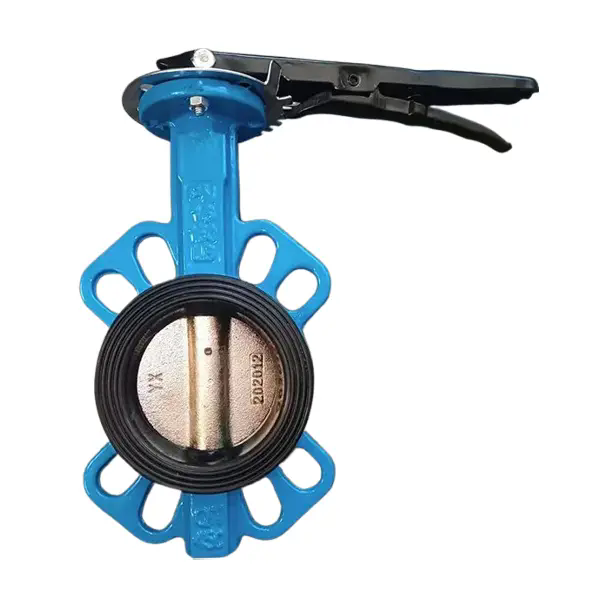
Table of Contents
- 1. Introduction to Soft Seal Butterfly Valve
- 2. Working Principle
- 3. Key Advantages in Industrial Systems
- 4. Soft Seal vs Metal Seal Butterfly Valve
- 5. Typical Applications
- 6. Selection and Engineering Considerations
- 7. Installation and Maintenance Guidelines
- 8. Common Issues and Troubleshooting
- 9. FAQ
- 10. Conclusion
1. Introduction to Soft Seal Butterfly Valve
A Soft Seal Butterfly Valve is a quarter-turn rotary valve designed for regulating and isolating fluid flow using a resilient elastomeric sealing element. Unlike rigid metal-seated designs, the soft seal structure relies on rubber or PTFE-based sealing materials to achieve tight shutoff even under low pressure differentials.
In industrial pipeline systems, leakage control and operational efficiency are critical concerns. Even minor sealing failures can lead to fluid loss, environmental risks, and system inefficiencies. This valve type addresses those issues by providing superior sealing performance and simplified operation.
Shengshi Huagong Valve has developed advanced Soft Seal Butterfly Valve solutions that are widely used in water distribution networks, HVAC systems, chemical pipelines, and municipal engineering projects.
2. Working Principle
The operation of a Soft Seal Butterfly Valve is based on a simple yet highly effective mechanism. The valve disc rotates around a central axis, either fully opening or closing the flow path depending on the rotation angle.
- 0° rotation: Valve fully closed, disc compresses against soft seat
- 90° rotation: Valve fully open, minimal flow resistance
- Partial rotation: Flow regulation capability
The soft sealing material ensures that when the disc closes, it forms a tight compression seal against the valve body. This eliminates leakage even under fluctuating pressure conditions.
3. Key Advantages in Industrial Systems
Soft Seal Butterfly Valves are widely selected due to their performance reliability and cost-effectiveness. Below are the primary advantages:
- Excellent sealing performance: Ensures zero or near-zero leakage in shutoff conditions
- Low torque operation: Reduces actuator energy requirements
- Lightweight structure: Easier installation compared to gate or globe valves
- Corrosion resistance: Suitable for water, air, and mild chemical fluids
- Cost efficiency: Lower manufacturing and maintenance costs
These advantages make the valve suitable for large-scale pipeline systems where reliability and cost optimization are both essential.
4. Soft Seal vs Metal Seal Butterfly Valve
| Feature | Soft Seal Butterfly Valve | Metal Seal Butterfly Valve |
|---|---|---|
| Sealing Performance | High tightness, suitable for low to medium pressure | Suitable for high temperature and abrasive conditions |
| Operating Torque | Low | Higher |
| Cost | Economical | Relatively expensive |
| Maintenance | Simpler and less frequent | Requires more specialized maintenance |
Soft sealing solutions are preferred in systems where leakage prevention and operational efficiency outweigh extreme temperature resistance requirements.
5. Typical Applications
The Soft Seal Butterfly Valve is widely used across multiple industries due to its adaptability and reliability.
- Municipal water supply and drainage systems
- HVAC heating and cooling circulation systems
- Food and beverage processing pipelines
- Light chemical transport systems
- Irrigation and agricultural water distribution
In each of these applications, the valve helps maintain stable flow control while reducing system downtime caused by leakage or mechanical failure.
6. Selection and Engineering Considerations
Choosing the correct Soft Seal Butterfly Valve requires evaluating several technical parameters:
- Pressure rating: Ensure compatibility with system operating pressure
- Temperature range: Soft seals have material limitations
- Fluid type: Compatibility with water, air, or mild chemicals
- Body material: Cast iron, ductile iron, stainless steel options
- Actuation method: Manual, electric, or pneumatic control
Shengshi Huagong Valve provides customized engineering support to help clients match valve specifications with real operating conditions, ensuring long-term system stability.
7. Installation and Maintenance Guidelines
Proper installation is critical to achieving optimal sealing performance and extending service life.
Installation Best Practices
- Ensure pipeline alignment to avoid seat deformation
- Clean internal pipeline before installation
- Do not install under fully closed disc position
- Tighten flange bolts evenly to avoid stress concentration
Maintenance Recommendations
- Regular inspection of sealing surfaces
- Lubrication of actuator components
- Periodic torque testing for manual valves
- Replacement of elastomer seals when wear is detected
8. Common Issues and Troubleshooting
Even high-quality valves may experience operational issues if system conditions are not optimal. Below are common problems and solutions:
| Issue | Possible Cause | Solution |
|---|---|---|
| Leakage at closed position | Worn sealing ring or debris interference | Clean valve and replace seal |
| High operating torque | Misalignment or seat deformation | Reinstall and inspect flange alignment |
| Vibration during operation | Flow turbulence or improper sizing | Adjust flow design or replace valve size |
9. FAQ
Q1: Can Soft Seal Butterfly Valves be used for high-temperature fluids?
They are generally recommended for moderate temperature conditions. High-temperature systems may require metal-seated alternatives.
Q2: How long is the service life?
With proper installation and maintenance, service life can extend beyond 5–10 years depending on operating conditions.
Q3: Are these valves suitable for chemical pipelines?
Yes, but compatibility depends on seal material selection and chemical properties.
Q4: Can automation be added?
Yes, they can be integrated with electric or pneumatic actuators for automated control systems.
10. Conclusion
The Soft Seal Butterfly Valve is a practical and efficient solution for modern fluid control systems where sealing reliability, cost efficiency, and operational simplicity are essential. Its wide adaptability across water systems, HVAC networks, and light industrial applications makes it one of the most widely used valve types in pipeline engineering.
By selecting a properly engineered solution from Shengshi Huagong Valve, industries can significantly reduce leakage risks, improve system stability, and optimize long-term operational costs.
For customized specifications, technical support, or project consultation, please contact us at Shengshi Huagong Valve to explore reliable Soft Seal Butterfly Valve solutions tailored to your system requirements.