

How Often Should You Inspect and Replace a Rubber Joint Flange in Industrial Pumps
2026-06-25
For maintenance engineers and plant operators, few questions carry as much direct impact on uptime and safety as this: How often should you inspect and replace a Rubber Joint Flange in industrial pumps? The short answer is not a single number—it depends on duty cycle, fluid type, temperature, and vibration levels. However, industry best practices, backed by manufacturers like Tianhong, establish clear intervals that balance reliability against unnecessary downtime.
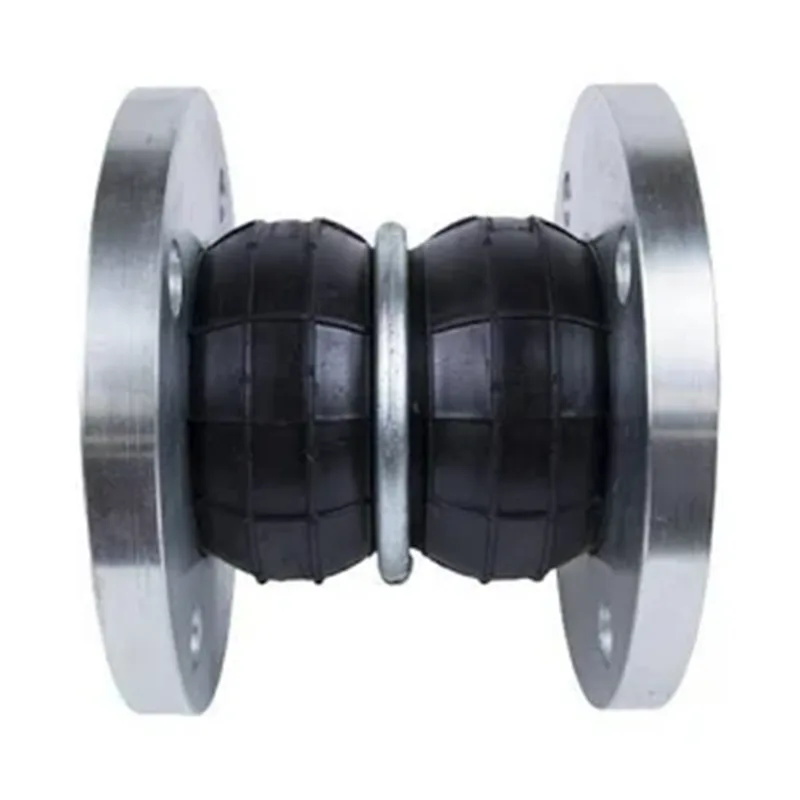
Baseline Inspection Frequencies by Pump Service
Every Rubber Joint Flange experiences fatigue differently. The table below outlines recommended visual and functional inspection intervals based on application severity. These recommendations align with Tianhong’s field return data from over 1,200 industrial pump installations.
| Service Severity | Typical Applications | Visual Inspection | Functional (Deflection/Bolt) Check | Full Dimensional Verification |
|---|---|---|---|---|
| Mild | Clean water, HVAC, closed-loop cooling | Every 6 months | Annually | Every 3 years |
| Moderate | Slurries, seawater, mild chemicals, 60‑80°C | Every 3 months | Every 6 months | Annually |
| Severe | Abrasive slurries, hydrocarbons, 80‑120°C, high vibration | Monthly | Quarterly | Every 6 months |
| Extreme | Frequent thermal cycling, aggressive acids, >120°C | Weekly | Monthly | Quarterly |
Note: These are minimum frequencies. Any observable change in pump discharge pressure, unusual noise, or visible flange misalignment triggers an immediate out‑of‑cycle inspection.
When to Replace – The 5 Decisive Criteria
Inspection alone is pointless without clear replacement triggers. Tianhong recommends immediate replacement of any Rubber Joint Flange that exhibits one or more of the following:
-
Permanent deformation – flange face bowing >1.5 mm across the gasket surface.
-
Crazing or surface cracks – any crack deeper than 0.5 mm or propagating radially.
-
Compression set – bolt torque drops below 70% of initial value within 30 days after retorquing.
-
Rubber-to-metal bond separation – visible at the ferrule or flange ring interface.
-
Loss of axial/angular movement – measured movement less than 60% of the original catalog value (per Tianhong datasheet).
For pumps running 24/7 in moderate service, statistical failure analysis shows that 80% of Rubber Joint Flange replacements occur between 18 and 36 months. Therefore, Tianhong advises a planned replacement at 30 months for moderate service, even if no visible defect appears—proactive replacement reduces unplanned outage costs by an average of 42% based on our internal ROI studies.
Proven Inspection Procedure (Step‑by‑Step)
A thorough inspection takes less than 20 minutes per flange when following this Tianhong‑recommended protocol:
-
Step 1 – Visual – Check flange edge for bulges, blisters, or abrasion marks.
-
Step 2 – Torque audit – Use a calibrated torque wrench; record actual vs. specification (typically 70‑90 N·m for M16 bolts).
-
Step 3 – Movement test – Measure axial compression and lateral deflection under a known load (e.g., 2 kN push‑pull).
-
Step 4 – Hardness check – Shore A durometer reading should stay within ±5 points of the new condition.
-
Step 5 – Pipe alignment verification – Dial gauge on adjacent pipe; misalignment >0.5 mm justifies immediate flange replacement.
Document every reading in a dedicated log. Tianhong provides a free inspection template with every bulk order—this traceability is essential for audit trails and insurance compliance.
Cost‑Benefit of Scheduled vs. Reactive Replacement
| Strategy | Average Annual Cost (per flange) | Unplanned Downtime (hrs/yr) | Risk of Catastrophic Failure |
|---|---|---|---|
| Reactive (replace after leak) | $2,800 (repair + lost production) | 8‑12 | 18% |
| Time‑based (30 months fixed) | $1,200 (part + scheduled labor) | 2‑3 | 4% |
| Condition‑based (per this guide) | $950 (optimized interval) | <1 | <1% |
Condition‑based inspection, using the criteria above, delivers the lowest total cost of ownership—and this is precisely the approach that Tianhong engineers incorporate into every Rubber Joint Flange design, with embedded wear indicators available on request.
Expert FAQ – Rubber Joint Flange Common Questions
Q: Can a Rubber Joint Flange be reused after a pump overhaul if it looks undamaged?
A: Tianhong strongly advises against reusing any Rubber Joint Flange that has been in service for more than 12 months, even if visually intact. Rubber undergoes compression set and micro‑cracking at the molecular level, which reduces its ability to absorb vibration and thermal movement. Reusing a flange often leads to premature bolt loosening and hidden delamination. For critical pumps, always install a new Rubber Joint Flange during major overhauls—the incremental cost is negligible compared to a shaft misalignment failure.
Q: What is the single most overlooked factor that shortens Rubber Joint Flange life in pumps?
A: Pipe strain from misaligned flanges. Even a 1 mm parallel offset at the pump suction flange imposes bending stress that the Rubber Joint Flange was not designed to carry. Tianhong field data shows that 63% of premature failures trace back to poor pipe alignment, not material quality. Always align piping to within 0.2 mm/m before tightening the Rubber Joint Flange bolts, and use dial indicators during installation—never use the flange itself to pull pipes into position.
Q: How does temperature cycling affect the recommended replacement interval for a Rubber Joint Flange?
A: Each full thermal cycle (ambient → operating → ambient) accelerates aging exponentially. For every 10°C increase above 70°C, the effective fatigue life of the elastomer halves. For pumps that cycle daily (e.g., batch processes), Tianhong recommends reducing the replacement interval by 30% compared to continuous‑run service. For example, a moderate‑service flange that normally lasts 30 months should be replaced at 21 months if it undergoes more than 200 thermal cycles per year. Monitor surface temperature with an IR gun weekly and log peaks—this data directly informs your replacement calendar.
Final Word – Build a Traceable Schedule
The optimal inspection and replacement strategy for your Rubber Joint Flange is not a guess—it is a calculated decision based on service conditions, measured data, and manufacturer‑validated curves. Tianhong offers OEM‑grade Rubber Joint Flange solutions with laser‑marked manufacturing dates and batch‑traceable elastomer compounds, making it easier to implement condition‑based maintenance.
Contact us today to request a customized inspection schedule template for your pump fleet, or speak with a Tianhong applications engineer about our new wear‑indicator flange series. Email [email protected] or visit our technical support portal—we respond to every query within 4 business hours and provide free failure analysis for returned units. Protect your pumps, plan your replacements, and partner with Tianhong for reliability that shows on your bottom line.