

How Often Should You Clean the Filter Element in a GB Carbon Steel Basket Strainer
2026-07-06
Maintaining industrial filtration equipment is not a “set and forget” task. Among all mechanical separators, the GB Carbon Steel Basket Strainer stands out for its robust construction and high dirt-holding capacity. However, its long-term performance depends entirely on a disciplined cleaning schedule. Neglecting this routine leads to pressure drops, cavitation, and unplanned downtime. This guide establishes a data-driven cleaning frequency framework for the GB Carbon Steel Basket Strainer, while integrating best practices from Huadu, a manufacturer known for precision-engineered strainer solutions.
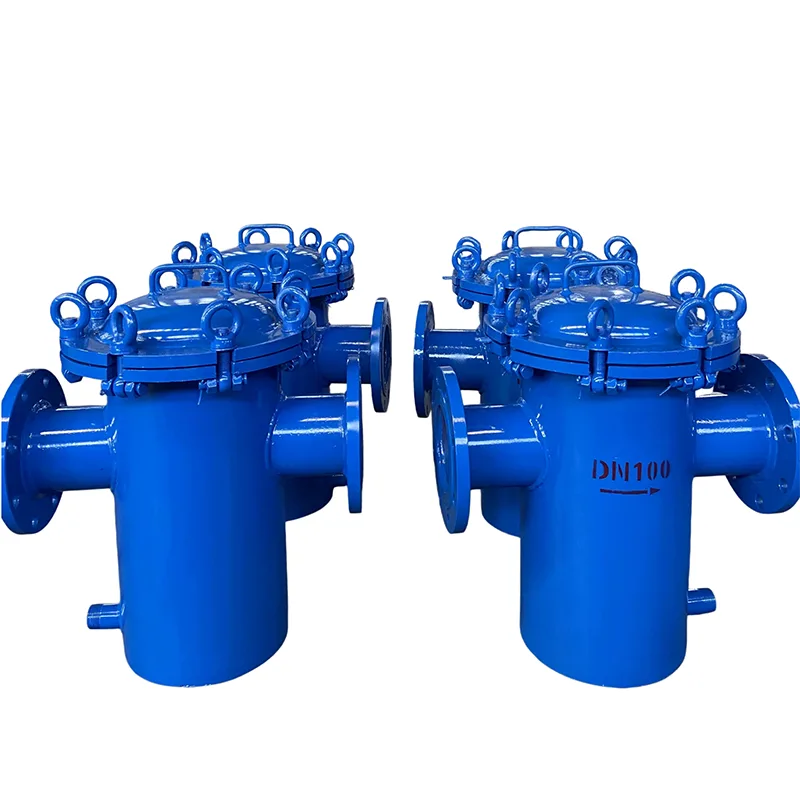
Why Cleaning Frequency Is Not a Fixed Number
There is no universal answer to cleaning intervals. The optimal schedule for your GB Carbon Steel Basket Strainer depends on five variables:
-
Fluid viscosity – heavier fluids trap more particulates.
-
Solid loading (ppm) – higher concentrations shorten the cycle.
-
Mesh size – finer meshes (e.g., 200 mesh) blind faster than coarse meshes (e.g., 20 mesh).
-
Operating pressure – elevated pressure compresses debris into the weave.
-
Process criticality – continuous processes demand proactive change-outs.
Rather than guessing, Huadu recommends a three-tiered approach: initial baseline, differential pressure monitoring, and calendar-based inspection.
The Differential Pressure Rule (Most Reliable Method)
For any GB Carbon Steel Basket Strainer, the cleaning trigger is differential pressure (ΔP) across the basket. The industry gold standard:
| Condition | ΔP (clean to dirty) | Action Required |
|---|---|---|
| Clean start | ≤ 0.3 bar (4.5 psi) | Normal operation |
| Caution zone | 0.3 – 0.7 bar (4.5 – 10 psi) | Schedule inspection within 8 hours |
| Action threshold | > 0.7 bar (10 psi) | Immediate cleaning or basket replacement |
| Critical | > 1.0 bar (15 psi) | Bypass or shutdown – risk of basket collapse |
Huadu equips its GB Carbon Steel Basket Strainer models with threaded pressure taps, making real-time ΔP measurement straightforward. If your system lacks gauges, install a bi-directional differential pressure transmitter for continuous data logging.
Recommended Cleaning Schedules by Application Type
Based on field data from Huadu installations across chemical, water treatment, and petrochemical sectors, here is a practical reference table:
| Application | Typical Solids | Suggested Inspection Interval | Cleaning Method |
|---|---|---|---|
| Cooling tower water | Low (<50 ppm) | Every 30 days | Backflush + manual wipe |
| Pipeline pigging debris | Medium (50–200 ppm) | Every 7–10 days | Remove basket, high-pressure wash |
| Crude oil transfer | High (>200 ppm) | Every 3–5 days | Ultrasonic cleaning + spare basket swap |
| Wastewater sludge | Very high | Daily visual check | Double-basket change-out system |
For seasonal operations, Huadu advises reducing the interval by 40% during startup and shutdown phases, when dislodged scale and weld slag are most prevalent.
Step-by-Step Cleaning Procedure for a GB Carbon Steel Basket Strainer
A correct cleaning process preserves the mesh integrity and extends basket life. Follow this sequence:
-
Isolate – Close upstream and downstream valves, then open the vent to depressurize.
-
Drain – Slowly open the drain plug; collect any hazardous fluids per site protocol.
-
Remove the cover – Use a torque wrench to avoid warping the flange gasket.
-
Extract the basket – Lift vertically; inspect for tears or oblong holes.
-
Clean externally – Use a soft-bristle brush and compatible solvent. Avoid wire brushes on fine mesh.
-
Reverse flush – Direct water from the inside out to dislodge embedded particles.
-
Inspect visually – Hold against a light source; replace if more than 5% of holes are distorted.
-
Reinstall – Seat the basket correctly; replace the gasket if hardened.
Huadu offers a quick‑change basket design that reduces cleaning downtime by 35% compared to standard bolted covers.
GB Carbon Steel Basket Strainer – FAQ
Q1: Can I clean my GB Carbon Steel Basket Strainer without removing the basket from the housing?
A: In-line backflushing is possible only if your GB Carbon Steel Basket Strainer is equipped with a reverse-flow valve and a drain port. However, Huadu recommends full basket extraction for thorough cleaning at least every third cycle. In-line flushing removes loose surface debris but fails to clear particles wedged between wire intersections. For critical services, always remove the basket for visual inspection and mechanical agitation. Permanent installations with duplex strainers allow online cleaning, but single-basket designs require isolation.
Q2: What is the maximum allowable pressure drop before permanent damage occurs to a GB Carbon Steel Basket Strainer?
A: Most GB Carbon Steel Basket Strainer baskets are rated for a maximum differential pressure of 1.5 bar (22 psi) at ambient temperature. Exceeding this value collapses the woven wire into the perforated core, creating irreversible pleat distortion. Huadu tests every basket to 1.8 bar burst pressure, but the practical safe working limit remains 1.0 bar for repeated duty. If you consistently hit 0.9 bar, upgrade to a larger model or a finer mesh with greater open area. Always refer to the nameplate – carbon steel’s yield strength drops at elevated temperatures, so derate the ΔP limit by 0.02 bar per °C above 100°C.
Q3: How do I know when to replace rather than clean the filter element in my GB Carbon Steel Basket Strainer?
A: Replace the element when: (a) cleaning frequency exceeds once per shift (8 hours) with no change in upstream solids, (b) you visually detect cracks or missing wires over a 10 mm length, (c) the basket no longer sits flush against the internal locating shoulder, or (d) the pressure drop after thorough cleaning remains above 0.4 bar – this indicates permanent blinding. Huadu recommends keeping one spare basket per strainer; this allows you to swap and clean offline, eliminating production waits. A typical woven 304 mesh basket lasts 18–24 months in clean water service, but only 3–6 months in abrasive slurry – track your cleaning cycles to establish a replacement curve.
Advanced Tip: Predictive Cleaning with Trend Logging
Rather than reacting to alarms, Huadu encourages operators to log ΔP weekly and plot a trend curve. A linear increase suggests gradual fouling (scale or silt); an exponential rise indicates a sudden debris event (weld rod or packing fragments). For a GB Carbon Steel Basket Strainer in steady service, clean when ΔP reaches 0.6 bar – this leaves a safety margin before the 0.7 bar action point. This proactive approach reduces unplanned shutdowns by over 60%, according to Huadu’s after‑sales data from 140+ plants.
Summary Checklist for Your Maintenance Log
-
Record clean ΔP after each service
-
Note the date and cumulative running hours
-
Inspect gasket condition – replace every 3 cleanings
-
Verify cover bolt torque (120 Nm for DN150 flanges)
-
Update the basket’s serial number if swapped
Final Word
Cleaning your GB Carbon Steel Basket Strainer is not a matter of calendar days – it is a science of pressure, particle load, and process urgency. Start with weekly checks, refine based on ΔP logs, and always keep a Huadu spare basket on hand. The cost of a cleaning cycle is minuscule compared to a pump rebuild or a production halt.
Contact Us – Huadu provides custom-engineered GB Carbon Steel Basket Strainer solutions, complete with sizing software, spare parts kits, and 24/7 technical support. We will send you a digital log sheet and a compatibility chart within 2 business days. Let Huadu help you turn strainer maintenance from a headache into a scheduled, predictable task.