

How Often Should a Safety Valve Be Tested to Ensure Reliable Operation?
2026-09-10
1. What Do Codes and Standards Require for Safety Valve Testing?
The minimum testing interval for a Safety Valve is typically established by national or international codes. In the United States, the ASME Boiler and Pressure Vessel Code (Section VIII) requires that pressure relief devices be tested at intervals not exceeding 5 years, but many jurisdictions and insurance companies impose shorter intervals. In Europe, the Pressure Equipment Directive (PED 2014/68/EU) requires that safety devices be maintained and tested according to the manufacturer's instructions and the operator's risk assessment. In China, the TSG 21-2016 regulation requires that Safety Valve units be tested at least once per year for most industrial applications.
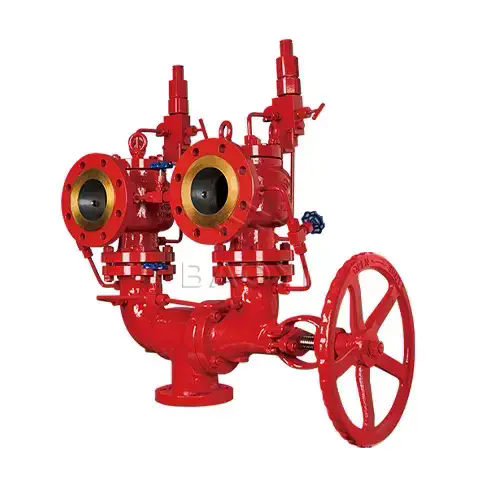
The table below summarizes the typical minimum requirements across different jurisdictions.
| Jurisdiction / standard | Typical maximum interval | Additional conditions |
| ASME Section VIII (US) | 5 years | Shorter intervals may be required by local jurisdiction or insurer |
| PED 2014/68/EU (Europe) | Risk-based | Operator must document risk assessment |
| TSG 21-2016 (China) | 1 year | Mandatory annual test for most pressure vessels |
| API 576 (Refinery) | 1 to 5 years | Based on service conditions and historical performance |
| ISO 4126 (International) | Manufacturer recommendation | Typically 1 to 3 years depending on service |
In our factory, we manufacture Safety Valve units that are certified to ASME and PED requirements. We provide a recommended testing interval based on the service conditions specified by the customer. We also supply the test documentation that our customers need to demonstrate compliance during audits.
2. How Do Service Conditions Determine the Actual Testing Frequency?
The code minimum is a starting point, not an ending point. The actual testing frequency should be determined by a risk assessment that considers the following factors: the corrosiveness of the fluid, the tendency of the fluid to polymerize or crystallize, the operating temperature relative to the valve's temperature limits, the frequency of set pressure cycling, and the consequence of valve failure. The table below provides a practical guideline for adjusting the testing interval based on service conditions.
| Service condition | Recommended interval | Reasoning |
| Clean, dry air or nitrogen | 3 – 5 years | Minimal corrosion or fouling; valve remains clean |
| Steam (clean, dry) | 2 – 3 years | Some scale formation possible; thermal cycling |
| Water or aqueous solutions | 1 – 2 years | Corrosion and scale formation likely |
| Hydrocarbons (clean) | 2 – 3 years | Low corrosion but possible varnish formation |
| Hydrocarbons (with H2S or acids) | 1 year | Sulfide stress cracking and corrosion risk |
| Polymerizing or crystallizing fluids | 6 – 12 months | High risk of trim sticking or plugging |
| High temperature (> 300°C) | 1 year | Creep and relaxation of spring; material degradation |
The risk assessment should also consider the consequence of failure. A Safety Valve protecting a small, low-pressure vessel in a non-hazardous area may tolerate a longer interval. A valve protecting a high-pressure reactor with toxic contents requires a shorter interval and possibly redundant protection. In our factory, we work with customers to review their service conditions and recommend an appropriate testing schedule. We also offer a valve with a bellows seal for corrosive services, which can extend the testing interval by isolating the spring from the process fluid.
3. What Is the Difference Between Online and Offline Safety Valve Testing?
Safety Valve testing can be performed either online (while the valve remains installed) or offline (after the valve is removed from the system). Online testing, also known as in-situ testing, uses a portable test rig to apply pressure to the valve inlet and measure the set pressure and seat tightness. Offline testing is performed on a certified test bench in a workshop. The table below compares the two methods.
| Comparison factor | Online testing (in-situ) | Offline testing (workshop) |
| System downtime required | Minimal (valve remains installed) | Significant (valve removed and system isolated) |
| Set pressure accuracy | Good (±3% typical) | Excellent (±1% typical) |
| Seat tightness verification | Limited (bubble test possible) | Full (bubble test and leak rate measurement) |
| Internal inspection | Not possible | Full inspection of trim, spring, and body |
| Cost per test | Lower (no removal or reinstallation) | Higher (labor, gaskets, transportation) |
| Recommended frequency | Annually or between offline tests | Every 3 to 5 years, or when online test indicates drift |
Our factory recommends a hybrid approach: perform online testing annually to verify the set pressure, and perform a full offline overhaul every 3 to 5 years to inspect the internal components and replace soft goods. This approach balances cost and reliability. Baoyi Group Co., Ltd. provides both online test equipment and offline testing services for our Safety Valve products.
4. What Documentation Should Be Retained to Demonstrate Compliance?
For every Safety Valve test, the following records should be retained: the valve identification number, the service location, the set pressure, the test pressure, the test result (pass/fail), the name of the technician, and the date of the test. The records should be retained for the life of the valve plus 3 years. In our factory, we provide a test certificate with every valve that is tested. For customers who perform their own testing, we supply a test record template that meets the requirements of ASME and PED. We also offer a digital valve management system that allows you to track test dates and receive reminders when a valve is due for testing. This system has helped our customers reduce overdue testing from 15 percent to under 2 percent.
Frequently Asked Questions About Safety Valve Testing Intervals
Summary for Maintenance Managers
The testing interval for a Safety Valve is not a fixed number. It is a decision that should be based on code requirements, service conditions, risk assessment, and historical performance. A hybrid approach of annual online testing and periodic offline overhaul provides the best balance of reliability and cost. Documentation is essential to demonstrate compliance during audits. Our factory has been manufacturing Safety Valve units for over 20 years and has supported customers in developing testing programs that meet the most demanding regulatory requirements.
Baoyi Group Co., Ltd. manufactures Safety Valve units in a range of materials and configurations. We provide testing equipment, test certificates, and digital valve management tools. Our engineering team can assist with risk-based inspection studies and testing schedule development.