

How Is a Sanitary Butterfly Type Ball Valve Installed in Stainless Steel Sanitary Piping
2026-10-26
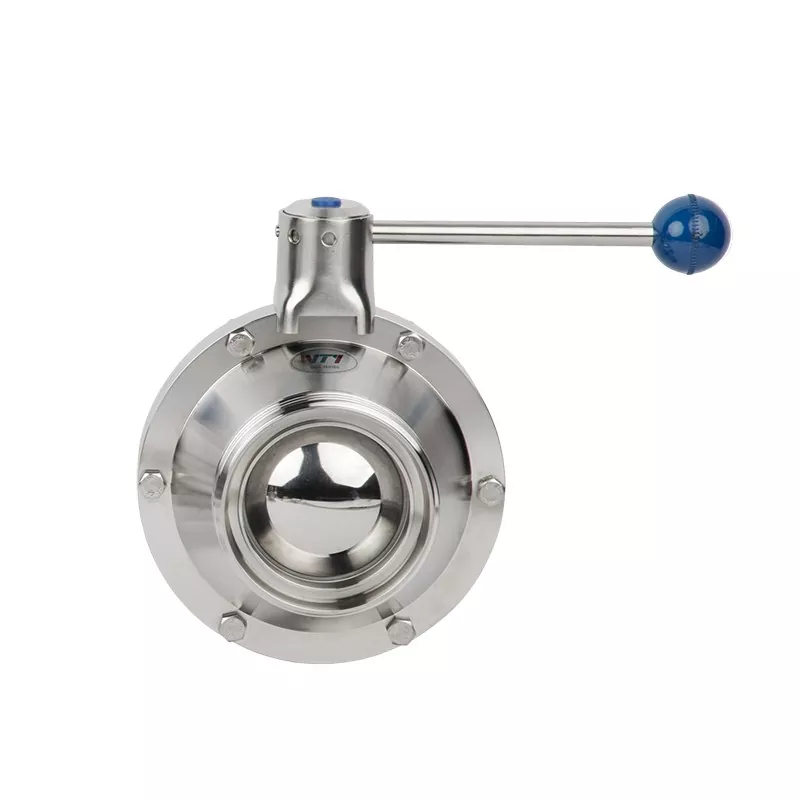
Proper installation of a Sanitary Butterfly Type Ball Valve determines whether a hygienic line performs reliably or becomes a contamination risk. At TianYue, we supply these valves to dairies, breweries, pharmaceutical plants, and food processors, and the installation questions we receive are remarkably consistent. This guide covers the practical steps, torque considerations, and verification checks that experienced fitters follow when mounting a Sanitary Butterfly Type Ball Valve into stainless steel sanitary piping.
Pre-Installation Checks
Before any clamp is tightened, confirm the following:
-
Valve certification: Verify 3-A, FDA, and where applicable EHEDG documentation for the Sanitary Butterfly Type Ball Valve.
-
Material traceability: Match the heat numbers on the valve body to the mill certificates for the adjoining 316L tubing.
-
Surface finish: Confirm internal Ra values (typically ≤0.8 µm for hygienic service, ≤0.4 µm for aseptic duty).
-
Gasket compatibility: Select EPDM, silicone, or PTFE seats according to temperature and cleaning chemistry.
-
End connections: Check that the valve ends match the piping standard — clamp (TC), SMS, DIN, RJT, or IDF.
Step-by-Step Installation Sequence
| Step | Action | Professional Note |
|---|---|---|
| 1 | Isolate and drain the line | Confirm zero pressure before breaking any connection |
| 2 | Inspect pipe ends and valve ports | Remove burrs; any scratch deeper than the Ra spec requires re-polishing |
| 3 | Fit the gasket centrally | Off-centre gaskets are the leading cause of crevice corrosion |
| 4 | Align the Sanitary Butterfly Type Ball Valve with the pipe axis | Misalignment loads the clamp and distorts the seat |
| 5 | Close the clamp by hand | Never use tools on sanitary clamps |
| 6 | Tighten evenly around the circumference | Alternate sides to seat the gasket uniformly |
| 7 | Operate the valve through a full cycle | Confirm smooth travel and correct open/close indication |
| 8 | Pressure test and record | Hold at 1.5× design pressure; log results for audit trails |
Torque and Alignment Guidance
Over-tightening is more common than under-tightening and causes gasket extrusion and seat deformation. As a general reference:
| Connection Size | Suggested Clamp Torque | Typical Gasket |
|---|---|---|
| 1"–1.5" | 15–20 N·m | EPDM |
| 2"–2.5" | 20–25 N·m | EPDM |
| 3"–4" | 25–30 N·m | EPDM / PTFE |
Always defer to the gasket manufacturer's published figures. TianYue provides torque tables with every Sanitary Butterfly Type Ball Valve shipment so maintenance teams can standardise procedures across lines.
Welding and Connection Considerations
Where the valve connects via welded ferrules rather than clamps, purge the bore with argon, use orbital welding for repeatability, and inspect the weld bead for full penetration. The Sanitary Butterfly Type Ball Valve should be removed or fully protected during welding to prevent heat damage to seats and seals.
Post-Installation Verification
-
Passivate weld-affected zones where required.
-
Perform CIP at design flow and temperature; verify spray coverage.
-
Record valve tag, serial number, and installation date in the maintenance system.
-
Confirm actuator or handle clearance for future seal replacement.
Frequently Asked Questions
Q: Can a Sanitary Butterfly Type Ball Valve be installed in any orientation?
A: Yes, the valve is bidirectional and may be mounted horizontally or vertically, but the preferred orientation places the stem horizontal to aid drainage, and the handle or actuator must have clearance for a full quarter-turn plus future maintenance access.
Q: What causes leakage at the clamp joint after installation?
A: Leakage usually traces to an off-centre or damaged gasket, mismatched clamp ferrules, insufficient torque, or a scratched sealing face; dismantle, inspect the gasket and ferrule geometry, replace the gasket, and re-torque evenly to the manufacturer's specification.
Q: How often should the seat and gasket be replaced?
A: Replacement intervals depend on cycle count and cleaning regime, but in typical hygienic service seals are inspected at each major shutdown and replaced every 12 to 24 months, or immediately if CIP verification shows declining results.
Q: Does the valve need to be removed for CIP?
A: No, a correctly installed Sanitary Butterfly Type Ball Valve is designed for clean-in-place service; the ball and seat geometry allow cleaning fluid to reach all product-contact surfaces when the valve is cycled during the cleaning sequence.
Contact Us
For installation drawings, torque specifications, certification packs, or a quotation on a Sanitary Butterfly Type Ball Valve for your hygienic process, contact TianYue today — our engineering team will match the right valve, end connection, and seal material to your line and support you through commissioning.