

How Does Temperature Affect the Seat Seal of a Forged Check Valve
2026-06-11
Temperature plays a critical role in the performance of any industrial valve, and the Forged Check Valve is no exception. At Huadu, a leading manufacturer in the flow control industry, understanding how thermal conditions impact the seat seal is essential for ensuring long‑term reliability, leak prevention, and system safety.
When a Forged Check Valve operates under varying temperatures, its seat seal—typically made from materials like stainless steel, Stellite, or PTFE—expands or contracts. This can directly affect sealing tightness, response time, and component life. Below is a professional breakdown of temperature‑related effects on the seat seal.
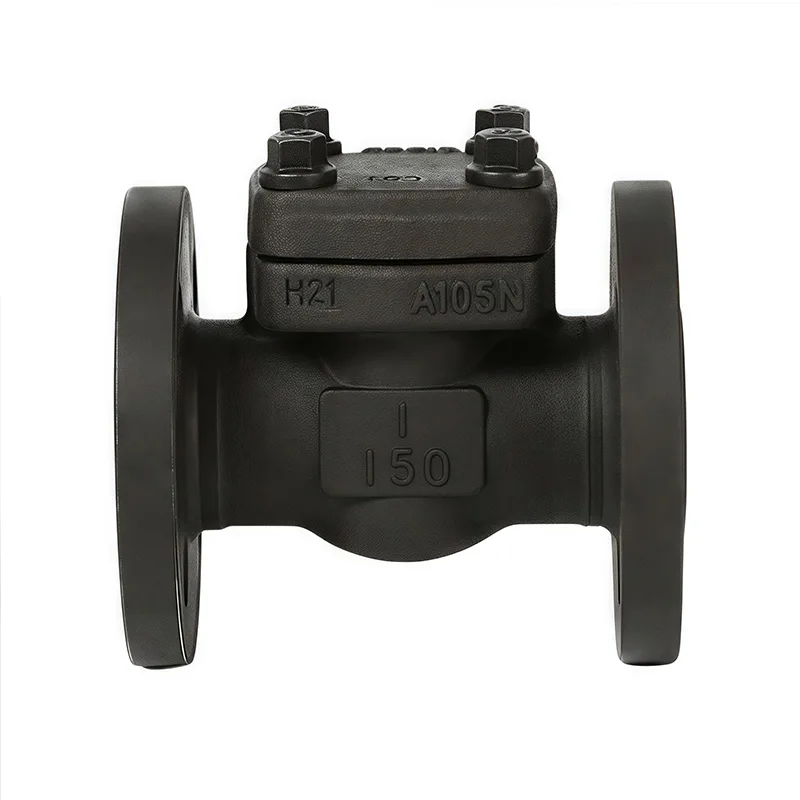
Key Temperature Effects on the Seat Seal
| Temperature Range | Effect on Seat Seal | Recommended Material for Seal |
|---|---|---|
| Cryogenic (below -100°C) | Material becomes brittle; shrinkage may cause leakage | Austenitic stainless steel with Kel-F or PCTFE |
| Low (-30°C to 0°C) | Reduced elasticity; slower disc response | PTFE or reinforced TFM |
| Moderate (0°C to 150°C) | Optimal sealing performance | Standard Stellite or 316SS |
| High (150°C to 350°C) | Thermal expansion risk; potential creep relaxation | Stellite 6 or Inconel |
| Very High (above 350°C) | Seal hardening, oxidation, loss of tight shut‑off | Hardfaced seat with metal‑to‑metal design |
How Temperature Causes Seal Failure
-
Thermal Expansion Mismatch – The seat and disc materials expand at different rates, creating gaps or excessive interference.
-
Elastomer Degradation – Soft seals (e.g., Viton, Buna‑N) harden, crack, or melt when exposed to temperatures beyond their design limits.
-
Creep and Relaxation – Prolonged high temperatures cause the seat material to deform plastically, reducing preload and sealing force.
-
Thermal Cycling – Repeated heating and cooling can loosen the seat retaining ring, leading to internal leakage.
Forged Check Valve FAQ – Common Questions
FAQ 1: What is the maximum operating temperature for a standard Forged Check Valve with a PTFE seat?
The maximum continuous operating temperature for a Forged Check Valve equipped with a PTFE seat is typically 200°C (392°F). Beyond this temperature, PTFE begins to soften and flow under pressure, causing the seat seal to deform and leak. For applications above 200°C, Huadu recommends a Forged Check Valve with a metal‑to‑metal Stellite‑faced seat, which can withstand temperatures up to 540°C (1004°F) in steam or high‑temperature fluid services.
FAQ 2: Can a Forged Check Valve be used in cryogenic services without seat seal damage?
Yes, but only if the Forged Check Valve is specifically designed for cryogenic conditions. Standard soft seals (e.g., PTFE or elastomers) become glass‑like and brittle below -50°C, leading to seal fracture and leakage. Huadu manufactures cryogenic‑grade Forged Check Valve models with extended bonnets and PCTFE or Kel‑F seats, which maintain sealing integrity down to -196°C (-320°F). Always verify the material certification and low‑temperature impact test reports before installation.
FAQ 3: How can you tell if temperature has damaged the seat seal of a Forged Check Valve without disassembling the valve?
Common signs of temperature‑induced seat seal damage in a Forged Check Valve include:
-
Forward leakage detected by a downstream pressure gauge or flow meter when the valve should be closed.
-
Abnormal clicking or chatter caused by unstable disc movement due to seat distortion.
-
Increased system temperature drop across the valve, indicating partial blockage from seat material extrusion.
-
External temperature measurement showing a hot spot near the seat area, suggesting internal blow‑by.
For critical lines, Huadu recommends performing a periodic seat leak test using helium or a pressure‑decay method without removing the valve.
Best Practices for Temperature Management
-
Always select the Forged Check Valve with seat material rated for both maximum and minimum process temperatures, including start‑up and upset conditions.
-
Account for thermal cycling – specify Belleville spring washers or a floating seat design if frequent temperature swings occur.
-
For high‑temperature steam or thermal oil, use a Huadu Forged Check Valve with a hardfaced seat and guided disc to prevent galling and sealing loss.
Contact Huadu for Expert Valve Solutions
If you need help selecting the right Forged Check Valve for high‑temperature, cryogenic, or thermal cycling applications, Huadu offers engineering support, material certification, and custom seat designs. Contact our technical team today to discuss your operating conditions and ensure a reliable, leak‑free seal for years to come.