

How Does Full-Port Design Affect Pressure Drop Across Stainless Steel Ball Valves?
2026-11-19
How Does Full-Port Design Change the Flow Path Inside a Ball Valve?
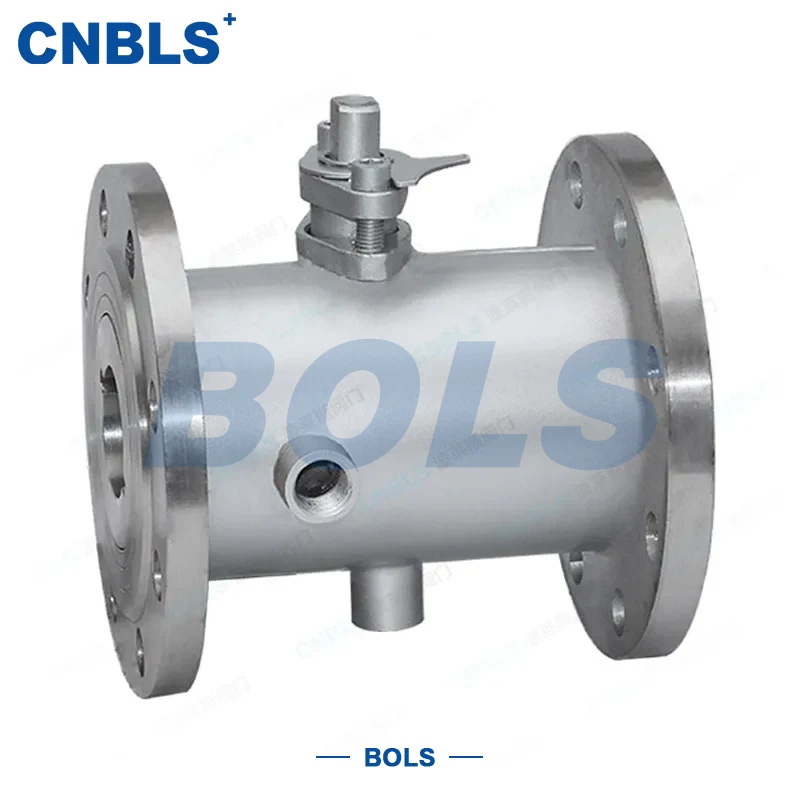
Stainless Steel Ball Valves are often selected for industrial pipelines where operators need dependable shut-off and a flow path that does not impose unnecessary resistance. In a full-port design, the opening through the ball is sized to closely match the nominal internal diameter of the connected pipe. When the valve is fully open, fluid can pass through a relatively straight bore rather than being forced through a noticeably smaller opening. This geometry can reduce local velocity and turbulence at the valve, helping limit the pressure loss attributable to the valve itself.
The distinction matters in water, process-liquid, oil and gas lines. A reduced-port valve has a smaller bore than the adjoining pipe, so fluid accelerates through the restriction and decelerates downstream. This change in velocity contributes to local pressure loss. A full-port design reduces that restriction but cannot eliminate friction or losses elsewhere in the line.
Why Does a Larger Bore Usually Reduce Pressure Drop?
Pressure drop across a valve is the difference between upstream and downstream pressure under a defined flow condition. For a given volumetric flow rate, average fluid velocity rises as the available flow area becomes smaller. A reduced opening therefore creates a higher-velocity region through the valve. The fluid then expands into the downstream pipe, where part of its mechanical energy is dissipated through turbulence and mixing.
A full-port opening in Stainless Steel Ball Valves keeps the flow area closer to that of the adjoining pipe. This reduces the abrupt contraction and expansion that occur at a restricted bore. In many services, the result is a lower local loss coefficient and a higher flow capacity than a comparable reduced-port valve of the same nominal size. The benefit depends on the actual bore, seat arrangement and internal finish, not the product label alone.
Engineers commonly compare valves using the flow coefficient, expressed as Cv in many North American specifications or Kv in metric practice. These values describe flow capacity under defined test conditions. A higher coefficient generally indicates less resistance at the same flow rate, but Cv or Kv must be compared on a consistent basis. Density, viscosity, temperature, pressure, flow regime and test method affect interpretation.
For our pipeline review, the useful question is not whether a full-port valve has zero pressure drop. Fluid still encounters the ball, seats and end transitions. The engineering question is how much loss the selected model adds at design flow, and whether that affects pump duty, compressor capacity, energy use or process stability.
Which Pipeline Conditions Make Full-Port Construction More Valuable?
The benefit is most noticeable in our assessment where the pipeline is sized to maintain a target velocity and the valve would otherwise become a local restriction. This can include transfer lines, circulation loops, water distribution headers and process lines where pressure margin is limited. In a long line, the valve may account for only one part of the total system resistance, so engineers should calculate the complete line rather than treating the valve as the sole source of pressure loss.
Full-port construction can help with viscous liquids, product recovery and some line-cleaning operations because it avoids a pronounced bore restriction. It does not automatically make a valve piggable: passage depends on bore continuity, seat design, branches and the cleaning system.
For gas service, use compressible-flow calculations. Pressure ratio, gas properties and temperature affect the relationship between flow and pressure loss, so a liquid-flow comparison is not sufficient. Flashing, cavitating and two-phase services also require specialised assessment.
Full-port geometry is not always the most economical choice. Where pressure margin is ample and the valve is used only for isolation, a reduced-port option may meet the duty at lower cost. Compare operating profile, allowable loss and lifecycle cost instead of assuming the largest bore is always best.
How Do Material, Pressure and Connection Options Affect Valve Selection?
Zhejiang Bolaisi Valve Co., Ltd. supplies stainless steel ball valve options with 304 and 316 stainless steel body materials. Choose the grade for the medium, chloride concentration, temperature, cleaning chemicals and environment. Grade 316 generally resists certain chloride-related corrosion mechanisms better than 304, but neither is immune to pitting or crevice corrosion. Check compatibility for the actual service.
For Stainless Steel Ball Valves, the available product information gives a stated working-pressure range of 0.6 to 30 MPa and a stated temperature range of minus 40 degrees Celsius to 450 degrees Celsius. These are range-level figures, not a guarantee that every valve configuration can operate at the maximum pressure and maximum temperature simultaneously. The allowable combination depends on the model, body, seat and seal materials, connection design and pressure-temperature rating. Request the model-specific rating curve before finalising the specification.
| Selection item | Available information | What the project engineer should verify |
| Body material | 304 or 316 stainless steel | Corrosion compatibility with the process medium and environment |
| Working pressure | Stated range of 0.6 to 30 MPa | Pressure rating for the exact size, model and temperature |
| Operating temperature | Stated range of minus 40 degrees Celsius to 450 degrees Celsius | Seat, packing and seal limits, plus the model pressure-temperature curve |
| End connections | Flanged, threaded or welded | Facing, thread form, dimensions, schedule and applicable connection standard |
| Actuation | Manual, electric or pneumatic options | Required torque, control signal, fail position and available utilities |
| Port configuration | Confirm for the selected model | Actual bore diameter and whether it matches the intended line geometry |
Connection style affects installation and maintenance. Flanged ends can be removed by unbolting after safe isolation. Threaded ends suit some smaller lines, provided thread form and sealing method match the piping specification. Welded ends provide a permanent joint, but replacement may require cutting and qualified welding.
Choose the actuator according to operating frequency and control requirements. Manual levers suit occasional isolation; electric units support remote control; pneumatic units may suit plants with instrument air. Size the actuator for operating torque at the actual differential pressure, and specify limit switches, solenoids and fail-safe functions where required.
At Bolaisi, our product range includes connection and operation options intended for different pipeline arrangements. Our factory can discuss the intended medium, line size, pressure, temperature and installation conditions before a model is selected. For a full-port requirement, the key confirmation is the measured or drawing-specified ball bore, not the nominal pipe size printed on the order alone.
How Should Engineers Check Pressure-Loss Performance Before Ordering?
Start with the design flow rate and the properties of the process medium. For liquids, record density and viscosity at operating temperature. For gases, record composition, molecular weight, compressibility and the upstream and downstream pressure conditions. Then establish the allowable pressure loss across the valve and identify whether the line operates continuously, intermittently or across a wide turndown range.
Next, request the manufacturer's Cv or Kv data for the exact valve size and port configuration. If the supplier provides only a nominal port description, ask for the actual bore dimension and a sectional drawing. Compare the valve data with the required flow rate using the appropriate calculation method for the medium. Do not estimate performance from nominal diameter alone, because two valves with the same nominal size can have different internal passages and flow coefficients.
Installation also matters. An elbow, reducer or pump discharge immediately upstream can disturb the inlet flow and make catalogue data less representative. Where pressure loss is critical, follow the piping layout requirements, avoid unnecessary reducers and observe any specified flow orientation.
Our engineering review should also consider the valve's normal position. A ball valve designed for on-off isolation is generally intended to operate fully open or fully closed. Leaving a standard ball valve partly open for continuous throttling can cause high local velocity, noise, vibration, seat erosion or unstable control. If flow regulation is required, select a valve specifically designed and rated for that duty, or use a dedicated control valve.
Before purchase, request the model code, size, port bore, body and trim materials, seat and packing details, pressure-temperature rating, Cv or Kv, connection dimensions, actuator data and applicable inspection records. Confirm relevant standards and certificates for the ordered model; a product-family range is not a substitute for its datasheet.
The supplier can use these project details to identify a suitable configuration for review. Our selection process should be based on documented operating conditions, rather than assuming that every stainless steel valve with a full-port label will deliver the same pressure-loss performance. Our technical team can clarify the available model data, while our project team should confirm that the final selection meets the piping design and site requirements.
What Should Operators Remember About Full-Port Valve Maintenance?
Low pressure loss does not remove the need for routine inspection. Before maintenance, isolate the line, depressurise, drain or purge the section as required, and follow the site's lockout and tagout procedure. Confirm that the process medium has been made safe before loosening any connection or removing an actuator. Valve position alone is not proof that a pipeline is depressurised or safe to open.
During inspection, check for leakage at the stem, body joints and end connections, as well as corrosion, loose fasteners, actuator faults and abnormal vibration. If operating torque rises, investigate deposits, seat damage, packing condition and differential pressure rather than forcing the lever. Follow the manufacturer's procedure for disassembly and testing.
Where pressure loss is monitored, record upstream and downstream readings at repeatable flow rates and temperatures. A change may indicate fouling, obstruction, altered process conditions or an instrument fault. Consistent measurement points make trend data more meaningful.
Our maintenance recommendation for Stainless Steel Ball Valves is to keep the valve identification, material details, seat specification and inspection history with the equipment record. Our factory can provide model information for the supplied configuration, but maintenance intervals must be set according to the medium, duty cycle, site rules and observed condition. This approach helps operators distinguish normal system variation from a developing valve problem.
What Do Buyers Commonly Ask About Full-Port Design?
Does a full-port ball valve eliminate pressure drop in a pipeline?
No. A full-port design reduces the restriction created by the valve bore, but the fluid still encounters the ball passage, seats and internal transitions. The valve therefore produces some local loss, and the complete pipeline also has friction losses from straight pipe, elbows, tees, reducers, filters and other equipment. The actual pressure drop should be calculated at the specified flow rate using the valve's Cv or Kv data.
Is a full-port valve always better than a reduced-port valve?
No. Full-port construction is useful when low local resistance, a near-continuous bore or line-cleaning considerations matter. A reduced-port valve may be a sensible choice when pressure margin is adequate, the valve is used only for isolation and a smaller or more economical configuration meets the duty. Selection should compare pressure-loss requirements, installation constraints, purchase cost and lifecycle consequences.
What information is needed to confirm the pressure-drop performance of Stainless Steel Ball Valves?
Provide the valve size and port bore, required flow rate, medium and its operating properties, upstream pressure, downstream pressure, temperature, end connections and normal valve position. Ask the supplier for model-specific Cv or Kv data, a sectional drawing and the pressure-temperature rating. For gas, flashing, cavitating or two-phase service, use the appropriate compressible-flow or specialised sizing method rather than a basic liquid calculation.
What Is the Practical Takeaway for Pipeline Designers?
Full-port geometry can reduce the local pressure loss caused by a restricted valve opening by keeping the flow area closer to the adjoining pipe bore. The benefit is most relevant when pressure margin, flow capacity, energy use or line-cleaning requirements influence the design. It should still be assessed alongside the valve's actual Cv or Kv, seat arrangement, materials, operating conditions and the resistance of the complete pipeline.
When specifying Stainless Steel Ball Valves, confirm the exact bore, pressure-temperature rating, seat materials, connection dimensions and actuator requirements for the selected model. Zhejiang Bolaisi Valve Co., Ltd. welcomes enquiries with pipeline drawings and operating data so that the appropriate configuration can be reviewed. Contact our team to discuss your application and request model-specific technical information before placing an order.