

How Does Check Valve Casting Influence Industrial Flow Control Performance?
2026-01-06
Article Abstract
Check valve casting plays a decisive role in ensuring reliable one-way flow control across industrial systems such as oil and gas pipelines, water treatment facilities, power plants, and chemical processing lines. This article provides a comprehensive examination of check valve casting from a manufacturing and application perspective. It explains casting processes, material parameters, dimensional tolerances, and performance characteristics while addressing common technical questions faced by procurement managers and engineers. The discussion is structured to align with professional reading habits and modern search behavior, supporting both technical understanding and informed sourcing decisions.
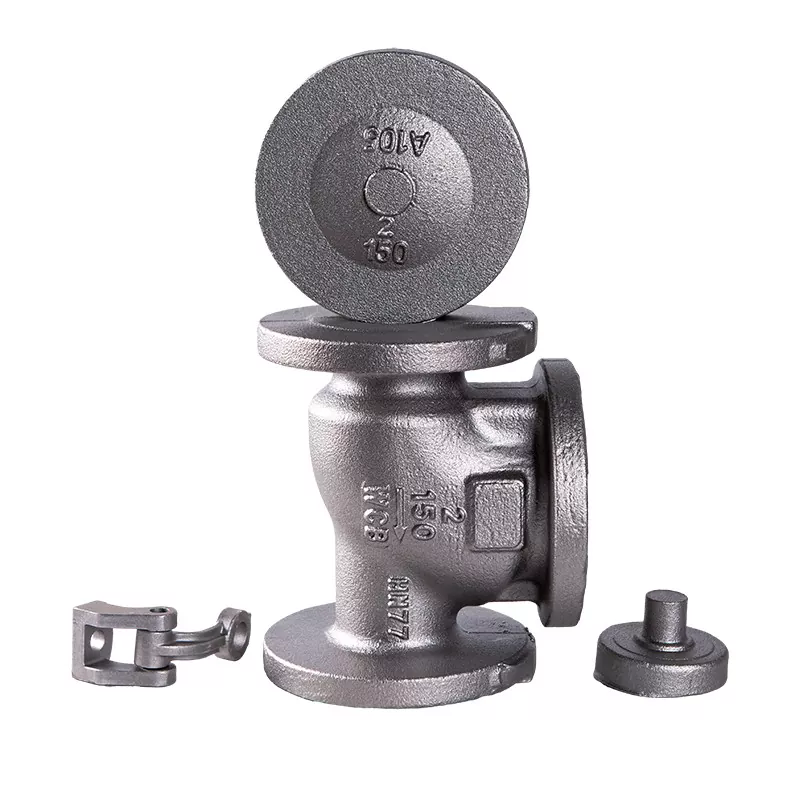
Table of Contents
- How Is Check Valve Casting Manufactured for Industrial Reliability?
- How Do Material Parameters Define Check Valve Casting Performance?
- How Can Common Check Valve Casting Questions Be Answered in Practice?
- How Will Check Valve Casting Evolve with Future Industrial Demands?
Article Outline
- Overview of check valve casting and its role in flow control
- Manufacturing methods and quality control logic
- Detailed product parameters and specifications
- Frequently asked questions with technical explanations
- Industry trends and sourcing considerations
How Is Check Valve Casting Manufactured for Industrial Reliability?
Check valve casting refers to the process of forming the valve body and critical structural components through controlled metal casting techniques. The primary objective of this process is to produce a pressure-resistant, dimensionally stable housing capable of supporting internal valve mechanisms such as discs, balls, or swing arms. These components must function consistently under fluctuating pressure, temperature, and flow conditions.
The manufacturing workflow typically begins with pattern design, where internal flow paths and wall thicknesses are engineered to minimize turbulence and stress concentration. Casting methods such as sand casting, investment casting, or shell molding are selected based on valve size, pressure rating, and surface finish requirements. After pouring and solidification, castings undergo heat treatment to enhance mechanical strength and corrosion resistance.
Dimensional machining follows casting to ensure sealing surfaces, flange faces, and internal bores meet international standards such as ASME, API, or DIN. Non-destructive testing, including radiographic inspection and pressure testing, is applied to confirm structural integrity before final assembly.
How Do Material Parameters Define Check Valve Casting Performance?
Material selection is a defining factor in check valve casting performance. The cast body must withstand internal pressure, chemical exposure, and thermal cycling without deformation or cracking. Below is a consolidated overview of typical product parameters used in industrial check valve castings.
| Parameter | Specification Range | Technical Significance |
|---|---|---|
| Nominal Size | DN15 – DN1200 | Determines flow capacity and pipeline compatibility |
| Pressure Rating | PN10 – PN420 / Class 150 – 2500 | Defines maximum allowable working pressure |
| Body Material | Carbon Steel, Stainless Steel, Alloy Steel, Ductile Iron | Controls corrosion resistance and mechanical strength |
| Casting Process | Sand Casting, Investment Casting | Affects surface finish and dimensional precision |
| Operating Temperature | -29°C to +600°C | Ensures stability under thermal stress |
These parameters are standardized to ensure interchangeability and predictable performance in global supply chains. Proper alignment between material grade and operating conditions directly extends service life and reduces maintenance frequency.
How Can Common Check Valve Casting Questions Be Answered in Practice?
Q: How does check valve casting differ from forged valve bodies?
A: Check valve casting allows greater flexibility in internal geometry and size range, making it suitable for large-diameter valves and complex flow paths. Forged bodies generally offer higher density but are limited in shape complexity and size scalability.
Q: How can casting defects impact check valve performance?
A: Defects such as porosity or shrinkage cavities can reduce pressure resistance and lead to leakage under cyclic loading. This is why radiographic testing and hydrostatic pressure testing are critical quality assurance steps in cast check valves.
Q: How should check valve casting material be selected for corrosive media?
A: Material selection should be based on chemical compatibility charts and operating temperature. Stainless steel and high-alloy castings are commonly used in corrosive or high-purity environments to prevent pitting and stress corrosion cracking.
How Will Check Valve Casting Evolve with Future Industrial Demands?
Future development of check valve casting is driven by stricter emission standards, higher efficiency requirements, and the expansion of energy infrastructure. Advanced simulation tools are increasingly used during casting design to optimize flow paths and reduce material waste. At the same time, demand for traceability and certification continues to rise in global procurement.
Digital quality management systems and automated inspection technologies are becoming standard in modern foundries. These advancements support consistent casting quality while reducing lead times and production variability. As industries transition toward hydrogen, renewable energy, and smart water networks, check valve casting will remain a foundational technology supporting safe and reliable flow control.
Within this evolving landscape, manufacturers such as Hanno continue to refine casting processes and material standards to align with international compliance requirements and long-term operational reliability. By integrating engineering expertise with controlled production systems, consistent valve casting performance can be achieved across diverse applications.
For project-specific specifications, technical consultation, or sourcing inquiries related to check valve casting, interested parties are encouraged to contact us to obtain detailed documentation, drawings, and application support tailored to operational needs.