

How Does an ANSI Class 150 Stainless Steel Soft-Seal Gate Valve Compare to a Metal-Seated One
2026-07-03
Selecting the right gate valve for industrial piping systems often comes down to one critical decision: soft-seal versus metal-seated. For many engineers and procurement specialists, the ANSI Class 150 Stainless Steel Soft-Seal Gate Valve represents the modern default choice, but metal-seated variants remain indispensable in certain harsh environments. This comparison breaks down the technical, operational, and economic differences to help you make an informed selection—backed by Tianhong’s engineering expertise in valve manufacturing.
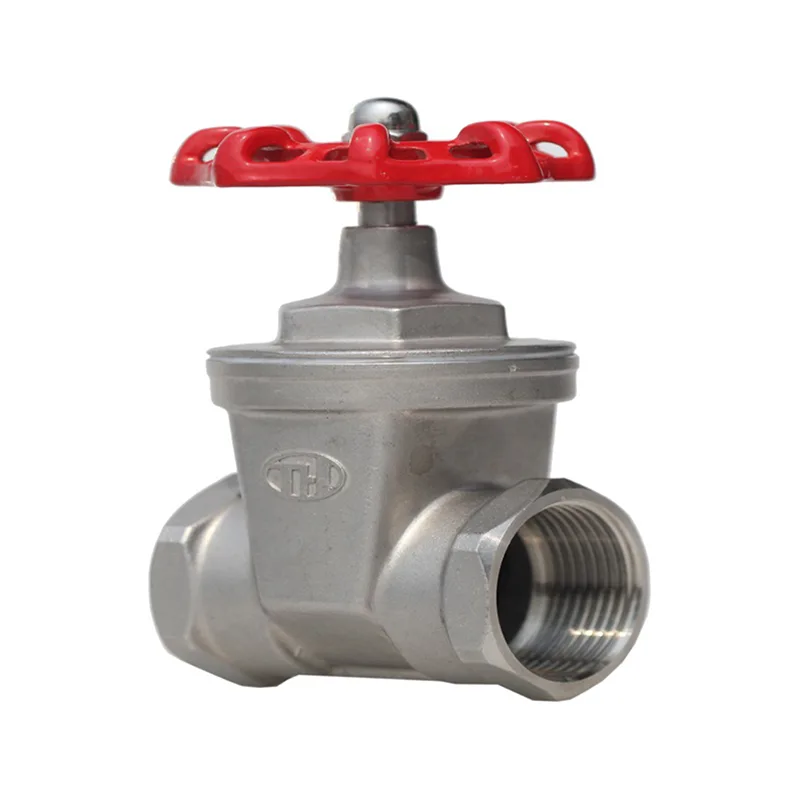
1. Core Design Differences
| Feature | ANSI Class 150 Stainless Steel Soft-Seal Gate Valve | Metal-Seated Gate Valve |
|---|---|---|
| Sealing Material | PTFE, RPTFE, or NBR elastomer | Stainless steel (316/304) or Stellite hardfacing |
| Leakage Rate | Zero leakage (FCI 70-2 Class VI) | Class II–IV (allowable minor seepage) |
| Temperature Range | –29°C to +200°C (typical) | –196°C to +650°C (with special alloys) |
| Pressure Rating | ANSI Class 150 (up to 285 psi at 38°C) | Same flange rating, but higher thermal derating tolerance |
| Cycle Life | 10,000–20,000 cycles (with clean media) | 50,000+ cycles (abrasion-resistant) |
| Cost (Initial) | Moderate | 40–60% higher (due to hardfacing and precision grinding) |
2. Performance Under Real Operating Conditions
The ANSI Class 150 Stainless Steel Soft-Seal Gate Valve excels in applications requiring bubble-tight shutoff—water treatment, pharmaceutical lines, food processing, and HVAC systems. Its elastomeric seat deforms slightly under closure pressure, creating a perfect barrier against liquid or gas passage. Tianhong’s soft-seat designs incorporate self-cleaning seat profiles that reduce particle entrapment, extending seat life in clean services.
In contrast, the metal-seated valve relies on precision-machined mating surfaces (often coated with cobalt-based alloys) to achieve shutoff. While it allows minor leakage (typically 0.01% of valve capacity), it withstands high-velocity steam, superheated water, and slurry-laden fluids that would rapidly erode a soft polymer seat. If your medium contains sand, catalyst fines, or scale, the metal seat is non-negotiable.
3. Maintenance and Total Cost of Ownership (TCO)
| Cost Factor | ANSI Class 150 Stainless Steel Soft-Seal Gate Valve | Metal-Seated Valve |
|---|---|---|
| Seat Replacement | Simple, low-cost (< 15 minutes bench work) | Requires regrinding or disc replacement (specialized tooling) |
| Spare Parts Availability | Wide availability (standard sizes) | Often custom-ordered (longer lead times) |
| Downtime Impact | Minimal (in-line seat change possible with top-entry designs) | Extended (valve removal from line often required) |
| 5-Year TCO | Lower (cheaper parts + faster labor) | Higher (but justifiable in abrasive services) |
For most general industrial applications, the ANSI Class 150 Stainless Steel Soft-Seal Gate Valve from Tianhong reduces annual maintenance budgets by 30–45% compared to metal-seated equivalents, simply because seat replacement is quick and does not require special welding or heat-treatment procedures.
4. Application Suitability Matrix
| Application | Soft-Seal Recommended? | Metal-Seat Recommended? | Reason |
|---|---|---|---|
| Chilled water / Glycol | ✅ Yes | ❌ No | Soft seat provides zero leakage at low differential pressures |
| Saturated steam (≤180°C) | ✅ Yes (with PTFE seat) | ⚠️ Optional | Soft seat works if temperature within limit |
| Superheated steam (250°C+) | ❌ No | ✅ Yes | Elastomer degrades; metal seat handles thermal cycling |
| Crude oil with sand | ❌ No | ✅ Yes | Abrasive particles destroy soft seats within weeks |
| Demineralized water (pharma) | ✅ Yes | ❌ No | Metal ions can contaminate product; soft seal is inert |
| Cryogenic (-196°C) | ❌ No | ✅ Yes (special 316L) | Soft polymers become brittle at extreme lows |
5. Frequently Asked Questions (FAQ)
Q1: Can an ANSI Class 150 Stainless Steel Soft-Seal Gate Valve handle intermittent steam at 200°C without seat deformation?
A: Yes, but only if the seat material is specifically rated for high-temperature service. Standard PTFE softens above 180°C, while Tianhong offers reinforced RPTFE and PEEK seats that sustain 200°C for short durations (up to 30 minutes per cycle). For continuous steam above 190°C, we strongly advise switching to a metal-seated design to avoid extrusion or cold-flow creep of the polymer seat. Always check the temperature-pressure curve—at 200°C, the ANSI Class 150 flange rating derates to approximately 180 psi, so ensure your system pressure stays below that threshold.
Q2: How do I know if my fluid contains abrasive particles that will damage the soft seal of an ANSI Class 150 Stainless Steel Soft-Seal Gate Valve?
A: Perform a simple "slurry test": take a 500 mL sample of your process fluid, filter it through a 200-mesh screen, and dry the retained solids. If the residue exceeds 50 mg per liter, or if particles have a Mohs hardness above 3 (e.g., silica sand, iron oxide, or catalyst beads), the soft seat will experience micro-cutting and premature leakage—often within 3–6 months. In such cases, Tianhong recommends our metal-seated gate valve series with Stellite #6 hardfacing, which resists erosion up to 50 m/s fluid velocity. For borderline cases, we can supply a soft-seat valve with a protective tungsten-carbide coating on the disc leading edge.
Q3: What is the typical pressure drop difference between a fully open ANSI Class 150 Stainless Steel Soft-Seal Gate Valve and a metal-seated gate valve of the same size?
A: In full-open position, both valve types have nearly identical Cv (flow coefficient) values because the flow path is straight-through with the gate fully retracted. The pressure drop (ΔP) difference is negligible—typically less than 0.5 psi at nominal flow rates for a 4-inch valve. However, at partial opening (e.g., 30–50% stroke), the soft-seal valve exhibits a slightly lower ΔP because its thinner gate profile and contoured seat reduce turbulence. Tianhong’s flow tests show that at 40% opening, a 6-inch soft-seal valve has a ΔP of 2.8 psi versus 3.4 psi for an equivalent metal-seated valve—an 18% improvement. That said, neither valve type is designed for throttling service; prolonged partial opening will erode both seat types.
6. Decision Summary
Choose the ANSI Class 150 Stainless Steel Soft-Seal Gate Valve if:
-
Your fluid is clean (water, oil, gases, chemicals) with no particulates.
-
Temperature stays within –29°C to +200°C.
-
Zero leakage is mandatory for safety, environmental, or product quality reasons.
-
You value quick, low-cost maintenance and spare-part availability.
Choose a metal-seated valve if:
-
You handle steam above 200°C, cryogenic fluids, or abrasive slurries.
-
Minor leakage (Class II–III) is acceptable.
-
You have in-house expertise for grinding and lapping seat surfaces.
7. Why Tianhong?
With over two decades of valve engineering, Tianhong manufactures both soft-seal and metal-seated gate valves under strict ISO 9001 and API 600 standards. Every ANSI Class 150 Stainless Steel Soft-Seal Gate Valve leaving our factory undergoes 100% hydrostatic and pneumatic seat-leakage testing—guaranteeing Class VI shutoff out of the box. Our engineering team provides free media-compatibility reviews and temperature-derating calculations to ensure your selection matches actual site conditions.
Ready to specify the right valve for your project? Contact Tianhong today for a detailed sizing proposal, material certificate samples, and a side-by-side FEA report comparing soft-seal vs. metal-seat performance under your exact pressure and temperature profile. Our technical sales engineers respond within 4 business hours with a customized valve selection matrix. Reach us at [email protected] or submit your inquiry form on our website—we will ship a test sample for qualified projects within 10 working days.