

How Does a Threaded Ball Valve Work in Industrial Systems?
2026-07-02
Abstract
Threaded ball valves are widely used in industrial fluid control systems due to their compact structure, reliable sealing performance, and ease of installation. This article explains how a threaded ball valve works, its internal structure, key benefits, application scenarios, and how to select the right model for different operational environments. It also highlights common issues users face in real-world usage and provides practical maintenance insights. The goal is to help engineers, procurement teams, and system designers make informed decisions when integrating threaded ball valves into pipelines.
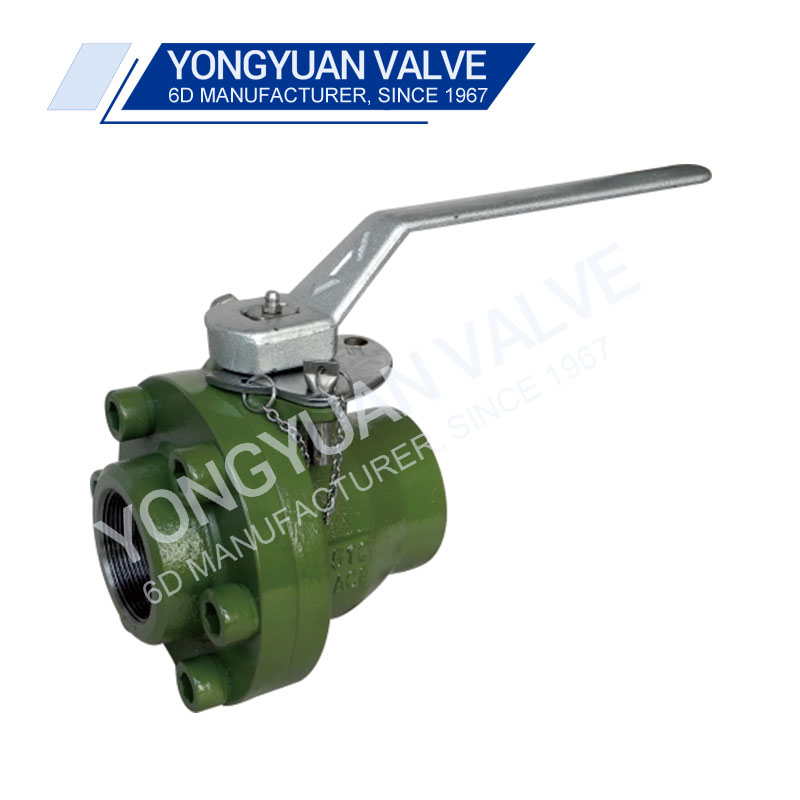
Table of Contents
- Outline
- What is a Threaded Ball Valve?
- How Does It Work?
- Key Components Explained
- Advantages in Industrial Systems
- Typical Applications
- How to Select the Right Model
- Installation and Maintenance
- Common Problems and Solutions
- Comparison Table
- FAQ
Outline
This article covers the structure, working principle, performance advantages, application scenarios, selection guidelines, installation practices, troubleshooting methods, and comparative analysis of threaded ball valves. It concludes with frequently asked questions to address practical concerns from industrial users.
What is a Threaded Ball Valve?
A threaded ball valve is a type of quarter-turn valve that uses internal or external threaded connections to join pipeline systems. The core controlling element is a spherical ball with a central bore. When the handle rotates 90 degrees, the bore aligns or misaligns with the pipeline, allowing or blocking fluid flow.
Compared with welded or flanged alternatives, threaded ball valves are typically used in small to medium diameter pipelines. Their compact structure makes them particularly suitable for systems where space is limited or frequent disassembly is required.
How Does It Work?
The working mechanism of a threaded ball valve is based on rotational motion. When the handle is turned, the stem rotates the ball inside the valve body.
- Open Position: The hole in the ball aligns with the pipeline, allowing fluid to pass through with minimal resistance.
- Closed Position: The ball rotates 90 degrees, and the solid surface blocks the flow completely.
- Partial Adjustment: Although not primarily designed for throttling, slight adjustments can regulate flow in low-demand systems.
This simple quarter-turn operation reduces wear, improves sealing reliability, and ensures fast response in industrial operations such as water treatment, chemical processing, and gas distribution.
Key Components Explained
Understanding the internal structure helps users evaluate performance and durability. A standard threaded ball valve includes the following parts:
- Valve Body: The outer shell that houses all components and connects to the pipeline via threaded ends.
- Ball: A precision-machined sphere with a central bore that controls flow.
- Stem: Connects the handle to the ball, transmitting rotational force.
- Seats: Usually made of PTFE or other sealing materials to ensure tight closure.
- Handle: Provides manual control for opening and closing operations.
Manufacturers such as Yongyuan focus on precision machining and sealing optimization to ensure long service life under demanding conditions.
Advantages in Industrial Systems
Threaded ball valves offer several advantages that make them highly preferred in fluid control systems:
- Quick operation with only a 90-degree rotation
- Compact design suitable for limited installation spaces
- Excellent sealing performance with minimal leakage risk
- Easy installation and removal without welding equipment
- Low maintenance requirements
These features make them particularly suitable for systems requiring frequent maintenance or modular pipeline design.
Typical Applications
Threaded ball valves are used across multiple industries due to their adaptability:
- Water supply and drainage systems
- Oil and gas pipelines
- Chemical processing plants
- HVAC systems
- Food and beverage processing equipment
In many of these environments, reliability and sealing integrity are critical, especially when handling corrosive or high-pressure fluids.
How to Select the Right Model
Choosing the correct threaded ball valve requires evaluating operational conditions carefully. The following table summarizes key selection factors:
| Factor | Description | Recommendation |
|---|---|---|
| Material | Stainless steel, brass, or PVC | Stainless steel for corrosive environments |
| Pressure Rating | Maximum operating pressure | Select 20–30% above system pressure |
| Temperature Range | Fluid and environment temperature | PTFE seats for high-temperature resistance |
| Thread Type | BSP, NPT, or metric | Match pipeline standard |
Suppliers like Yongyuan provide customized threaded ball valve solutions to match different industrial standards and operating conditions.
Installation and Maintenance
Proper installation ensures long-term stability and performance. Follow these guidelines:
- Clean pipeline threads before installation
- Apply appropriate sealing tape or compound
- Avoid over-tightening to prevent thread damage
- Ensure correct flow direction alignment
Maintenance is generally minimal, but periodic inspection is recommended:
- Check for leakage at threaded joints
- Inspect handle operation smoothness
- Replace worn seals when necessary
Common Problems and Solutions
Even high-quality valves may encounter operational issues over time. Below are common problems and solutions:
- Leakage at threads: Reapply sealing tape or replace damaged threads
- Stiff operation: Lubricate stem or check for internal corrosion
- Seal wear: Replace PTFE seats
- Pressure drop: Check for internal blockage or misalignment
Working with experienced manufacturers like Yongyuan helps reduce such issues through better material selection and precision manufacturing.
Comparison Table
| Type | Connection | Size Range | Maintenance | Application |
|---|---|---|---|---|
| Threaded Ball Valve | Threaded | Small–Medium | Easy | General industrial use |
| Flanged Ball Valve | Flanged | Medium–Large | Moderate | High-pressure systems |
| Welded Ball Valve | Welded | Medium–Large | Difficult | Permanent installations |
FAQ
Q1: Can threaded ball valves be used for high-pressure systems?
Yes, but only within their rated pressure limits. For extremely high-pressure applications, flanged or welded valves are recommended.
Q2: Are threaded ball valves suitable for gas systems?
Yes, provided that proper sealing materials and thread standards are used to prevent leakage.
Q3: How long is the service life?
With proper maintenance, a high-quality valve can last several years depending on operating conditions.
Q4: Can I repair a leaking threaded ball valve?
Yes, most leakage issues can be resolved by replacing seals or re-sealing threads.
Q5: What makes threaded ball valves popular?
Their simplicity, cost-effectiveness, and easy installation make them widely used across industries.
Threaded ball valves remain an essential component in modern industrial pipeline systems due to their efficiency, durability, and ease of use. Selecting the right configuration and maintaining it properly ensures long-term operational stability and safety.
Yongyuan continues to focus on delivering high-performance threaded ball valve solutions tailored to global industrial needs, ensuring reliable flow control across diverse applications.
If you are looking for durable, precision-engineered threaded ball valves or customized solutions for your project, contact us today and let our engineering team at Yongyuan support your system optimization needs.