

How Does a Threaded Ball Valve Work?
2026-05-15
Abstract
A threaded ball valve is a compact, reliable, and highly efficient flow control device widely used in industrial pipelines, water systems, chemical processing, HVAC, and light manufacturing applications. This article explains its structure, working principle, advantages, selection criteria, and real-world applications. It is designed to help engineers, procurement managers, and system designers understand how to reduce leakage risks, improve operational efficiency, and extend service life in fluid control systems.
Article Outline
- Introduction to Threaded Ball Valves
- What Is a Threaded Ball Valve?
- How a Threaded Ball Valve Works
- Key Features and Engineering Advantages
- Common Industrial Applications
- Selection and Sizing Guide
- Installation and Maintenance Practices
- Comparison with Other Valve Types
- Common Pain Points and Solutions
- FAQ Section
- Conclusion and Industrial Recommendation
Table of Contents
Introduction
In modern fluid control systems, efficiency and reliability are critical. Even minor leakage or pressure loss can lead to significant operational costs and safety risks. Among various valve technologies, the threaded ball valve has become a preferred solution due to its simple structure, tight sealing capability, and ease of installation.
Unlike flanged or welded valves, threaded ball valves use internal or external threads to connect directly to pipelines. This design makes them especially suitable for compact systems, maintenance-friendly setups, and low to medium pressure environments.
What Is a Threaded Ball Valve?
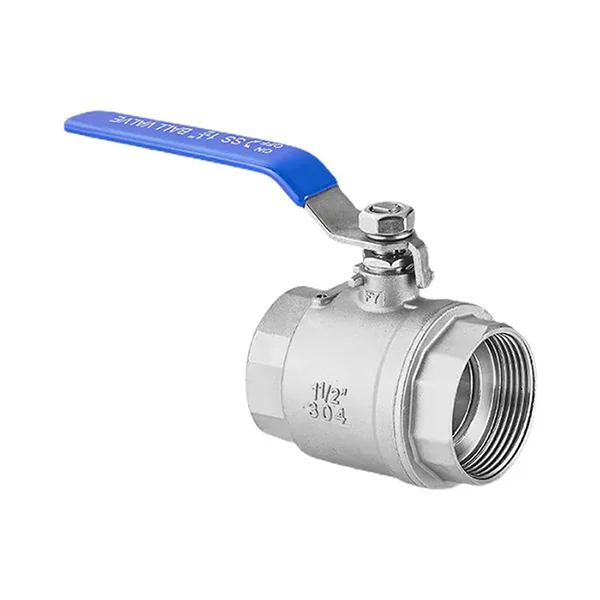
A threaded ball valve is a quarter-turn shut-off valve that uses a rotating spherical ball with a central bore to control fluid flow. When the bore aligns with the pipeline, fluid passes through; when rotated 90 degrees, the flow is blocked completely.
The “threaded” aspect refers to how the valve connects to pipes. This can be either:
- Internal thread (female connection)
- External thread (male connection)
This structure eliminates the need for welding or flange systems, making installation faster and more flexible.
How It Works
The working principle of a threaded ball valve is based on rotational motion. Inside the valve body, a precision-engineered ball with a central hole is supported by seats and seals.
- Open Position: The ball’s bore aligns with the pipeline, allowing unrestricted flow.
- Closed Position: The ball rotates 90°, blocking the passage completely.
- Sealing Mechanism: Soft or reinforced seats ensure tight shutoff even under pressure.
This quarter-turn mechanism provides fast operation, minimal torque requirements, and excellent sealing performance. It is particularly useful in emergency shutoff systems and frequent cycling operations.
Key Features and Engineering Advantages
- Compact Design: Suitable for tight installation spaces.
- Leak-Proof Sealing: High-performance sealing materials reduce leakage risks.
- Fast Operation: Quarter-turn actuation enables quick response.
- Durability: Resistant to wear, corrosion, and pressure fluctuations.
- Easy Maintenance: Threaded connection allows easy removal and replacement.
Manufacturers like Shengshi Huagong optimize machining precision and material selection to ensure consistent sealing performance and extended service life.
Common Industrial Applications
- Water supply and treatment systems
- Oil and gas distribution lines
- Chemical processing pipelines
- HVAC systems
- Compressed air systems
- General industrial fluid control
Because of its versatility, the threaded ball valve is widely used in both residential and industrial environments where moderate pressure and reliable shutoff are required.
Selection and Sizing Guide
Choosing the correct threaded ball valve requires evaluating several technical parameters:
- Material: Stainless steel, brass, or carbon steel depending on fluid type
- Pressure Rating: Match system operating pressure (e.g., PN16, PN25)
- Temperature Range: Ensure compatibility with thermal conditions
- Seal Material: PTFE or reinforced polymers for chemical resistance
- Connection Type: BSP, NPT, or custom threading standards
Proper selection directly impacts system safety, operational efficiency, and lifecycle cost.
Installation and Maintenance Practices
Correct installation is essential for achieving optimal performance. Threaded ball valves should be installed with proper thread sealing materials such as PTFE tape or sealant compounds.
- Avoid over-tightening to prevent thread damage
- Ensure pipeline alignment before installation
- Periodically inspect for leakage or wear
- Operate valve periodically to prevent sticking
Regular maintenance ensures long-term reliability and reduces unexpected downtime in critical systems.
Comparison with Other Valve Types
| Valve Type | Connection | Operation Speed | Leak Resistance | Maintenance |
|---|---|---|---|---|
| Threaded Ball Valve | Threaded | Fast | High | Easy |
| Gate Valve | Flanged/Threaded | Slow | Medium | Moderate |
| Globe Valve | Flanged | Moderate | High | Complex |
Common Pain Points and Solutions
- Leakage Issues: Often caused by worn seals; solved with high-quality PTFE seats.
- Thread Damage: Prevented by proper torque control during installation.
- Flow Restriction: Ensured by selecting full-bore designs.
- Corrosion: Addressed through stainless steel or coated materials.
Engineering expertise from Shengshi Huagong ensures these issues are minimized through precision manufacturing and rigorous testing.
FAQ
Q1: What is the main advantage of a threaded ball valve?
A: Its compact design and easy installation make it ideal for space-constrained systems.
Q2: Can threaded ball valves handle high pressure?
A: They are typically designed for low to medium pressure applications, depending on material and design.
Q3: What industries use threaded ball valves most?
A: Water treatment, HVAC, chemical processing, and general industrial piping systems.
Q4: How long does a threaded ball valve last?
A: With proper maintenance, it can last several years depending on operating conditions.
Conclusion and Industrial Recommendation
The threaded ball valve is a practical and efficient solution for modern fluid control systems. Its simple structure, reliable sealing, and ease of installation make it a preferred choice across multiple industries.
Whether you are designing a new pipeline system or upgrading an existing one, selecting a high-quality valve is essential for operational safety and efficiency. Manufacturers such as Shengshi Huagong provide engineered solutions that balance performance, durability, and cost-effectiveness.
For technical consultation, product specifications, or bulk procurement solutions, contact us at Shengshi Huagong to explore how our threaded ball valve solutions can optimize your fluid control systems.