

How Does a Sanitary Rotary Valve Improve Hygienic Material Handling?
2026-09-14
In modern food, pharmaceutical, chemical, and other hygienic processing industries, controlling powder and granular materials requires more than simple material transfer. Equipment must provide stable feeding, reliable sealing, easy cleaning, and reduced contamination risks while fitting the production line accurately. A Sanitary Rotary Valve is designed to address these requirements by controlling the discharge of dry bulk materials while helping maintain hygienic process conditions. For manufacturers looking for flexible equipment solutions, AVM Extraordinary Intelligent Control Equipment Co., Ltd. combines sanitary rotary valve technology with customized engineering to meet different process layouts, material characteristics, and vessel configurations.
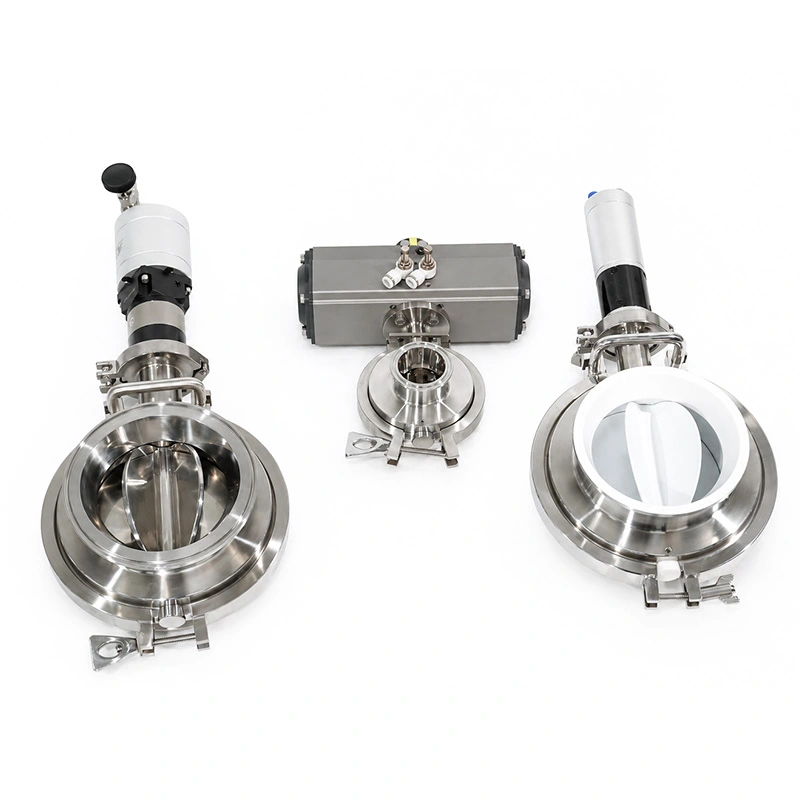
What Is a Sanitary Rotary Valve?
A Sanitary Rotary Valve is a rotary feeding and airlock device designed for hygienic handling of powders, granules, pellets, and other dry bulk materials. Its rotating rotor creates controlled material pockets that receive product from the inlet and discharge it at a regulated rate.
Unlike a conventional industrial rotary valve, a sanitary-oriented design places greater emphasis on product-contact surfaces, cleaning accessibility, sealing, and minimizing areas where material can accumulate. These characteristics make sanitary rotary valves particularly valuable in applications where cleanliness and consistent material handling are essential.
Core Functions
A properly selected sanitary rotary valve can perform several important tasks:
-
Controlled feeding of powders and granules
-
Metering and regulated material discharge
-
Pressure isolation between connected process zones
-
Material transfer in pneumatic conveying systems
-
Reduction of product accumulation and contamination risks
-
Connection between hoppers, mixers, dryers, filling systems, and other equipment
This combination makes the valve an important component rather than simply an on/off flow-control device.
Why Is Hygienic Design So Important?
For food, pharmaceutical, dairy, biotechnology, and fine chemical production, residual material can affect product quality and increase cleaning requirements. A sanitary design therefore needs to make cleaning and inspection as practical as possible.
Smooth internal surfaces, minimized dead zones, suitable sealing systems, and removable rotor structures are commonly used to improve hygienic performance. Some sanitary rotary valve designs also provide quick-clean or clean-in-place configurations to reduce maintenance and production downtime.
The main benefits include:
| Requirement | Sanitary Rotary Valve Advantage |
|---|---|
| Hygienic production | Smooth product-contact surfaces help reduce material retention |
| Stable feeding | Rotary pockets provide controlled and repeatable discharge |
| Easy maintenance | Removable or accessible rotor designs simplify inspection |
| Contamination control | Proper sealing helps isolate process areas |
| Continuous operation | Reliable rotary feeding supports automated production |
| Flexible installation | Customized dimensions and connections can match equipment layouts |
How Does It Improve Production Efficiency?
A Sanitary Rotary Valve can improve production efficiency by creating a more controlled transition between storage and processing equipment.
For example, when powder moves from a hopper into a mixer or pneumatic conveying line, uncontrolled discharge may cause inconsistent feeding or pressure fluctuations. A rotary valve meters material through its rotor chambers, helping establish a more predictable flow.
For hygienic production lines, cleaning efficiency is equally important. A valve that can be accessed, inspected, and cleaned quickly can help reduce maintenance interruptions. Easy-clean rotary valve designs are specifically developed to allow faster rotor access and sanitation.
Where Can a Sanitary Rotary Valve Be Used?
The equipment is suitable for a wide range of industries handling dry bulk materials.
Typical applications include:
-
Food Processing – flour, starch, milk powder, sugar, spices, cocoa powder, and other ingredients.
-
Pharmaceutical Manufacturing – pharmaceutical powders and controlled material feeding.
-
Dairy Production – hygienic powder handling and ingredient dosing.
-
Fine Chemicals – controlled transfer of sensitive powders and granules.
-
Cosmetics – hygienic handling of powdered ingredients.
-
Pneumatic Conveying – feeding materials while maintaining pressure separation.
-
Mixing and Drying Systems – controlled discharge between process stages.
These applications benefit from the combination of controlled feeding, hygienic construction, and maintenance accessibility.
Why Choose Customized Sanitary Rotary Valve Solutions?
Every processing line has different requirements. Material properties, feeding capacity, inlet and outlet dimensions, installation space, drive configuration, sealing requirements, and cleaning procedures can all influence valve selection.
This is where AVM Extraordinary Intelligent Control Equipment Co., Ltd. provides an important advantage. Instead of relying only on a standard configuration, AVM can develop a customized Sanitary Rotary Valve according to the customer's actual process conditions.
Support for Vessel-Type Customization
One of the notable advantages is support for vessel-type customization.
Different vessels, hoppers, tanks, silos, mixers, and processing units may have different connection structures and installation requirements. A customized rotary valve can be configured according to the vessel shape, connection position, discharge direction, available installation space, and material-flow requirements.
This helps customers achieve a better equipment fit without making unnecessary changes to the entire production line.
Customization may include:
-
Vessel and hopper connection dimensions
-
Inlet and outlet configuration
-
Valve body dimensions
-
Rotor specifications
-
Drive and motor arrangement
-
Sealing configuration
-
Material-contact components
-
Surface finishing requirements
-
Installation direction
-
Special equipment integration
For projects involving non-standard vessels or complex processing equipment, this flexibility can significantly improve installation compatibility and overall system integration.
What Makes AVM a Practical Choice?
AVM Extraordinary Intelligent Control Equipment Co., Ltd. focuses on intelligent control and material-handling equipment for industrial applications. Its Sanitary Rotary Valve solutions are designed around practical production requirements rather than a one-size-fits-all approach.
The company can consider the customer's material characteristics, process requirements, equipment layout, and installation conditions when configuring the valve. This approach is particularly useful for OEM projects, customized production lines, and specialized sanitary processing systems.
Key Advantages of AVM Solutions
-
Sanitary-focused design for hygienic material handling
-
Stable feeding for powders and granular materials
-
Customized configuration for different production systems
-
Vessel-type customization for specialized equipment integration
-
Flexible connection options according to installation requirements
-
Professional engineering support for application-specific solutions
-
Suitable for OEM and customized equipment projects
How Should Buyers Select the Right Valve?
Before purchasing a Sanitary Rotary Valve, buyers should evaluate more than valve size and price. The actual material and process conditions determine whether a particular configuration will deliver reliable performance.
Consider these factors:
-
Material type and particle characteristics
-
Required feeding capacity
-
Bulk density and flowability
-
Operating temperature
-
Pressure difference
-
Cleaning and sanitation method
-
Required connection dimensions
-
Available installation space
-
Sealing requirements
-
Drive and control requirements
-
Vessel or hopper configuration
A professional manufacturer can use this information to recommend a suitable configuration instead of forcing the process into a standard model.
The Long-Term Value of Sanitary Rotary Valve Technology
The importance of a Sanitary Rotary Valve goes beyond material discharge. In a modern processing line, it can influence feeding consistency, cleaning efficiency, contamination control, equipment integration, and overall production reliability.
For companies operating in demanding hygienic environments, choosing a properly engineered valve can help create a cleaner, more stable, and more efficient material-handling system.
With its focus on customized engineering and vessel-type customization, AVM Extraordinary Intelligent Control Equipment Co., Ltd. provides solutions for customers who need more than a standard rotary valve. Whether the application involves food powders, pharmaceutical materials, fine chemicals, or other dry bulk products, the right configuration can be developed around the actual production requirements.
Looking for a customized Sanitary Rotary Valve for your production line or vessel? Contact us to discuss your material, capacity, connection dimensions, installation requirements, and customization needs. AVM Extraordinary Intelligent Control Equipment Co., Ltd. is ready to provide a professional and application-oriented solution for your project.