

How Does a Sanitary Liquid Sampling Valve Improve Process Safety and Product Quality?
2026-10-23
In industries such as pharmaceuticals, food and beverage, biotechnology, cosmetics, and chemical processing, maintaining product quality requires accurate sampling and strict hygiene control. A Sanitary Liquid Sampling Valve provides a reliable way to collect liquid samples from pipelines, tanks, and process equipment without unnecessarily exposing the product to external contamination. By supporting controlled sample collection and hygienic operation, this component helps manufacturers monitor production conditions, verify quality standards, and maintain consistent product performance. For businesses seeking dependable fluid control solutions, selecting the right sampling valve is an important step toward improving process efficiency and product safety.
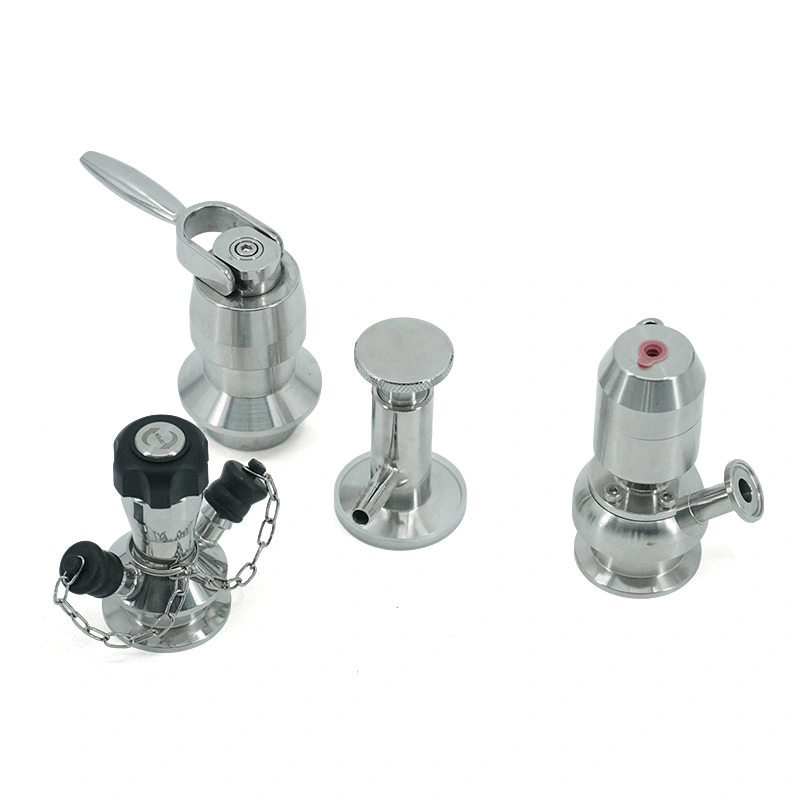
What Is a Sanitary Liquid Sampling Valve?
A Sanitary Liquid Sampling Valve is a specialized valve designed to collect representative liquid samples from hygienic production systems. Unlike conventional industrial valves, sanitary sampling valves are developed with particular attention to cleanliness, product contact surfaces, and ease of maintenance.
They are commonly used in production environments where contamination risks must be minimized and sampling accuracy is essential. Depending on the application, different valve structures and operating methods can accommodate specific fluid properties, pressure conditions, and cleaning requirements.
Typical applications include:
-
Pharmaceutical manufacturing: Collecting samples for quality inspection and process verification.
-
Food and beverage production: Monitoring ingredients, intermediate products, and finished liquids.
-
Biotechnology: Supporting controlled sampling in hygienic processing systems.
-
Cosmetics manufacturing: Checking the consistency and quality of liquid formulations.
-
Chemical processing: Collecting compatible process liquids for analysis and quality control.
Choosing a valve that matches the production environment helps ensure safe operation and dependable sampling performance.
Why Is a Sanitary Liquid Sampling Valve Important?
1. Reducing Contamination Risks
In hygienic production, even a small amount of unwanted material can affect product quality. A properly selected Sanitary Liquid Sampling Valve helps reduce exposure to external contaminants during sample collection.
Its hygienic design, compatible sealing materials, and appropriate connection structure can support contamination control. However, the actual level of protection depends on the valve design, installation, operating procedures, and cleaning practices.
2. Improving Sampling Accuracy
Reliable quality analysis begins with a representative sample. A suitable sampling valve allows operators to collect liquids from designated process points in a controlled manner.
This supports routine inspections, laboratory testing, and production monitoring. Consistent sampling procedures also make it easier to compare results across different production batches and identify potential variations before they affect finished products.
3. Supporting Hygienic Cleaning
Production equipment may require regular cleaning or sterilization to prevent residue accumulation and cross-contamination. Depending on its design, a sanitary sampling valve may be compatible with clean-in-place (CIP) or steam-in-place (SIP) procedures.
Manufacturers should verify the valve's actual cleaning and sterilization capabilities, temperature limits, and material compatibility before selecting it for a specific process.
4. Enhancing Operational Efficiency
A well-designed sampling valve enables operators to collect samples without unnecessary disruption to the production line. Straightforward operation and convenient maintenance can reduce handling time and simplify routine quality checks.
Over time, these benefits may help manufacturers improve workflow consistency, reduce avoidable downtime, and maintain better control over production processes.
Which Features Should Buyers Evaluate?
Selecting a Sanitary Liquid Sampling Valve requires more than comparing prices or external dimensions. Buyers should consider the complete operating environment and the requirements of the production system.
| Evaluation Factor | Why It Matters |
|---|---|
| Material selection | Ensures compatibility with the liquid and cleaning agents |
| Sealing performance | Helps prevent leakage and unwanted contamination |
| Hygienic structure | Supports cleaning and reduces residue accumulation |
| Connection type | Ensures compatibility with existing pipelines or tanks |
| Operating method | Determines convenience for manual or automated sampling |
| Pressure and temperature ratings | Supports safe operation under actual process conditions |
| Cleaning compatibility | Helps meet the facility's CIP or SIP requirements |
For demanding applications, buyers should also review relevant material certificates, surface finish specifications, applicable industry standards, and documented performance requirements.
How Does a Sanitary Liquid Sampling Valve Work?
The basic sampling process involves several coordinated steps. First, the operator identifies the designated sampling point and verifies that the valve and surrounding equipment are ready for use. The valve is then operated according to the manufacturer's instructions, allowing a controlled quantity of liquid to enter a suitable sampling container.
After the required sample has been collected, the valve is closed securely. The sampling point is then cleaned or sanitized according to the established operating procedure.
A typical sampling workflow includes:
-
Preparation: Confirm the liquid, sampling location, and required safety precautions.
-
Sample collection: Operate the valve and collect the required volume using suitable equipment.
-
Closure: Close the valve and check for leakage.
-
Cleaning: Follow the specified cleaning or sterilization procedure.
-
Documentation: Label the sample and record relevant batch or process information.
Following a standardized procedure helps improve repeatability and reduces the risk of sampling errors.
What Are the Benefits of Choosing the Right Sampling Valve?
The right valve can contribute to better process control throughout the production cycle.
-
More reliable quality monitoring: Supports routine inspection and process verification.
-
Improved hygiene management: Helps reduce contamination risks when combined with appropriate cleaning procedures.
-
Greater operational consistency: Enables standardized sample collection across production batches.
-
Simplified maintenance: Suitable designs can make inspection, cleaning, and component replacement more convenient.
-
Better equipment compatibility: Correct material and connection selection helps integrate the valve into existing systems.
These advantages are particularly valuable for manufacturers that require stable product quality, documented production procedures, and efficient quality assurance.
How Can AVM Extraordinary Intelligent Control Equipment Co., Ltd. Support Your Needs?
AVM Extraordinary Intelligent Control Equipment Co., Ltd. serves as a potential supplier to consider when evaluating industrial control and sampling equipment solutions. For buyers sourcing a Sanitary Liquid Sampling Valve, the key is to identify a product that matches the actual requirements of their production process rather than relying on a general-purpose specification.
When discussing your application with a supplier, prepare details such as the liquid being sampled, operating temperature and pressure, connection dimensions, required materials, cleaning method, and sampling frequency. These details help determine which valve configuration is appropriate.
Before placing an order, confirm the available product specifications, sealing materials, connection options, applicable certifications, delivery arrangements, and after-sales support. Buyers should also request technical documentation to verify that the proposed valve meets their facility's hygiene and operating requirements.
A careful selection process can help reduce compatibility issues and support more dependable long-term operation.
Conclusion
A Sanitary Liquid Sampling Valve plays an important role in hygienic liquid processing by enabling controlled sample collection, supporting contamination management, and improving routine quality monitoring. Its performance depends on suitable materials, effective sealing, hygienic design, and compatibility with the production environment.
For pharmaceutical, food, beverage, biotechnology, and other liquid-processing applications, choosing the right valve can help improve sampling consistency and operational efficiency. Working with a supplier that understands your technical requirements is an important step toward achieving a reliable solution.
Looking for a suitable Sanitary Liquid Sampling Valve for your production system? Contact AVM Extraordinary Intelligent Control Equipment Co., Ltd. to discuss your application requirements, explore available product options, and find a solution tailored to your process needs.