

How Does a Sanitary Butterfly Valve for Powder Discharge Improve Hygienic Processing?
2026-10-14
In industries where powder handling and product cleanliness are essential, selecting the right discharge valve can directly influence production efficiency, material utilization, and cleaning performance. A Sanitary Butterfly Valve For Powder Discharge is designed to control the discharge of powders and granules from processing equipment while supporting hygienic operation. It is particularly valuable in pharmaceutical manufacturing, food processing, fine chemicals, and advanced material production, where material residue and cross-contamination must be carefully managed.
For manufacturers seeking reliable powder handling equipment, AVM Extraordinary Intelligent Control Equipment Co., Ltd. provides sanitary valve solutions designed around practical process requirements. By considering discharge performance, sealing reliability, and cleaning accessibility, businesses can select a suitable valve to improve the overall efficiency of their powder processing systems.
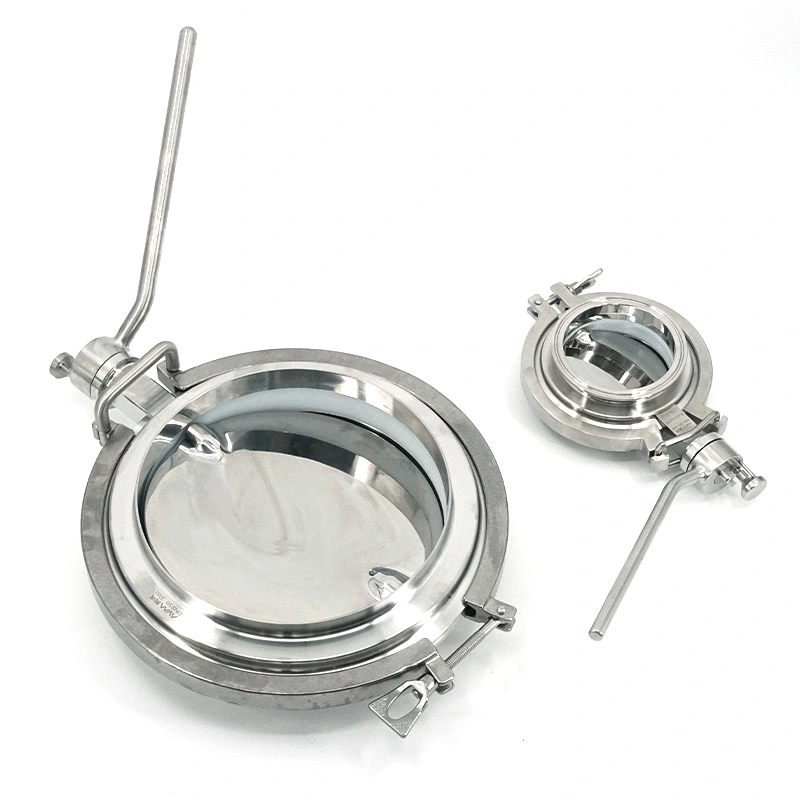
What Is a Sanitary Butterfly Valve for Powder Discharge?
A Sanitary Butterfly Valve For Powder Discharge is a specialized valve installed at the outlet of equipment such as hoppers, storage vessels, mixers, and dryers. Its primary function is to open or close the material passage, allowing powder to discharge when required and helping isolate the process when discharge is complete.
Unlike conventional valves primarily designed for liquids, powder discharge valves must account for particle accumulation, material flow characteristics, and the risk of product retention. Hygienic construction and an appropriately designed internal passage help address these challenges.
The valve typically consists of a valve body, a rotating disc or other specified closure mechanism, sealing components, and a manual or automated operating mechanism. The exact structure depends on the intended application and product configuration.
How Does It Work?
During operation, the valve opens to create a passage for powder or granules to move into downstream equipment. When the required discharge is complete, the closure mechanism returns to the closed position to isolate the process.
A properly selected valve can support:
-
Controlled opening and closing during material discharge.
-
More consistent powder transfer between connected processing units.
-
Reduced material accumulation when the internal geometry is suitable.
-
Easier access for inspection and cleaning.
-
Reliable process isolation when the valve is correctly specified for the operating conditions.
It is important to note that a standard butterfly valve is primarily an on-off device. Accurate metering, high-containment transfer, or demanding vacuum service may require a specialized valve configuration.
Why Is This Valve Important for Powder Processing?
Powder processing presents challenges that are not always encountered in liquid handling. Fine particles may adhere to internal surfaces, moisture-sensitive materials may agglomerate, and some powders may generate dust during transfer. These issues can affect production consistency, workplace cleanliness, and product quality.
A suitable Sanitary Butterfly Valve For Powder Discharge helps address several operational concerns.
1. Improved Discharge Efficiency
Powder retention around an outlet can lead to material waste and additional cleaning work. A valve with an appropriate flow passage and hygienic internal geometry can help reduce unnecessary accumulation and support smoother discharge.
This is especially important for valuable pharmaceutical ingredients, food additives, and specialty chemical powders, where material loss can increase operating costs.
2. Better Hygiene and Cleaning Accessibility
In food and pharmaceutical facilities, equipment must be cleaned according to the product and process requirements. Smooth product-contact surfaces, suitable sealing materials, and accessible connections can make cleaning and inspection more convenient.
Some designs support quick disassembly, while specific configurations may accommodate clean-in-place (CIP) or sterilization procedures. Compatibility should always be confirmed for the selected model rather than assumed for every valve.
3. Reduced Cross-Contamination Risks
When a production line handles different formulations or batches, powder residue can become a source of cross-contamination. A hygienic valve design can help minimize retention areas and simplify cleaning between production runs.
For highly potent or hazardous pharmaceutical powders, however, a conventional sanitary butterfly valve may not provide sufficient containment. A dedicated split butterfly valve or another engineered containment solution may be more appropriate.
4. More Reliable Production Operations
Frequent opening, closing, and cleaning can place demands on valve components. Selecting suitable sealing materials, operating mechanisms, and connection types helps support dependable performance and manageable maintenance requirements.
Where Is a Sanitary Butterfly Valve for Powder Discharge Used?
The valve can be integrated into different production systems, provided its materials, sealing performance, and operating limits match the application.
| Industry | Typical Applications | Main Considerations |
|---|---|---|
| Pharmaceutical | Powder discharge from mixers, dryers, and vessels | Cleanability, residue control, containment |
| Food processing | Ingredients, nutritional powders, and additives | Hygienic materials, easy cleaning |
| Fine chemicals | Dry chemical ingredients and intermediates | Chemical compatibility, sealing |
| Lithium battery materials | Powder transfer between process equipment | Abrasion, dust control, material compatibility |
| Nutraceuticals | Vitamins, supplements, and blended powders | Batch changeover, product protection |
Actual suitability depends on powder properties, process conditions, and the required level of hygiene or containment.
Which Features Should Buyers Evaluate?
Choosing the right valve involves more than comparing purchase prices. Buyers should assess how the equipment will perform within the complete powder handling system.
1. Material and Surface Finish
Stainless steel is commonly used in hygienic processing equipment. Depending on the product and environment, buyers may consider grades such as 304 or 316L. The appropriate choice depends on corrosion resistance, cleaning chemicals, product-contact requirements, and applicable industry standards.
A suitable surface finish can help limit material adhesion and facilitate cleaning. Request documented specifications for product-contact surfaces rather than relying solely on general descriptions such as "highly polished."
2. Sealing Performance
Sealing requirements vary with the powder, operating pressure, vacuum conditions, and risk of dust leakage. Buyers should confirm the compatibility of the seat and gasket materials with the product and cleaning process.
For applications involving hazardous powders or stringent containment requirements, request relevant test data and evaluate the complete transfer system.
3. Operating Method
Manual operation may be appropriate for straightforward discharge points. Pneumatic or other automated actuation can be more suitable for production lines that require frequent cycling or integration with a control system.
The choice should reflect operating frequency, available utilities, process automation, and maintenance capabilities.
4. Connection and Installation
The valve must fit the dimensions and connection standards of the existing equipment. Clamp connections can be useful when frequent removal and cleaning are required, while other connection types may suit different installation arrangements.
Before ordering, confirm the valve size, installation space, connection dimensions, and required operating direction.
5. Powder Characteristics
Particle size, bulk density, flowability, moisture sensitivity, and abrasiveness can all influence discharge performance. Cohesive powders may require a different configuration from free-flowing granules.
Providing these details to the supplier helps ensure that the selected valve matches the actual working conditions.
How Can AVM Support Your Powder Discharge Requirements?
AVM Extraordinary Intelligent Control Equipment Co., Ltd. focuses on sanitary valves and powder handling solutions for demanding industrial processes. Its product range includes sanitary butterfly valves, split butterfly valves, sampling valves, and other specialized valve configurations for hygienic material handling.
For buyers evaluating a Sanitary Butterfly Valve For Powder Discharge, AVM can help assess key selection factors, including:
-
Application requirements: Identify the equipment outlet, material type, and discharge process.
-
Hygienic design: Evaluate product-contact materials, surface finish, and cleaning accessibility.
-
Operating configuration: Consider manual or automated actuation according to production needs.
-
System integration: Match valve connections and dimensions to the existing equipment.
-
Specialized requirements: Determine whether a standard discharge valve or a dedicated containment solution is more suitable.
This application-focused approach helps procurement teams compare specifications and identify a practical solution for their production lines.
Conclusion
A well-selected Sanitary Butterfly Valve For Powder Discharge plays an important role in hygienic powder handling by supporting efficient material discharge, cleaning accessibility, and dependable process isolation. The right configuration can help manufacturers reduce material retention, simplify maintenance, and improve production consistency.
However, performance depends on matching the valve design to the powder characteristics, hygiene requirements, operating conditions, and installation environment. Careful specification review is therefore essential before purchase.
Looking for a suitable sanitary valve for your powder processing line? Contact us at AVM Extraordinary Intelligent Control Equipment Co., Ltd. Share your application details, powder characteristics, connection dimensions, and operating requirements with our team to discuss a suitable valve solution for your production needs.