

How Does a PTFE Lined Y Pattern Globe Valve Improve Flow Control in Aggressive Chemical Applications
2026-06-15
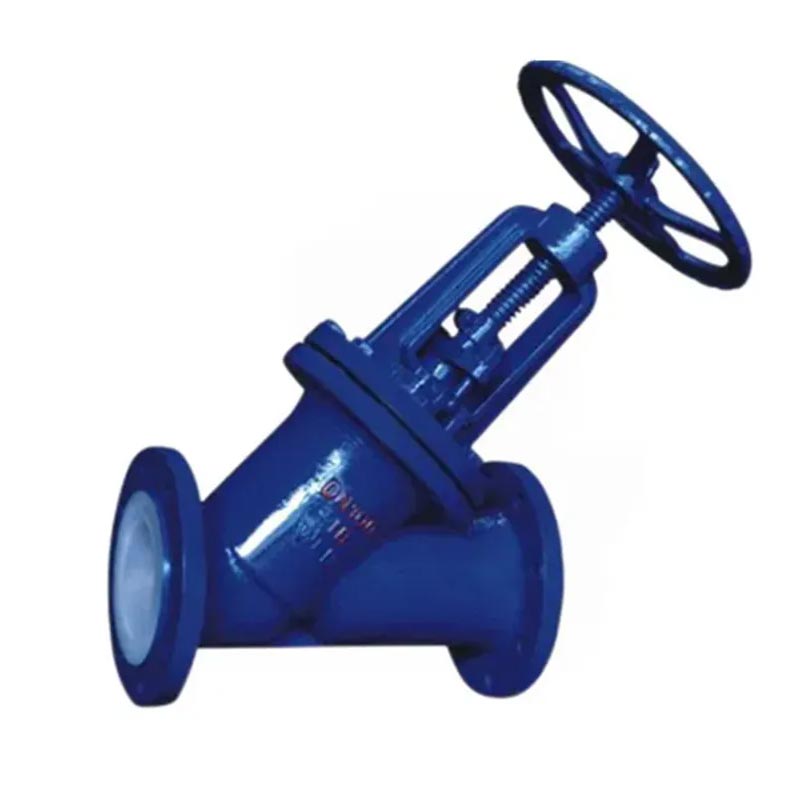
In harsh chemical processing environments, standard valves often fail due to corrosion, leakage, or poor throttling accuracy. The PTFE Lined Y Pattern Globe Valve from JOEPAI solves these challenges by combining a corrosion-resistant liner with an optimized flow path. This design ensures stable modulation, zero metal-to-fluid contact, and extended service life.
The Core Mechanism of Improved Flow Control
The Y-pattern body reduces flow resistance compared to traditional globe valves. When combined with a full PTFE liner, the PTFE Lined Y Pattern Globe Valve eliminates fluid contact with metal parts. This delivers three major control benefits:
| Feature | Benefit in Aggressive Applications |
|---|---|
| Y-pattern angled stem | Lower pressure drop, better linear flow control |
| Virgin PTFE liner | Inert to acids, chlorides, and solvents |
| Guided disc design | Precise throttling without vibration |
Key Advantages Over Other Valve Types
The table below compares the PTFE Lined Y Pattern Globe Valve from JOEPAI against standard options for aggressive media (e.g., HCl, H₂SO₄, nitric acid).
| Valve Type | Corrosion Resistance | Flow Control Precision | Leakage Risk |
|---|---|---|---|
| Unlined Globe Valve | Poor | Medium | High |
| Lined Ball Valve | Good | Poor (on/off only) | Low |
| JOEPAI PTFE Lined Y Pattern Globe Valve | Excellent | High (true modulating) | Very Low |
JOEPAI Engineering for Severe Service
JOEPAI manufactures each PTFE Lined Y Pattern Globe Valve with a vacuum-tested PTFE liner and a back-seating stem. The Y-pattern design reduces turbulence, allowing smoother plug movement. This directly improves flow control by providing a nearly linear installed characteristic, even under fluctuating inlet pressures.
PTFE Lined Y Pattern Globe Valve FAQ
Q1: Can the PTFE Lined Y Pattern Globe Valve handle slurry or crystallizing media?
A: Yes, but with precautions. The PTFE liner is non-stick and resists buildup, making it suitable for slightly slurry or crystallizing fluids. However, large hard particles may scratch the liner surface over time. For heavy slurry applications, JOEPAI recommends installing an upstream strainer or selecting a lined plug valve. The Y-pattern design helps minimize dead zones where crystals could accumulate.
Q2: What is the maximum operating temperature for the PTFE Lined Y Pattern Globe Valve from JOEPAI?
A: The standard PTFE liner supports continuous operation from -20°C to +180°C (-4°F to +356°F). Short-term peaks up to 200°C are possible but reduce liner life. For temperatures above 180°C, JOEPAI offers modified PFA liners. Always verify chemical compatibility with your specific fluid at elevated temperatures, as some aggressive chemicals (e.g., fuming sulfuric acid) may attack PTFE above certain thresholds.
Q3: How does the Y-pattern design improve throttling compared to a straight-pattern globe valve?
A: The Y-pattern angled stem and seat create a straighter flow path, reducing the number of direction changes. This lowers the pressure drop by 30–40% compared to a straight globe valve at the same Cv. Lower pressure drop means the disc can be positioned more precisely across the entire stroke, avoiding the "on-off" feel common in standard globe valves. As a result, operators achieve finer control over flow rates, especially in low-flow or high-differential-pressure conditions.
Proven Performance in Real Applications
Chemical plants using the JOEPAI PTFE Lined Y Pattern Globe Valve report 50% less maintenance frequency and zero stem leakage after two years. The combination of PTFE inertness and Y-pattern flow dynamics makes it a top choice for hydrochloric acid, chlorine, and mixed acid lines.
Contact Us
For a customized quote or engineering support on the PTFE Lined Y Pattern Globe Valve, reach out to JOEPAI today. Contact our team via the website form to discuss your aggressive chemical flow control needs.