

Article Summary
Pressure reducing valves (PRVs) play a critical role in controlling water or fluid pressure in pipelines, ensuring safety, improving system efficiency, and protecting equipment. This article provides a comprehensive guide on how these valves work, their benefits, installation tips, and common challenges, helping engineers and facility managers make informed decisions when selecting and maintaining PRVs. GenTant offers high-quality pressure reducing valves designed for diverse industrial applications.
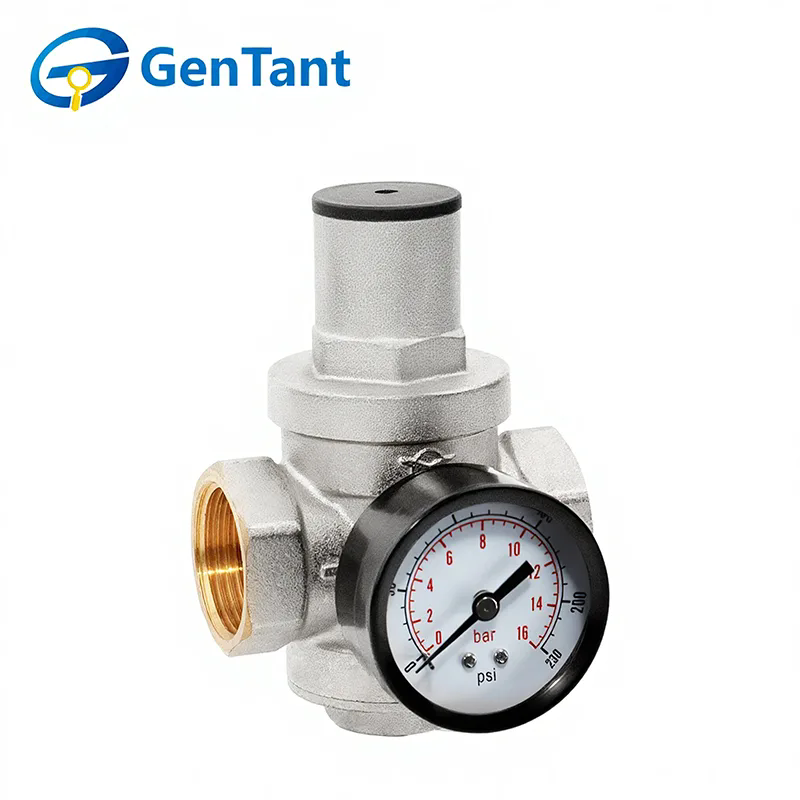
Table of Contents
What is a Pressure Reducing Valve?
A pressure reducing valve (PRV) is a mechanical device installed in fluid systems to lower the incoming high pressure to a safer, usable level. These valves are widely used in water distribution systems, heating and cooling networks, and industrial pipelines to prevent equipment damage and maintain operational stability.
Key Components of a PRV
- Inlet and Outlet Ports: Where the fluid enters and exits the valve.
- Diaphragm: Senses downstream pressure and adjusts valve opening.
- Spring Mechanism: Maintains a set pressure level by balancing against fluid force.
- Valve Seat and Plug: Controls the flow rate and reduces pressure.
How Does a Pressure Reducing Valve Work?
The operation of a PRV is based on a simple principle: regulating the downstream pressure while accommodating fluctuations in the upstream supply. When fluid enters the valve, the diaphragm detects the downstream pressure. If the pressure exceeds the set value, the spring mechanism forces the valve plug to close slightly, reducing flow and stabilizing pressure.
Step-by-Step Operation
- High-pressure fluid enters the valve.
- The diaphragm senses downstream pressure.
- If pressure exceeds the set point, the spring adjusts the valve plug.
- Flow is reduced, lowering downstream pressure.
- Stable pressure is maintained regardless of upstream fluctuations.
Technical Specifications to Consider
| Parameter | Description |
|---|---|
| Pressure Range | 5-150 psi (typical for domestic and industrial applications) |
| Flow Capacity | Varies by valve size; up to 500 GPM for large industrial valves |
| Material | Brass, stainless steel, or ductile iron |
| Temperature Rating | -10°C to 120°C (depends on materials and design) |
Why Should You Use a Pressure Reducing Valve?
Installing a PRV brings multiple benefits, especially in systems with fluctuating or excessively high pressure. The primary advantages include:
- Protect Equipment: Reduces wear and tear on pipes, pumps, and fittings.
- Energy Savings: Stabilizes pressure and prevents over-pressurization, reducing energy consumption.
- Safety: Minimizes risk of leaks, bursts, and accidents in high-pressure systems.
- Consistent Flow: Maintains uniform pressure for appliances and industrial processes.
Installation and Maintenance Tips
Proper installation and regular maintenance ensure long-term performance of PRVs.
- Install in an accessible location for inspection and adjustment.
- Always follow manufacturer’s recommended orientation.
- Use upstream and downstream strainers to prevent debris damage.
- Periodically check for leaks and pressure deviations.
- Replace worn diaphragms or springs as needed.
Common Issues and Troubleshooting
Even high-quality PRVs can face operational problems. Some common issues include:
- Fluctuating Downstream Pressure: Often caused by a worn diaphragm or incorrect spring tension.
- Noise or Water Hammer: Can result from high flow rates or sudden pressure changes.
- Valve Sticking: Accumulated debris or mineral deposits may restrict movement.
- Leakage: Usually due to damaged seals or improper installation.
Routine inspection, cleaning, and timely replacement of worn parts can prevent these issues.
FAQ
Q1: Can a pressure reducing valve handle hot water systems?
A1: Yes, as long as the valve is rated for the system’s temperature range. GenTant PRVs are designed for temperatures up to 120°C.
Q2: How often should I service a PRV?
A2: Regular inspections every 6-12 months are recommended. Replace internal components if performance drops.
Q3: Can one valve handle multiple outlets?
A3: It depends on the flow requirements. For large systems, multiple PRVs or larger capacity valves may be necessary.
Q4: Is a PRV necessary for residential water systems?
A4: Yes, especially in areas with high municipal water pressure. It protects plumbing and appliances.
Contact GenTant
GenTant offers premium pressure reducing valves engineered for durability, efficiency, and reliable performance. Whether for residential, commercial, or industrial applications, our valves help protect your systems and optimize performance. Explore our products today at GenTant Pressure Reducing Valves and contact us for personalized assistance, quotes, or technical support.