

How Does a Pole Mounted Transformer Work?
2026-05-26
Abstract
A pole mounted transformer is a critical component in modern electrical distribution systems, responsible for stepping down high-voltage electricity from overhead lines to usable low-voltage power for residential, commercial, and light industrial applications. This article provides a comprehensive explanation of how a pole mounted transformer works, its internal structure, applications, advantages, installation considerations, and maintenance requirements. It also addresses common customer concerns such as safety, efficiency, and reliability, helping utility planners, engineers, and procurement managers make informed decisions.
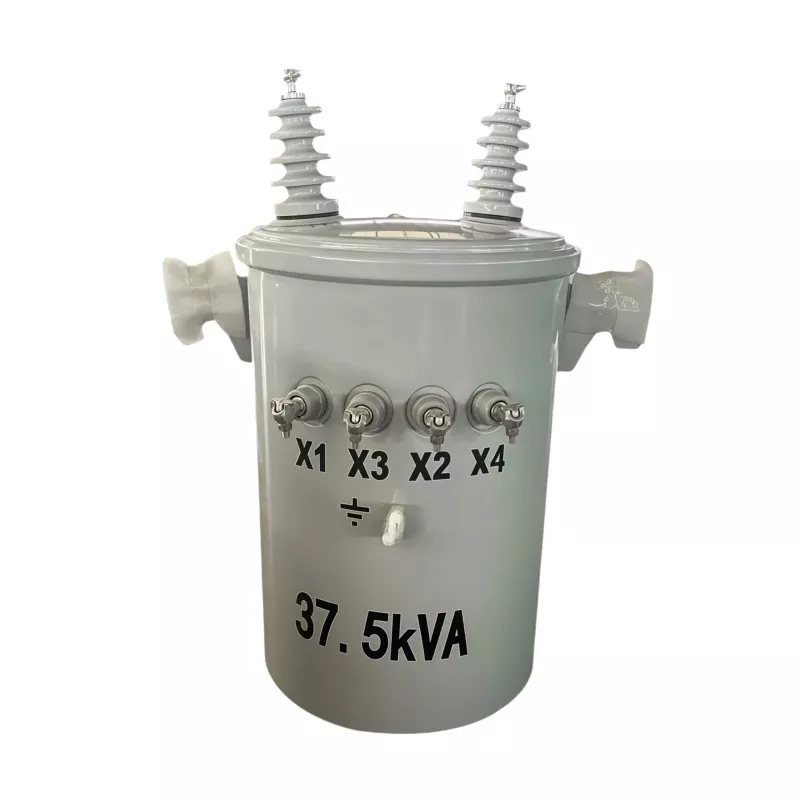
Table of Contents
- Introduction to Pole Mounted Transformers
- Working Principle Explained
- Main Components and Structure
- Technical Advantages
- Applications in Power Distribution
- Selection and Specification Guide
- Installation Considerations
- Maintenance and Lifecycle Management
- Safety Challenges and Solutions
- Frequently Asked Questions
- Conclusion and Contact Information
Introduction to Pole Mounted Transformers
A pole mounted transformer is typically installed on wooden or concrete utility poles and is widely used in overhead distribution systems. Its primary function is to convert high transmission voltages (such as 11kV, 22kV, or 33kV) into lower usable voltages (such as 400V or 230V). This ensures safe electricity delivery to end users.
Unlike ground-mounted substations, pole mounted transformers are designed for cost-effective deployment in rural, suburban, and remote areas where underground cabling is not practical.
Working Principle Explained
The operating principle of a pole mounted transformer is based on electromagnetic induction. When alternating current flows through the primary winding, it generates a magnetic field in the transformer core. This magnetic field then induces a lower voltage in the secondary winding.
The voltage transformation ratio depends on the number of turns in the primary and secondary coils. This simple yet efficient mechanism ensures minimal energy loss and stable power distribution.
- Step 1: High-voltage electricity enters the primary winding.
- Step 2: Magnetic flux is generated in the core.
- Step 3: Induced voltage appears in the secondary winding.
- Step 4: Low-voltage power is distributed to consumers.
Main Components and Structure
A pole mounted transformer consists of several essential components that ensure reliability and efficiency:
- Core: Laminated silicon steel to reduce energy losses.
- Primary Winding: Receives high-voltage input.
- Secondary Winding: Supplies stepped-down voltage.
- Transformer Tank: Filled with insulating oil for cooling and insulation.
- Bushings: Provide insulated connection points.
- Lightning Arresters: Protect against voltage surges.
- Mounting Brackets: Secure the transformer on utility poles.
Technical Advantages
Pole mounted transformers offer several operational and economic benefits that make them a preferred choice in distribution networks.
- Cost-effective installation compared to underground systems
- Reduced land usage requirements
- Easier inspection and maintenance access
- High efficiency in long-distance rural distribution
- Scalable for expanding power networks
These advantages make them essential for utilities aiming to balance cost efficiency and reliable power delivery.
Applications in Power Distribution
Pole mounted transformers are widely used across multiple sectors due to their adaptability and efficiency.
- Rural electrification projects
- Suburban residential distribution systems
- Light industrial zones
- Agricultural irrigation systems
- Temporary construction power supply
Selection and Specification Guide
Choosing the right pole mounted transformer requires careful evaluation of load demand, voltage levels, and environmental conditions. Below is a simplified selection reference table:
| Parameter | Common Range | Selection Consideration |
|---|---|---|
| Rated Capacity | 25 kVA – 500 kVA | Based on peak load demand |
| Primary Voltage | 11kV / 22kV / 33kV | Depends on grid configuration |
| Secondary Voltage | 400V / 230V | End-user requirement |
| Cooling Type | Oil-immersed | Heat dissipation efficiency |
| Insulation Class | Class A / B | Thermal endurance level |
Installation Considerations
Proper installation is critical to ensure long-term performance and safety of pole mounted transformers. Key factors include structural integrity of the pole, grounding system design, and clearance from surrounding objects.
- Ensure pole strength is sufficient for load bearing
- Maintain safe distance from buildings and vegetation
- Install proper grounding for fault protection
- Use certified mounting hardware
Maintenance and Lifecycle Management
Regular maintenance improves transformer lifespan and reduces failure risks. Maintenance activities include oil testing, insulation resistance checks, and visual inspection of bushings and connectors.
- Periodic thermal imaging inspections
- Oil quality analysis for contamination detection
- Load monitoring to prevent overload conditions
- Cleaning of external components to prevent insulation breakdown
Safety Challenges and Solutions
While pole mounted transformers are generally safe, certain risks must be addressed, including electrical hazards, environmental exposure, and surge damage.
-
Risk: Lightning strikes
Solution: Install surge arresters -
Risk: Overloading
Solution: Proper load balancing -
Risk: Oil leakage
Solution: Regular sealing and inspection -
Risk: Unauthorized access
Solution: Elevated installation and fencing
Frequently Asked Questions (FAQ)
Q1: What is the lifespan of a pole mounted transformer?
Typically, a well-maintained unit can last 25–35 years depending on load and environmental conditions.
Q2: Can pole mounted transformers operate in harsh weather?
Yes, they are designed for outdoor use and can withstand rain, heat, and wind when properly installed.
Q3: How often should maintenance be performed?
Routine inspections are recommended annually, with more detailed checks every 2–3 years.
Q4: Are they suitable for industrial use?
They are mainly used for distribution-level loads, suitable for light industrial applications but not heavy manufacturing loads.
Q5: What causes transformer failure?
Common causes include overload, insulation degradation, lightning surges, and poor maintenance practices.
Conclusion
Pole mounted transformers remain a foundational technology in modern electrical distribution systems. Their efficiency, cost-effectiveness, and adaptability make them indispensable for expanding power networks, especially in regions where underground infrastructure is impractical. Understanding their working principles and maintenance requirements ensures long-term operational stability and safety.
Zhejiang Guangbian Electric Power Technology Co., Ltd. specializes in designing and manufacturing high-quality pole mounted transformers engineered for reliability, safety, and long service life. With advanced production capabilities and strict quality control systems, the company supports global power distribution needs with tailored solutions.
For technical consultation, product customization, or partnership opportunities, contact us today to learn how our solutions can support your electrical infrastructure projects.