

How Does a Globe Valve Differ from a Gate Valve or Ball Valve
2026-01-05
Selecting the correct valve for your piping system is crucial for efficiency, safety, and cost-effectiveness. Three of the most common types—Globe Valves, Gate Valves, and Ball Valves—serve distinct purposes. Understanding their key differences is essential for engineers, procurement specialists, and facility managers. This guide breaks down the functional and design disparities to help you make an informed decision for your application, with insights from the precision engineering team at Dafugui.
Functional Design and Operation
The core difference lies in their operation and primary function within a system:
-
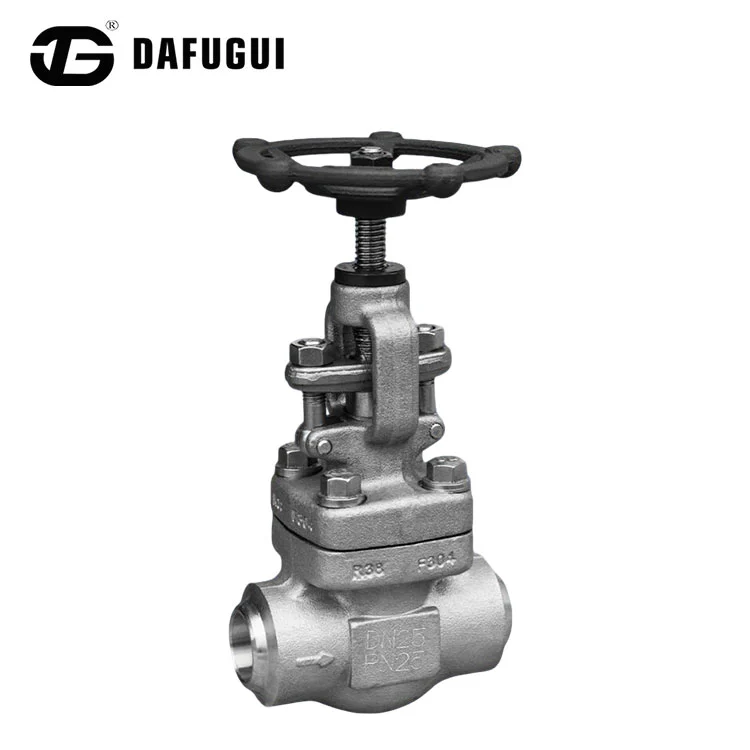
Globe Valves: Designed for precise flow regulation and throttling. They use a plug (disc) that moves perpendicularly to the seat, allowing for fine control of flow rate. Each adjustment changes the flow, making them ideal for applications requiring frequent modulation.
-
Gate Valves: Engineered primarily for on/off isolation with minimal pressure drop. A gate (wedge) is lifted completely out of the flow path when open, providing a straight-through passage. They are not suitable for throttling, as partial opening can cause vibration and seat damage.
-
Ball Valves: Also used for quick on/off control. They feature a rotating ball with a bore. A quarter-turn (90 degrees) opens or closes the valve completely. They offer excellent sealing and are known for their durability and speed.
Comparative Analysis: Key Parameters
The following table summarizes the critical differences to guide your selection:
| Feature | Globe Valve | Gate Valve | Ball Valve |
|---|---|---|---|
| Primary Function | Throttling & Regulation | On/Off Isolation | On/Off Isolation |
| Flow Path | Tortuous (Z-pattern) | Straight-through | Straight-through |
| Pressure Drop | High | Very Low | Low |
| Sealing | Good (leak-tight shutoff) | Excellent (bubble-tight) | Excellent (bubble-tight) |
| Speed of Operation | Slow (multiple turns) | Slow (multiple turns) | Fast (quarter-turn) |
| Suitability for Throttling | Excellent | Not Recommended | Poor (can cause cavitation) |
| Common Applications | Cooling systems, feedwater control, fuel oil systems | Water pipelines, drain lines, isolation services | Process lines, HVAC, shutoff applications |
Globe Valves FAQ: Common Questions Answered
Q: When should I specifically choose a globe valve over other types?
A: Choose a Globe Valve when your application requires frequent and precise adjustment of flow rate, such as in pressure regulation, cooling water systems, or fuel oil control lines. Their design allows for accurate throttling without the rapid wear seen in gate or ball valves used for the same purpose.
Q: Are globe valves good for complete shut-off?
A: Yes, modern Globe Valves, especially those from quality manufacturers like Dafugui, provide reliable leak-tight shutoff. The disc seals firmly against the seat when fully closed. However, for isolation services where the valve remains either fully open or closed for long periods without adjustment, a gate or ball valve might be more economical.
Q: What maintenance is typically required for a globe valve?
A: The main maintenance for Globe Valves involves monitoring and potentially refurbishing the seat and disc, as these are the primary wear parts due to frequent throttling action. Regular packing gland adjustment may also be needed to prevent stem leakage. Dafugui valves are designed for easy in-line maintenance to reduce downtime.
Making the Right Valve Choice
The decision between a globe, gate, or ball valve hinges entirely on your system's requirements: opt for globe valves for control, gate valves for uninterrupted flow isolation, and ball valves for quick, reliable shutoff. For applications demanding precision, durability, and superior performance, specifying a high-quality valve is non-negotiable.
Contact us today at Dafugui to discuss your specific project needs. Our engineering experts are ready to help you select or design the perfect globe valve, gate valve, or ball valve solution that ensures optimal system integrity, efficiency, and longevity.