

How Does a Flange Ammonia Globe Valve Improve Safety in Anhydrous Ammonia Service
2026-06-15
Anhydrous ammonia is widely used in industrial refrigeration and chemical processing, but its toxic and corrosive nature demands strict safety measures. A Flange Ammonia Globe Valve plays a critical role in leak prevention and system control. At Huadu, we engineer these valves to meet the highest safety standards, ensuring reliable shut-off and long-term performance in harsh ammonia environments.
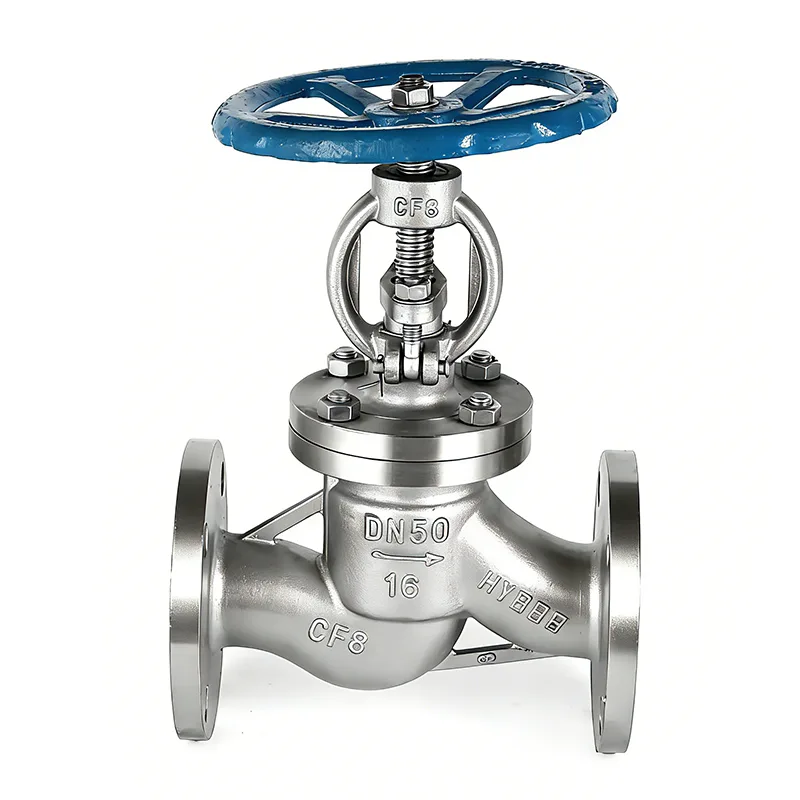
Why a Flange Ammonia Globe Valve is Safer for Anhydrous Ammonia
Compared to other valve types, the Flange Ammonia Globe Valve offers unique safety advantages. The flanged connection provides a robust, leak-tight seal, while the globe valve design allows precise flow regulation. Below is a comparison of key safety features:
| Feature | Safety Benefit for Anhydrous Ammonia |
|---|---|
| Flanged ends | Prevents thread wear and leakage under vibration or thermal cycling |
| Globe body pattern | Enables smooth, non-slam shut-off to avoid pressure surges |
| Stainless steel trim | Resists ammonia-induced corrosion and galling |
| Extended bonnet | Protects stem seals from extreme temperatures (-40°C to +150°C) |
| Backseating capability | Allows safe packing replacement under pressure |
How Huadu’s Design Enhances Operational Safety
Huadu incorporates a rising stem with visual position indicator, reducing operator error. The Flange Ammonia Globe Valve also features a bolted bonnet and spiral-wound gasket, eliminating common leak paths found in welded or threaded valves. These engineering choices directly lower the risk of accidental ammonia release.
Flange Ammonia Globe Valve – FAQ
Q1: Can a Flange Ammonia Globe Valve be used for both liquid and vapor anhydrous ammonia service?
A: Yes. Huadu designs the Flange Ammonia Globe Valve with a hardened disc and seat suitable for both phases. However, for liquid ammonia, ensure the valve is installed with the stem vertical to prevent hydraulic lock. For vapor, orientation is less critical, but the same pressure rating applies. Always verify the valve’s material compatibility – Huadu uses low-carbon stainless steel for trim to resist stress corrosion cracking in either phase.
Q2: What maintenance checks are essential for a Flange Ammonia Globe Valve in ammonia service?
A: Routine checks include: (1) Visual inspection for flange gasket creep or external corrosion, especially at the bonnet joint; (2) Testing stem seal integrity by slightly opening the backseat when the valve is fully open – if ammonia odor appears, packing needs replacement; (3) Checking torque on flange bolts quarterly, as thermal cycling can reduce preload. Huadu provides detailed maintenance logs with every valve. Never lubricate the stem with non-ammonia-compatible grease – use only PTFE-based lubricants.
Q3: How does a Flange Ammonia Globe Valve prevent leakage better than a threaded gate valve?
A: The Flange Ammonia Globe Valve eliminates thread engagement points, which are common leak sources under vibration. Flanged connections use controlled bolt torque and a compressed gasket – typically spiral-wound with graphite filler – creating a metal-to-metal sealing plane. Additionally, the globe valve’s perpendicular seat design allows tighter shut-off (up to Class VI per ANSI/FCI 70-2) compared to gate valves. Huadu pressure-tests every Flange Ammonia Globe Valve with helium mass spectrometry, achieving leak rates below 1×10⁻⁶ mbar·L/s, far stricter than ammonia industry requirements.
Best Practices for Installing a Flange Ammonia Globe Valve
-
Use spiral-wound gaskets with an outer ring to prevent radial blowout.
-
Apply anti-seize compound only on flange bolts, not on gasket faces.
-
Ensure mating flanges are parallel within 0.5 mm to avoid uneven gasket compression.
-
Huadu recommends installing the valve with stem pointing upward for liquid ammonia to allow trapped gas release.
Contact Us
For a customized quote or technical consultation on Flange Ammonia Globe Valve solutions for your anhydrous ammonia system, contact Huadu today. Our engineering team provides free leakage risk assessments and 24-hour response for critical applications.