

How Does a Dismantling Joint Ensure Safe Pipeline Installation and Maintenance?
2026-01-04
Abstract
A dismantling joint is a critical mechanical component widely used in industrial pipeline systems to facilitate installation, adjustment, and maintenance. This article provides a comprehensive technical analysis of dismantling joints, focusing on how they function within pipeline networks, how engineers can evaluate specifications, and how evolving infrastructure demands are shaping future applications. The content is structured into four logical sections, supported by technical parameters, frequently asked engineering questions, and authoritative references, ensuring alignment with global search behavior and professional reading habits.
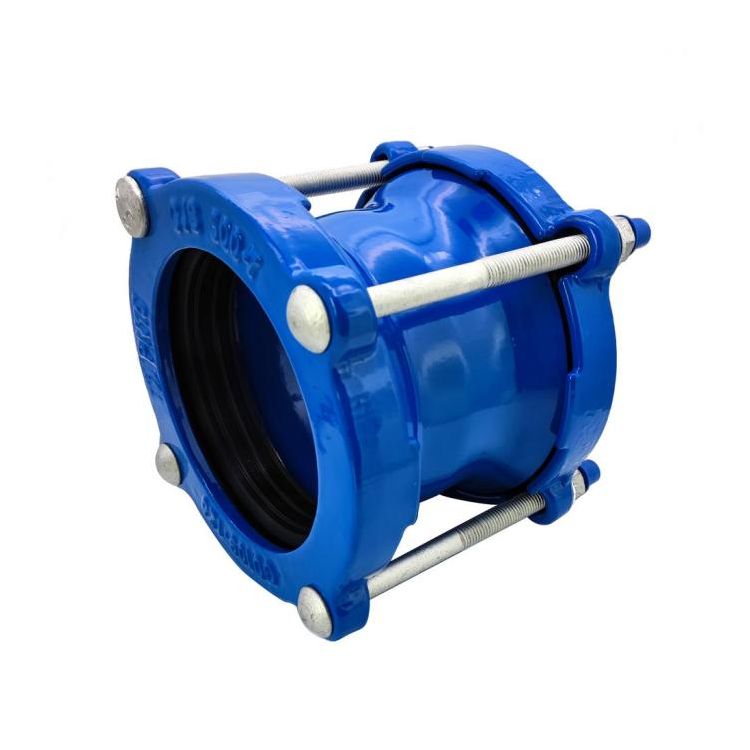
Table of Contents
- 1. How Does a Dismantling Joint Function in Pipeline Systems?
- 2. How Are Technical Parameters of a Dismantling Joint Evaluated?
- 3. How Do Dismantling Joints Address Common Engineering Challenges?
- 4. How Is the Role of Dismantling Joints Evolving in Modern Infrastructure?
1. How Does a Dismantling Joint Function in Pipeline Systems?
A dismantling joint, sometimes referred to as a flanged dismantling joint, is designed to compensate for axial displacement and simplify the assembly or disassembly of pipelines, valves, pumps, and other equipment. Positioned between flanged connections, it allows controlled axial movement, ensuring that adjacent components can be installed or removed without inducing excessive stress on the pipeline.
The core function of a dismantling joint lies in its ability to convert installation tolerances into manageable axial adjustment. During pipeline construction, minor deviations in length often occur due to manufacturing tolerances, thermal expansion, or on-site alignment conditions. A dismantling joint absorbs these deviations, maintaining structural integrity while reducing installation time.
From an operational perspective, dismantling joints are essential in systems requiring frequent inspection or component replacement. By loosening tie rods and flange bolts, maintenance personnel can remove valves or pumps without cutting or realigning the pipeline, significantly reducing downtime.
2. How Are Technical Parameters of a Dismantling Joint Evaluated?
Selecting an appropriate dismantling joint requires a detailed understanding of its technical parameters. These parameters determine compatibility with pipeline standards, operating conditions, and long-term reliability.
Below is a consolidated overview of common technical specifications used in professional engineering evaluations:
| Parameter | Specification Range | Engineering Significance |
|---|---|---|
| Nominal Diameter (DN) | DN50 – DN4000 | Defines compatibility with pipeline size |
| Pressure Rating (PN) | PN10 / PN16 / PN25 / PN40 | Ensures safe operation under system pressure |
| Axial Adjustment | ±10 mm to ±200 mm | Allows precise installation and dismantling |
| Body Material | Carbon Steel / Ductile Iron / Stainless Steel | Determines mechanical strength and corrosion resistance |
| Sealing Material | EPDM / NBR / PTFE | Ensures leak-tight performance |
| Connection Standard | EN, DIN, ANSI, ISO | Ensures global system compatibility |
Engineering teams typically match these parameters against system design documents, ensuring that axial displacement capacity, pressure resistance, and material selection align with operational requirements such as temperature variation, fluid type, and environmental exposure.
3. How Do Dismantling Joints Address Common Engineering Challenges?
Despite their relatively simple structure, dismantling joints resolve several recurring challenges in pipeline engineering. Below are commonly raised technical questions addressed in professional practice.
Q: How does a dismantling joint prevent pipeline stress during installation?
A dismantling joint provides axial flexibility that absorbs installation tolerances and misalignment. By adjusting its effective length, installers can avoid forced flange alignment, which otherwise introduces residual stress into the pipeline system.
Q: How is sealing reliability maintained under repeated dismantling?
High-quality dismantling joints use elastomeric sealing elements designed for repeated compression cycles. Proper torque control on tie rods ensures uniform gasket compression, maintaining leak-tight performance even after multiple maintenance operations.
Q: How does a dismantling joint improve maintenance efficiency?
By enabling axial retraction, a dismantling joint allows valves or pumps to be removed without disturbing adjacent pipe sections. This reduces labor intensity, shortens shutdown periods, and minimizes the risk of secondary damage during maintenance.
Q: How can service life be extended in corrosive environments?
Material selection plays a decisive role. Stainless steel bodies, protective coatings, and chemically compatible sealing materials significantly enhance durability in aggressive media such as seawater, wastewater, or chemical processing systems.
4. How Is the Role of Dismantling Joints Evolving in Modern Infrastructure?
As infrastructure systems expand in scale and complexity, dismantling joints are increasingly specified in large-diameter pipelines, urban water networks, energy facilities, and industrial process plants. Modern design trends emphasize modular construction, faster commissioning, and lifecycle cost optimization—all areas where dismantling joints deliver measurable value.
In large municipal water projects, dismantling joints are now commonly integrated into pump stations and valve chambers to support rapid equipment replacement. In industrial sectors, higher pressure ratings and improved sealing technologies are being adopted to meet stricter safety and compliance standards.
Digital design tools and standardized specifications are also influencing product development. Finite element analysis is used to optimize stress distribution, while international standards harmonization simplifies cross-border procurement and installation. These trends indicate that dismantling joints will continue to play a foundational role in pipeline engineering.
Within this evolving context, FYL has positioned its dismantling joint solutions to meet international standards while addressing practical installation and maintenance needs across diverse industries. By combining precise manufacturing control with adaptable design, FYL products align with the operational expectations of global engineering projects.
For detailed specifications, application guidance, or technical consultation related to dismantling joint selection, engineering teams are encouraged to contact us for professional support and tailored solutions.