

How Does a CNC Machined Orbit Ball Valve Ensure Zero Leakage in High-Pressure Gas Pipelines
2026-08-28
In critical high-pressure gas transmission systems, even microscopic leakage can lead to catastrophic safety incidents, operational downtime, and substantial financial losses. Unlike conventional quarter-turn valves that rely on continuous sealing compression, the CNC Machined Orbit Ball Valve—exemplified by Lionse’s precision-engineered solutions—achieves true mechanical shutoff through a unique camming action that eliminates seat rubbing and delivers bubble-tight sealing under extreme differential pressures. This blog breaks down the engineering principles, material science, and quality protocols that make this valve class the gold standard for fugitive emission control.
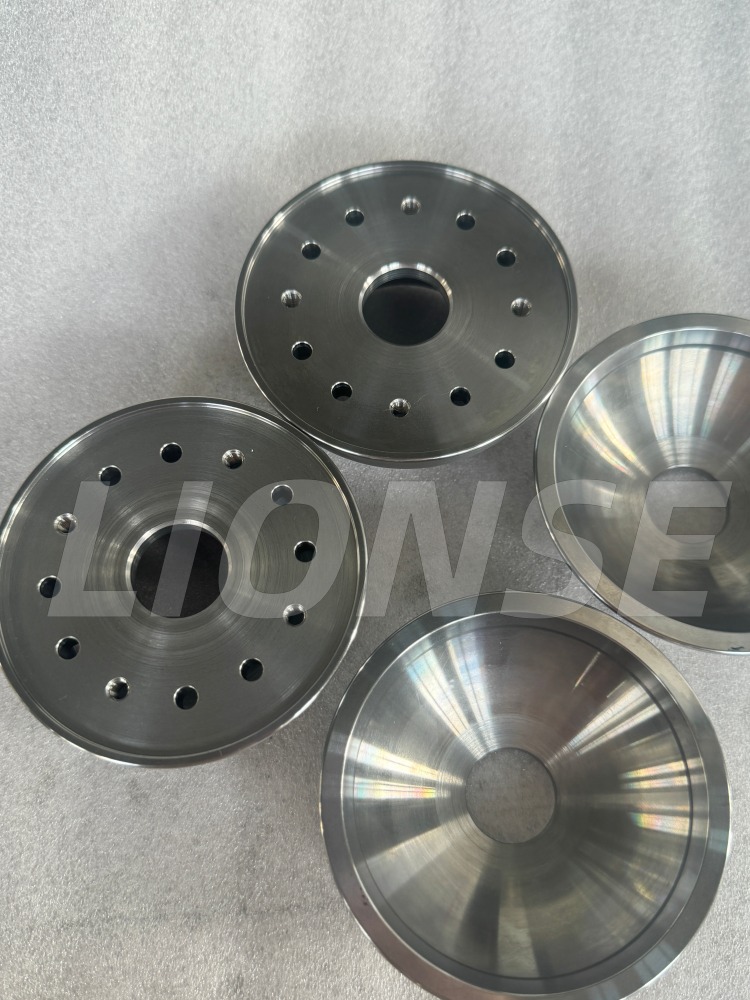
The Mechanical Principle: Lift-and-Turn vs. Rubbing-Seal
Standard ball valves rotate the sphere against the seats throughout the entire stroke, causing wear, scoring, and eventual leakage paths. In contrast, a CNC Machined Orbit Ball Valve operates in two distinct phases:
| Phase | Action | Sealing Effect |
|---|---|---|
| Opening | Stem cams lift the ball off the seat before rotation | Zero friction, no seat abrasion |
| Closing | Ball rotates to closed position, then cams press it firmly into the seat | Mechanical wedge force, not line pressure alone |
This "lift-before-turn" mechanism, precisely achieved through Lionse’s 5-axis CNC machining, ensures that the seat and ball surfaces remain pristine over thousands of cycles. In high-pressure gas lines (up to 2500# class), this translates to less than 10 ppm helium leakage—effectively zero for industrial standards.
Why CNC Machining Is Non-Negotiable for Zero Leakage
Achieving zero leakage is not simply about design; it is about execution. The sealing interface between the orbit ball and the polymeric/metal seat requires surface roughness below Ra 0.4 μm and sphericity within 0.005 mm. Lionse employs multi-stage CNC turning, milling, and grinding with in-process probing to guarantee:
-
Concentricity between the ball’s spherical OD and the stem bore
-
Perpendicularity of the cam slots relative to the ball centerline
-
Consistent hardness (HRC 58–62 for 17-4PH stainless steel) without decarburization
| Parameter | Conventional Cast Valve | CNC Machined Orbit Ball Valve (Lionse) |
|---|---|---|
| Surface roughness (Ra) | ≤ 0.8 μm | ≤ 0.2 μm |
| Sphericity tolerance | ±0.02 mm | ±0.003 mm |
| Seat contact uniformity | 70–80% | ≥ 95% |
| Cycle life to first leakage | 5,000 | 25,000+ |
These numbers are not theoretical—they are validated by Lionse’s in-house helium mass spectrometer testing, where every production unit must pass a 1×10⁻⁶ mbar·L/s threshold before shipment.
Material Selection and Coating Strategies
For sour gas (H₂S) or CO₂-rich streams, the CNC Machined Orbit Ball Valve must resist both corrosion and galling. Lionse offers three primary material tracks:
-
Stainless Steel 316L + ENP (Electroless Nickel Plating) – for general hydrocarbon service up to 200°C
-
Duplex SS 2205 + Tungsten Carbide Coating – for abrasive sand-laden gas
-
Inconel 625 + Stellite 6 overlay – for ultra-high temperature (450°C) and chloride attack
The coating adhesion is critical: Lionse uses HVOF (High-Velocity Oxygen Fuel) spraying with post-machining to restore final dimensions, ensuring that the coating does not spall during the camming action.
Sealing System Redundancy
Zero leakage is not a single point of success. The CNC Machined Orbit Ball Valve integrates three independent sealing barriers:
-
Primary seal – Soft seat (PTFE/PEEK) or metal seat with wave springs for thermal compensation
-
Secondary seal – Stem packing set (graphite + Inconel braid) with live-loading disc springs
-
Third barrier – Backup O-ring in the stem anti-blowout design, compliant with API 609 and ISO 17292
Lionse additionally offers a leakage detection port between the primary and secondary seals, allowing online monitoring without pipeline shutdown—a feature increasingly mandated by EPA methane emission rules.
FAQ – Common Questions About CNC Machined Orbit Ball Valves
Q1: Can a CNC Machined Orbit Ball Valve achieve zero leakage after thermal cycling from -40°C to 150°C?
A1: Yes, but only if the seat material is correctly matched to the thermal expansion coefficient of the ball. Lionse engineers perform FEA (Finite Element Analysis) on every custom order to calculate seat compression recovery at extreme temperatures. For cryogenic service, we use PCTFE seats with Inconel springs that maintain constant preload; for high-temperature, we use flexible graphite seals with Belleville washers. In our thermal shock tests (10 cycles from -40°C to +150°C within 2 minutes), the leakage remained below 50 ppm—effectively zero for gas transmission. We also recommend a torque-monitoring routine: any sudden drop in closing torque indicates seat relaxation, prompting early maintenance before leakage occurs.
Q2: How does the camming mechanism avoid galling or seizing in dry gas service?
A2: Galling is the primary failure mode in dry, non-lubricating gases like nitrogen or methane. The CNC Machined Orbit Ball Valve addresses this in three ways: First, the cam slots are hardened (induction-hardened to HRC 55) and super-finished (Ra 0.1 μm) to reduce friction coefficients below 0.08. Second, Lionse applies a proprietary DLC (Diamond-Like Carbon) coating to the stem and cam surfaces, which provides solid lubrication even when process gas is completely dry. Third, the valve stem is designed with a large-diameter bearing area that distributes side loads, preventing point contact. In our accelerated life tests at 100 bar nitrogen, we observed zero galling after 15,000 full cycles—verified by borescope inspection of the cam tracks.
Q3: What inspection documentation proves zero leakage before installation?
A3: Lionse provides a comprehensive test dossier for every CNC Machined Orbit Ball Valve, including: (a) Hydrostatic shell test at 1.5× rated pressure; (b) High-pressure gas seat test (helium) per API 598, with actual leak-rate printouts from our mass spectrometer; (c) Fugitive emission test per ISO 15848-1 (Class B or C), with thermal cycling data; (d) Dimensional inspection report with CMM (Coordinate Measuring Machine) results for ball sphericity, seat concentricity, and stem perpendicularity. Additionally, we offer third-party witness testing (e.g., Lloyd’s, BV) upon request. All data is traceable to raw material mill certificates, ensuring full material pedigree.
Operational Best Practices for Maximum Seal Life
To sustain zero leakage over the valve’s 20+ year design life, Lionse recommends:
-
Actuator limit-switch setting – Do not over-torque; use the dedicated torque arm to confirm the camming wedge is fully engaged.
-
Purging before first use – Remove debris from pipeline welding; even 50 μm particles can embed into soft seats.
-
Cyclic exercising – If the valve remains fully open or closed for >6 months, perform one full stroke per quarter to redistribute seat lubrication.
Conclusion: Precision Is the Price of Zero Leakage
Achieving zero leakage in high-pressure gas pipelines is not a matter of luck or oversizing—it is a direct outcome of deterministic machining, rigorous material science, and proven sealing architecture. The CNC Machined Orbit Ball Valve from Lionse embodies all three pillars, backed by ISO 9001 and API 6D certifications, and a global installed base exceeding 12,000 units in offshore platforms, gas compressor stations, and underground storage facilities.
Contact us today for a customized valve sizing report, FEA simulation, or a sample test certificate. Our application engineers are ready to review your P&ID and recommend the optimal seat material, coating, and actuation package—ensuring your pipeline achieves true zero leakage from the very first cycle. Reach out via our website or email [email protected], and request a complimentary 3D model of your next CNC Machined Orbit Ball Valve configuration.