

How Does a Check Valve Work?
2026-02-11
Article Abstract
A check valve is a fundamental flow-control component used across industrial, commercial, and residential piping systems. Its primary function is to allow fluid or gas to flow in one direction while preventing reverse flow that may cause pressure damage, contamination, or system failure. This article provides a comprehensive explanation of how a check valve works, common types, application scenarios, selection considerations, and maintenance insights. By addressing common user concerns and practical challenges, this guide helps engineers, purchasers, and system designers make informed decisions when selecting a reliable check valve solution.
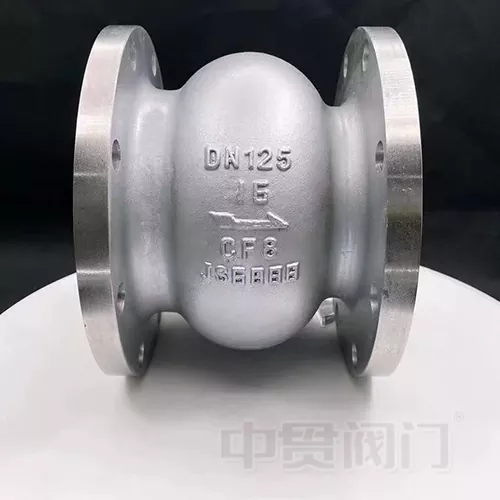
Table of Contents
- Outline of This Guide
- What Is a Check Valve?
- How a Check Valve Works in Practice
- Main Types of Check Valves
- Key Application Scenarios
- Common Problems and How to Avoid Them
- How to Choose the Right Check Valve
- Comparison Table of Check Valve Types
- Maintenance and Service Life Considerations
- Frequently Asked Questions
- Conclusion and Contact Information
Outline of This Guide
- Explain the working principle of a check valve
- Identify major check valve designs and structures
- Analyze real-world usage and failure risks
- Provide practical selection and maintenance guidance
What Is a Check Valve?
A check valve, also known as a non-return valve or one-way valve, is a mechanical device designed to permit flow in only one direction. Once flow reverses, the valve automatically closes to block backflow. This self-acting function does not require external power, making check valves essential for safety and efficiency in fluid systems.
Check valves are widely used in pipelines transporting water, oil, gas, steam, chemicals, and compressed air. They protect pumps, compressors, and other downstream equipment from reverse pressure and fluid hammer effects.
How a Check Valve Works in Practice
The operating principle of a check valve is based on pressure differential. When upstream pressure exceeds downstream pressure, the internal disc, ball, or flap opens, allowing flow to pass. When downstream pressure becomes higher or flow stops, gravity, backpressure, or a spring mechanism forces the closure element back into its seat, sealing the valve.
This automatic response ensures system stability without manual intervention. Proper orientation and installation direction are critical to ensure correct operation.
Main Types of Check Valves
- Swing Check Valve – Uses a hinged disc that swings open with flow and closes with reverse pressure.
- Lift Check Valve – Employs a vertically moving disc lifted by forward flow.
- Ball Check Valve – Uses a spherical ball that seals against a seat when flow reverses.
- Spring-Loaded Check Valve – Features a spring mechanism for faster closure and reduced water hammer.
Key Application Scenarios
Check valves are applied across diverse industries due to their protective function:
- Water supply and drainage systems
- Oil and gas transmission pipelines
- Chemical processing plants
- HVAC and boiler systems
- Pump discharge protection
In each scenario, selecting the correct valve design ensures optimal flow control and system safety.
Common Problems and How to Avoid Them
Improper check valve selection or installation can lead to operational issues:
- Water Hammer – Reduced by choosing spring-assisted or non-slam designs.
- Leakage – Avoided through proper material selection and seat design.
- Premature Wear – Minimized by matching valve type with flow conditions.
How to Choose the Right Check Valve
Several technical factors should be evaluated before selection:
- Medium type and temperature
- Operating pressure range
- Installation orientation
- Required response speed
- Maintenance accessibility
Consulting experienced manufacturers can help align valve performance with system requirements.
Comparison Table of Check Valve Types
| Valve Type | Flow Resistance | Response Speed | Typical Applications |
|---|---|---|---|
| Swing Check Valve | Low | Moderate | Water supply, wastewater |
| Lift Check Valve | Moderate | Fast | High-pressure systems |
| Ball Check Valve | Low | Moderate | Slurry and viscous fluids |
| Spring Check Valve | Moderate | Very Fast | Compact piping layouts |
Maintenance and Service Life Considerations
Although check valves operate automatically, periodic inspection is recommended to ensure reliability. Deposits, corrosion, or worn sealing surfaces may affect closure performance. Selecting corrosion-resistant materials and scheduling routine checks can significantly extend service life.
Frequently Asked Questions
Q1: Can a check valve be installed vertically?
Yes, certain designs such as lift and spring-loaded check valves are suitable for vertical installation when flow direction is upward.
Q2: Why does a check valve make noise?
Noise is often caused by rapid closure or water hammer. Selecting a non-slam or spring-assisted valve can reduce this issue.
Q3: How long does a check valve typically last?
Service life depends on operating conditions, medium, and maintenance, but high-quality valves can perform reliably for many years.
Conclusion and Contact Information
Understanding how a check valve works is essential for ensuring pipeline safety, efficiency, and long-term system stability. From selecting the correct valve type to proper installation and maintenance, each step directly affects performance. Zhongguan provides professionally engineered check valve solutions designed for demanding industrial environments. To learn more about suitable models for your application or to receive technical support, please contact us today for detailed product guidance and responsive service.