

How Does a Check Valve Control Fluid Direction in Industrial Systems?
2026-01-06
Article Abstract
A check valve is a critical flow-control component designed to allow media to move in only one direction while preventing reverse flow that may cause equipment damage, pressure instability, or system failure. This article explains how check valves function, how technical parameters influence performance, and how to address common operational challenges.
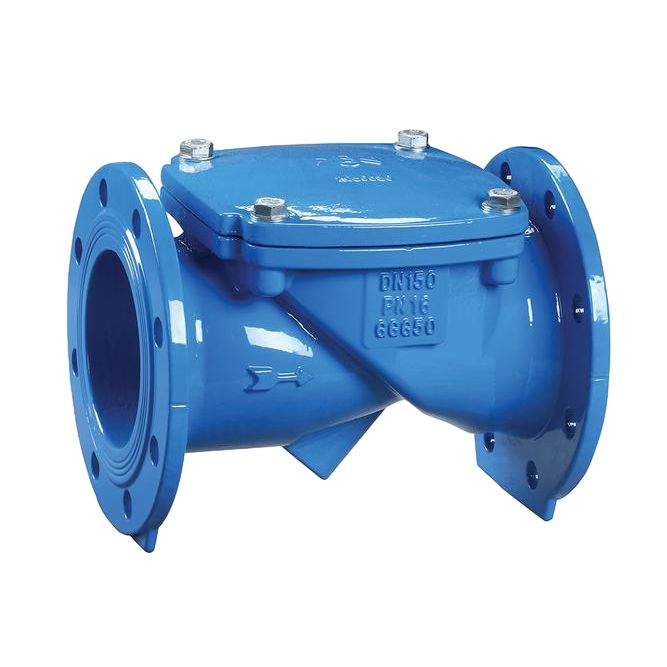
Table of Contents
- How Does a Check Valve Work Within a Piping System?
- How Should Check Valve Parameters Be Evaluated for Different Applications?
- How Can Common Check Valve Problems Be Diagnosed and Resolved?
- How Are Check Valves Applied Across Modern Industrial Scenarios?
How Does a Check Valve Work Within a Piping System?
A check valve, sometimes referred to as a non-return valve, operates automatically to permit fluid flow in a single direction. The core working principle is based on differential pressure. When upstream pressure exceeds downstream pressure, the internal disc, ball, swing arm, or piston moves away from the seat, allowing flow. When pressure equalizes or reverses, gravity, spring force, or back pressure returns the closure element to the seat, sealing the passage.
This self-actuating behavior eliminates the need for external control or manual operation. As a result, check valves are widely used in pumping systems, compressed air networks, water treatment facilities, and chemical processing lines. Their primary function is to protect pumps, compressors, and pipelines from reverse flow, which could otherwise lead to mechanical damage, contamination, or efficiency loss.
Different structural designs influence how quickly and smoothly the valve responds. Swing check valves rely on a hinged disc and are suitable for low-velocity applications. Lift check valves use a guided disc for higher-pressure systems. Ball and piston check valves offer compact solutions where installation space is limited. Understanding how these mechanisms interact with flow conditions is essential for system stability.
How Should Check Valve Parameters Be Evaluated for Different Applications?
Selecting an appropriate check valve requires careful evaluation of technical parameters. These parameters determine compatibility with system media, pressure ratings, and operational longevity. Engineering decisions should be guided by fluid characteristics, operating conditions, and installation orientation.
Key technical parameters commonly reviewed during selection include:
| Parameter | Description | Engineering Consideration |
|---|---|---|
| Nominal Diameter (DN) | Internal flow passage size | Must match pipeline diameter to reduce turbulence |
| Pressure Rating (PN/Class) | Maximum allowable working pressure | Selected according to system pressure and safety margin |
| Body Material | Carbon steel, stainless steel, brass, alloy | Determined by corrosion resistance and media compatibility |
| Seal Material | EPDM, NBR, PTFE, metal seat | Chosen based on temperature and chemical exposure |
| Cracking Pressure | Minimum pressure required to open valve | Affects pump load and system efficiency |
| Installation Orientation | Horizontal or vertical | Impacts closure response and service life |
Accurate parameter matching minimizes energy loss and reduces maintenance frequency. In high-cycle systems, attention should be given to wear resistance and response time. In corrosive environments, material selection becomes a decisive factor in preventing premature failure.
How Can Common Check Valve Problems Be Diagnosed and Resolved?
Despite their simple structure, check valves may encounter operational issues if improperly selected or installed. Addressing these issues requires systematic diagnosis based on observable symptoms and system data.
Check Valve Common Questions and Answers
Q: How can reverse flow still occur after installing a check valve?
A: Reverse flow may occur if the valve is installed backward, if debris prevents full closure, or if the cracking pressure is too high for the operating conditions. Inspection of flow direction markings and internal components is required.
Q: How does water hammer relate to check valve performance?
A: Water hammer is caused by sudden flow stoppage. Slow-closing or improperly sized check valves may contribute to pressure surges. Selecting valves with dampened or spring-assisted closure mechanisms helps mitigate this risk.
Q: How often should a check valve be maintained or inspected?
A: Inspection intervals depend on media type, operating pressure, and cycle frequency. In clean water systems, annual inspection may suffice, while chemical or slurry applications may require more frequent evaluation.
Proactive troubleshooting improves system reliability and extends service life. Monitoring pressure fluctuations and flow irregularities provides early indicators of valve-related issues.
How Are Check Valves Applied Across Modern Industrial Scenarios?
Check valves are used across a broad spectrum of industries due to their adaptability and autonomous operation. In water supply systems, they prevent backflow contamination. In oil and gas pipelines, they stabilize pressure zones. In HVAC systems, they maintain directional circulation and protect pumps during shutdown.
In chemical processing, material compatibility and sealing integrity are paramount. In power generation, check valves support auxiliary systems by isolating equipment during load changes. Each scenario requires tailored selection based on operating data and regulatory requirements.
Manufacturers with engineering-focused production capabilities can provide customized solutions that align with these diverse applications. Tianjin FYL Technology Co., Ltd. integrates material science, precision machining, and quality control to supply check valves suitable for demanding industrial environments. For system-specific requirements or technical consultation, contact us to discuss appropriate configurations and support options.