

How Does a 4A Series Air Control Valve 5 Way Improve Pneumatic System Performance?
2026-10-28
In modern industrial automation, precise airflow control is essential for achieving reliable machine operation, consistent production quality, and efficient use of compressed air. A 4A Series Air Control Valve 5 Way is designed to direct compressed air through different flow paths, enabling pneumatic actuators to perform controlled forward and reverse movements. This makes it a valuable component in automated assembly lines, packaging equipment, material handling systems, and other industrial applications that depend on pneumatic motion.
By managing the air supply and exhaust paths, a five-way air control valve helps improve operational flexibility and supports the coordinated movement of pneumatic cylinders. For manufacturers seeking dependable pneumatic components, ZHEJIANG OULEIKAI PNEUMATIC CO.,LTD provides a professional solution for integrating air control technology into industrial equipment.
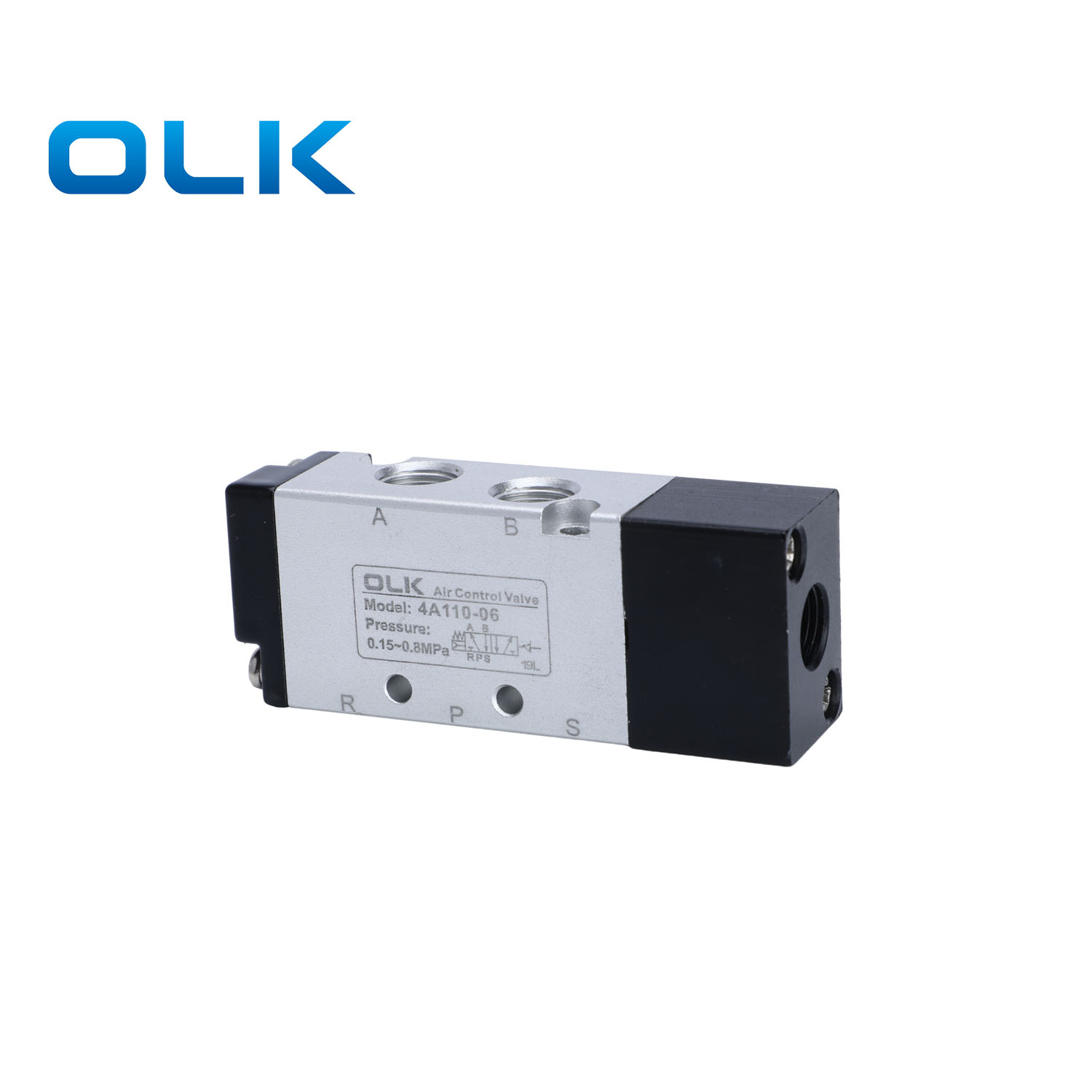
What Is a 4A Series Air Control Valve 5 Way?
A 4A Series Air Control Valve 5 Way is a directional control component used to regulate the movement of compressed air within a pneumatic circuit. The term "5 way" refers to five ports that typically include one air supply port, two actuator ports, and two exhaust ports.
These connections allow the valve to alternate the air supply between the two sides of a double-acting pneumatic cylinder. When the airflow direction changes, the cylinder can extend or retract, supporting repetitive mechanical movements in automated systems.
Depending on the specific model and configuration, the valve may use different actuation methods and mounting arrangements. Buyers should confirm the product specifications, port sizes, operating pressure, and compatibility with their pneumatic equipment before purchasing.
Why Is a Five-Way Air Control Valve Important?
The performance of a pneumatic system depends on more than the quality of its air source. Air must also be distributed accurately and consistently to ensure that actuators move as required.
A five-way directional valve plays several important roles:
-
Directional control: Switches airflow paths to control actuator extension and retraction.
-
Operational coordination: Supports synchronized sequences when integrated with suitable pneumatic controls.
-
System flexibility: Enables different machine movements through appropriate circuit design.
-
Exhaust management: Provides separate exhaust paths for the actuator connections.
-
Automation support: Helps pneumatic equipment perform repetitive operations with consistent control.
Selecting a suitable valve can reduce control limitations and help equipment designers build more practical pneumatic circuits.
What Performance Benefits Can It Deliver?
A properly selected 4A Series Air Control Valve 5 Way can contribute to more efficient and dependable pneumatic operation.
1. More Precise Directional Switching
Directional switching determines which side of a double-acting cylinder receives compressed air. By changing the flow path, the valve enables the actuator to perform the required movement. When matched with an appropriate control signal and pneumatic circuit, it helps machinery carry out repeatable operating sequences.
2. Improved Automation Efficiency
Automated production equipment often requires frequent cylinder movements, including pushing, lifting, clamping, sorting, and positioning. A suitable five-way valve supports these repeated actions and helps simplify pneumatic circuit design.
3. Better Integration with Pneumatic Equipment
A valve that matches the system's pressure range, flow requirements, connection type, and actuation method can be integrated more effectively into existing equipment. Correct sizing also helps avoid unnecessary restrictions that could affect actuator response.
4. Practical Airflow Management
The valve's separate supply, actuator, and exhaust connections allow air to be directed according to the operating state. Appropriate exhaust arrangements and flow controls can help engineers adjust cylinder speed and improve overall system behavior.
Actual performance depends on valve specifications, air quality, cylinder dimensions, tubing, control signals, and installation conditions.
Where Is a 4A Series Air Control Valve 5 Way Used?
Five-way directional valves are widely applicable in pneumatic systems where controlled linear movement is required.
Common application areas include:
-
Packaging machinery: Operating pneumatic pushers, clamps, and positioning mechanisms.
-
Automated assembly lines: Controlling cylinder movements during component assembly.
-
Material handling equipment: Supporting pneumatic gripping, lifting, and transferring operations.
-
Industrial manufacturing: Enabling repetitive movements in production machinery.
-
Sorting and conveying systems: Operating pneumatic gates, stops, and diverter mechanisms.
The final application should be evaluated according to the required switching frequency, actuator load, environmental conditions, and control architecture.
How Does a Five-Way Valve Compare with a Three-Way Valve?
Although both valve types control compressed air, they serve different functions in pneumatic circuits.
| Feature | Three-Way Valve | Five-Way Valve |
|---|---|---|
| Number of ports | Three | Five |
| Typical function | Controls supply and exhaust for a single working connection | Directs supply and exhaust between two actuator connections |
| Common application | Single-acting cylinders and air-operated functions | Double-acting cylinders and reversible pneumatic motion |
| Circuit requirements | Generally simpler | Supports more complex directional control |
| Selection priority | Suitability for the actuator and circuit | Suitability for the actuator and circuit |
A three-way valve is often suitable for applications requiring a single working air connection, while a five-way valve is commonly used when an actuator needs controlled movement in two directions. The appropriate option depends on the system design rather than the number of ports alone.
What Should Buyers Consider Before Selecting a Valve?
Choosing the right 4A Series Air Control Valve 5 Way requires careful evaluation of the application's operating requirements.
Key considerations include:
-
Operating pressure: Confirm that the valve supports the system's specified pressure range.
-
Flow capacity: Ensure that the valve can deliver sufficient airflow for the required actuator speed.
-
Port size and connections: Match the valve interfaces with the existing tubing and fittings.
-
Actuation method: Check whether the required configuration is manual, mechanical, pneumatic, or electrically controlled.
-
Operating environment: Consider temperature, humidity, dust exposure, and other relevant conditions.
-
Maintenance requirements: Evaluate accessibility, air filtration, replacement parts, and service procedures.
Providing these details to the supplier can help narrow down suitable configurations and reduce compatibility issues during installation.
Why Work with ZHEJIANG OULEIKAI PNEUMATIC CO.,LTD?
For industrial buyers, selecting pneumatic components involves balancing technical compatibility, operational reliability, and purchasing requirements. ZHEJIANG OULEIKAI PNEUMATIC CO.,LTD offers a professional point of contact for businesses evaluating pneumatic control solutions for machinery and automation projects.
When sourcing a 4A Series Air Control Valve 5 Way, buyers should communicate their application requirements clearly and confirm the relevant product specifications before placing an order. This approach helps ensure that the selected component is appropriate for the intended pneumatic circuit and operating conditions.
Whether you are upgrading existing equipment, developing new machinery, or sourcing components for ongoing production, careful product selection can contribute to stable operation and more efficient system integration.
Conclusion
A 4A Series Air Control Valve 5 Way is an important component for controlling airflow direction in pneumatic systems, particularly those using double-acting cylinders. Its five-port configuration supports reversible actuator movement, practical exhaust management, and flexible integration into automated machinery.
By evaluating pressure, flow capacity, connection size, actuation method, and application requirements, industrial buyers can identify a valve configuration that better matches their equipment. ZHEJIANG OULEIKAI PNEUMATIC CO.,LTD can be your partner when exploring pneumatic control components for industrial applications.
Looking for a suitable 4A Series Air Control Valve 5 Way for your equipment? Contact us to discuss your application requirements, confirm product compatibility, and explore a pneumatic control solution tailored to your project.