

How Do You Select the Right Swing Check Valve Size for Water Applications
2026-06-12
Selecting the correct Swing Check Valve size for water applications is critical to system performance and longevity. An undersized or oversized Swing Check Valve leads to water hammer, excessive pressure drop, or internal component damage. Hanno provides engineering-grade Swing Check Valves designed for precise sizing in potable water, irrigation, and industrial water systems.
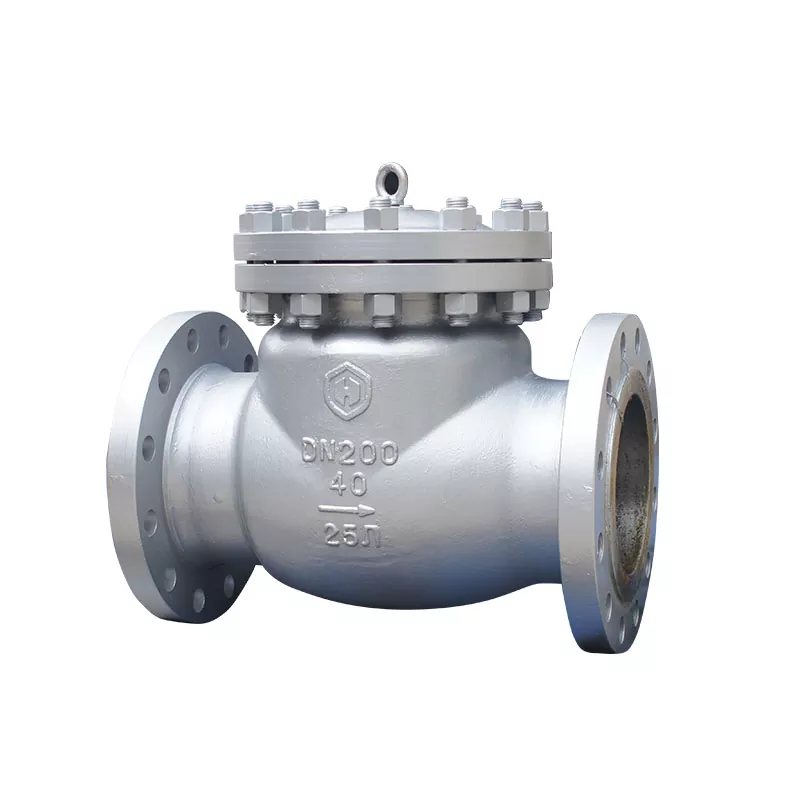
Key Factors for Sizing a Swing Check Valve
To select the right Swing Check Valve size, engineers must evaluate the following parameters:
| Parameter | Why It Matters |
|---|---|
| Flow rate (Q) | Determines velocity through the valve |
| Pipe diameter | Must match valve end connections |
| System pressure | Affects disc stability and sealing |
| Fluid temperature | Impacts material expansion and clearances |
| Allowable pressure drop | Influences energy efficiency |
Step-by-Step Sizing Method
-
Calculate expected flow velocity
For water applications, ideal velocity through a Swing Check Valve ranges from 2 to 4 m/s. Below 1.5 m/s, the disc may not fully open, causing chatter. Above 5 m/s, erosion and slamming occur. -
Match line size unless velocity dictates otherwise
Most Swing Check Valves are line-sized (same diameter as pipe). However, if calculated velocity exceeds 5 m/s, increase valve size by one or two nominal diameters. -
Verify pressure drop using manufacturer curves
Hanno provides ΔP charts for each Swing Check Valve model. Multiply the valve’s resistance coefficient (K) by velocity pressure to estimate losses. -
Check closure time
Larger Swing Check Valves have heavier discs and longer stroke, leading to delayed closure and higher reverse flow velocity. Use fast-closing designs or external dampers when needed.
Common Sizing Mistakes
-
Using pump discharge size without checking velocity
-
Ignoring transient conditions (start/stop cycles)
-
Assuming line size always equals correct valve size
Hanno application engineers verify each Swing Check Valve size using hydraulic analysis to avoid these errors.
Swing Check Valves FAQ
Q1: What happens if I choose a Swing Check Valve that is too large for my water pipeline?
A: An oversized Swing Check Valve causes the disc to float partially open or oscillate. This leads to rapid wear of hinge pins and seat seals, increased maintenance frequency, and low-frequency water hammer. For low-flow conditions, always size down to match expected velocity rather than pipe diameter.
Q2: Can I use the same Swing Check Valve size for both constant and intermittent water flow?
A: No. Intermittent flow (e.g., pumping stations with on/off cycles) requires a Swing Check Valve sized for the lowest expected continuous flow velocity. For constant flow, size for normal operating velocity. Hanno recommends separate sizing calculations for each operating regime because disc response time differs significantly between steady and transient flow.
Q3: How does water temperature affect Swing Check Valve sizing?
A: Hot water (above 60°C) lowers viscosity slightly but increases thermal expansion of the disc and body. Clearances in a Swing Check Valve must be widened for high-temperature water to prevent binding. For cold water (below 10°C), higher density requires slightly larger valve area to maintain the same mass flow rate. Always consult Hanno temperature derating tables when sizing Swing Check Valves for non-ambient water temperatures.
Recommended Sizes for Common Water Applications
| Application | Typical Flow Velocity | Recommended Swing Check Valve Size |
|---|---|---|
| Building water supply | 2–3 m/s | Same as pipe diameter |
| Irrigation mainline | 3–4 m/s | One size larger than pipe (if >3.5 m/s) |
| Cooling tower recirculation | 1.5–2.5 m/s | Same as pipe diameter |
| Firewater ring main | 4–6 m/s | Two sizes larger with external damper |
For detailed engineering support or to request a sizing calculation for your specific water project, contact Hanno today through our technical inquiry form. Our team provides free sizing verification for all Swing Check Valve applications.