

How Do You Select the Right Spring for a Lift Type Check Valve in Pulsating Flow Conditions
2026-05-06
Selecting the correct spring for a Lift Type Check Valve in pulsating flow environments is critical to system reliability and longevity. At Zhongguan, engineers often emphasize that improper spring selection leads to premature wear, chatter, and seal failure. This guide provides a professional framework for making that choice.
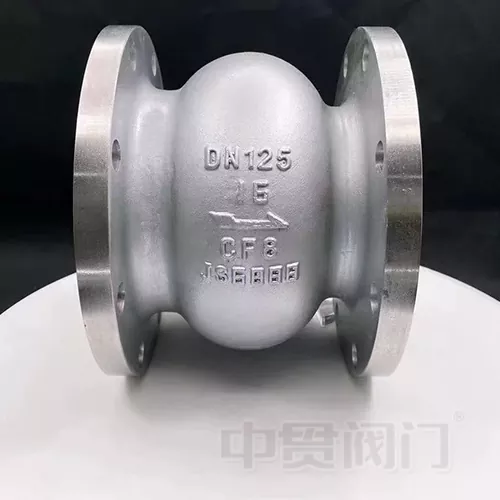
Understanding the Challenge
Pulsating flow—common in reciprocating pumps, compressors, and certain process systems—creates rapid pressure fluctuations. A Lift Type Check Valve relies on spring force to return the disc to its seat before flow reverses. Too weak a spring causes slamming; too strong a spring prevents opening at low flow. Zhongguan recommends analyzing three parameters: pulsation frequency, pressure amplitude, and fluid density.
Key Selection Criteria
| Criterion | Why It Matters | Recommended Action |
|---|---|---|
| Spring rate (k) | Determines disc response speed | Match k to maximum pressure rise rate |
| Preload force | Sets cracking pressure | Calculate 5-10% above average line pressure |
| Natural frequency | Avoids resonance with pulsations | Keep spring frequency 20x pulsation frequency |
| Fatigue life | Withstands cyclic loading | Use chrome-silicon or stainless spring steel |
| End type | Affects seating alignment | Closed and ground ends for pulsating duty |
Step-by-Step Selection Process for Lift Type Check Valve Springs
-
Measure pulsation characteristics – Record frequency (Hz), peak-to-peak pressure, and minimum flow velocity.
-
Calculate required spring force – Fspring=ΔPmin×Adisc+Finertia where ΔPmin is the minimum pressure differential to keep disc seated during flow lulls.
-
Select spring material – For pulsating water/oil, 302 stainless; for steam or corrosive media, Inconel or Zhongguan-specified alloys.
-
Validate through simulation – Use computational fluid dynamics (CFD) or manufacturer sizing software.
Lift Type Check Valve FAQ – Common Spring-Related Questions
Q1: What happens if the spring is too weak for a Lift Type Check Valve in pulsating service?
A1: A weak spring cannot close the disc quickly enough between pressure pulses. The disc remains suspended or bounces, allowing reverse flow before full closure occurs. This creates water hammer, loud banging noises, and rapid seat erosion. In extreme cases, the disc may never fully seat, leading to continuous backflow and complete valve failure within hours. Zhongguan recommends over-sizing spring preload by 15% for pulsating conditions to ensure positive seating.
Q2: How often should the spring be replaced in a Lift Type Check Valve exposed to high-frequency pulsations?
A2: For pulsations above 5 Hz, spring fatigue becomes a primary concern. Zhongguan advises inspection intervals of 2,000 operating hours or every 3 months, whichever comes first. Actual replacement depends on spring material: chrome-silicon springs typically last 1–2 million cycles; stainless steel lasts 500,000–1 million cycles under similar loads. Use nondestructive testing (dye penetrant or magnetic particle) to detect micro-cracks. Any visible deformation or loss of preload warrants immediate replacement.
Q3: Can a standard spring from a non-pulsating Lift Type Check Valve work temporarily in a pulsating flow system?
A3: No. Standard springs are designed for steady flow and fatigue limits far below pulsating duty. Using one even temporarily risks spring fracture, which may send metal fragments downstream, damage pumps, or cause sudden valve failure. Zhongguan has documented cases where a non-rated spring failed within 4 hours at 3 Hz pulsation. Always use springs specifically rated for dynamic cycling. A certified replacement from Zhongguan ensures matching of spring rate, preload, and fatigue resistance for your exact pulsation profile.
Final Checklist Before Installation
-
Spring rate verified against manufacturer’s pulsation chart
-
Preload adjusted to 1.2x minimum backpressure
-
Spring ends ground for perpendicular load transfer
-
Disc travel stops installed to prevent spring over-compression
-
Simulation report confirms no resonant frequencies overlap
Selecting the right spring transforms a standard Lift Type Check Valve into a reliable component for demanding pulsating systems. Zhongguan provides engineered spring kits with documented pulsation ratings and material certificates.
For help selecting or customizing a Lift Type Check Valve spring for your specific pulsating flow application, contact us today. Our engineers offer free sizing calculations and fatigue life predictions based on your actual cycle data. Reach Zhongguan via the website contact form or call our technical support line for a consultation.