

How Do You Select the Right Cracking Pressure for a Long Shank Return Valve
2026-07-07
Selecting the correct cracking pressure for a Long Shank Return Valve is one of the most critical decisions in hydraulic system design. Set it too low, and the valve may open prematurely, causing erratic return flow and pressure fluctuations. Set it too high, and you risk excessive backpressure, reduced pump efficiency, or even component damage. At GenTant, we have engineered hundreds of Long Shank Return Valve solutions across mobile, industrial, and subsea applications, and we consistently see that cracking pressure selection directly impacts system reliability, energy consumption, and valve service life. This guide walks you through the engineering logic, application variables, and practical calculations to get it right the first time.
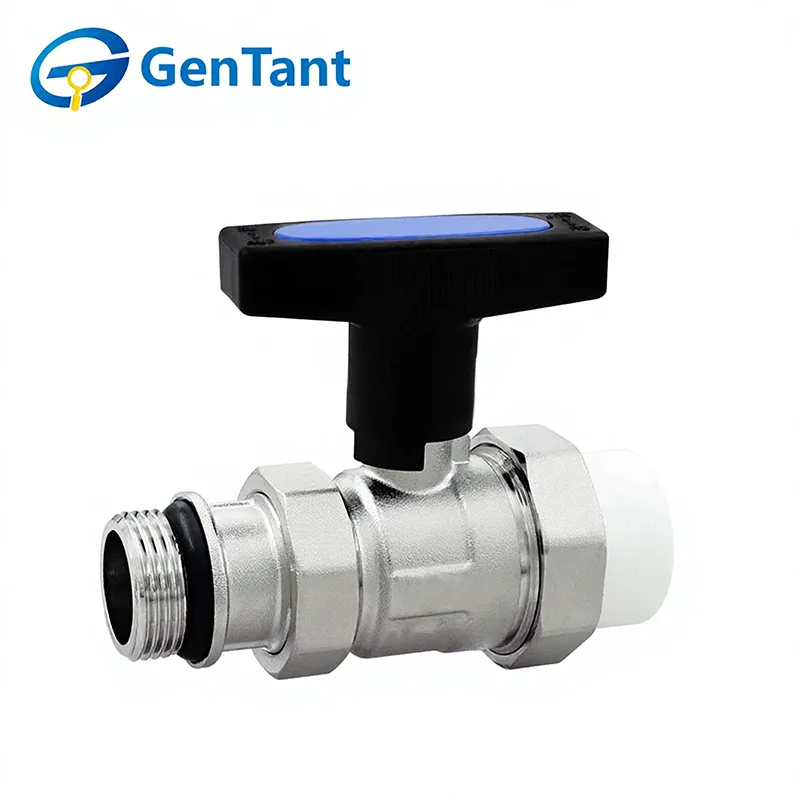
What Is Cracking Pressure in a Long Shank Return Valve?
Cracking pressure is the minimum upstream pressure required to overcome the valve’s spring force and poppet seal resistance, initiating flow through the return port. Unlike standard check valves, a Long Shank Return Valve features an elongated stem (shank) that provides guided alignment, reduced chatter, and smoother opening dynamics—but this design also introduces additional friction and damping forces that must be accounted for in your pressure calculation.
Key Factors That Influence Cracking Pressure Selection
| Factor | Impact on Cracking Pressure |
|---|---|
| Return line backpressure | Must be lower than cracking pressure; otherwise, the valve remains closed or chatters. |
| Pump flow rate (GPM/LPM) | Higher flow requires higher cracking pressure to maintain stable poppet lift. |
| Fluid viscosity (ISO VG grade) | Thicker fluids increase damping force, requiring a 5–10% pressure offset. |
| Operating temperature range | Cold starts may need a temporary lower setting; thermal expansion shifts spring preload. |
| System duty cycle (continuous vs. intermittent) | Continuous duty demands a wider margin above backpressure to avoid fatigue. |
| Mounting orientation (vertical/horizontal) | Gravity and shank weight add ±2–3 psi in vertical installations. |
Step-by-Step Selection Process (Engineered for GenTant Valves)
-
Measure maximum expected return line backpressure at the valve outlet (port T) under all operating conditions—including cold start, warm idle, and peak load.
-
Add a safety margin of 15–25 psi (1.0–1.7 bar) above that backpressure to ensure the Long Shank Return Valve remains fully seated when return flow is not required.
-
Calculate the minimum required cracking pressure using:
P_crack = P_back_max + P_margin + P_dynamic
where P_dynamic accounts for flow-induced forces (typically 3–8 psi for flows above 40 GPM). -
Cross-check against pump compensator settings – cracking pressure must never exceed 80% of the system’s main relief valve setting to avoid starvation.
-
Validate with thermal simulation – if your system sees a 50°C swing, the spring rate changes by ~3–5%; GenTant offers temperature-compensated springs for extreme environments.
Common Mistakes When Setting Cracking Pressure
-
Using the same pressure as a standard check valve – the longer shank increases friction drag, so you actually need 5–8% higher cracking pressure for equivalent performance.
-
Ignoring accumulator pre-charge – if an accumulator discharges into the return line, momentary backpressure spikes can exceed your setting; always measure with a pressure transducer during transient events.
-
Overlooking pilot-operated variants – some Long Shank Return Valve models from GenTant allow remote pilot control, which decouples cracking pressure from spring force entirely, giving you a wider safe range.
Long Shank Return Valve FAQ – Expert Answers
Q: Can I change the cracking pressure of an existing Long Shank Return Valve without replacing the entire unit?
A: Yes – but only if your valve is designed with an adjustable spring retainer or interchangeable shim kit. GenTant offers field-adjustable models where you can add or remove shims (each shim changes pressure by ~2–3 psi). However, we strongly recommend using a calibrated test bench to verify the new setting, because the long shank’s guided geometry amplifies small shim changes into larger flow hysteresis effects. For non-adjustable welded designs, you must replace the spring cartridge as a matched set to maintain the shank-to-seat alignment tolerance.
Q: How does cracking pressure affect the energy efficiency of a Long Shank Return Valve in a load-sensing system?
A: Directly and significantly. Every 10 psi of cracking pressure above the absolute minimum consumes approximately 0.5–1.0% of total pump input power as heat (depending on flow). In a 100 GPM system, a 25 psi over-setting wastes over 1.2 kW of continuous power. More critically, in load-sensing circuits, excessive cracking pressure delays the pump’s de-stroking response, causing the system to overshoot target pressures and degrade fuel economy. GenTant recommends using our online sizing tool to plot your system’s power loss vs. cracking pressure curve—our data shows the optimum point is usually just 18–22 psi above maximum backpressure, not the industry-default 30 psi.
Q: What happens if I set the cracking pressure too high on a Long Shank Return Valve during cold start conditions?
A: Two failure modes emerge. First, the valve may not open at all until the oil warms up, which starves the actuator return side and causes cavitation in the pump inlet. Second, if it does crack open, the high differential pressure across the poppet generates excessive jet velocity, eroding the shank guide surface over time – we have seen this reduce valve life from 10,000 cycles to under 800 cycles in laboratory tests at GenTant. To avoid this, always specify the cold-start viscosity grade and use the lowest cracking pressure that still maintains a positive seal at hot idle. If your application must cover a wide temperature range, select a GenTant thermally compensated spring that reduces preload by 8% automatically as viscosity rises.
Recommended Cracking Pressure Ranges by Application
| Application Type | Typical Flow (GPM) | Recommended Cracking Pressure (psi) | GenTant Model Suggestion |
|---|---|---|---|
| Agricultural steering return | 5–15 | 12–18 | GT-LSR-06A |
| Mobile excavator tank return | 30–60 | 22–28 | GT-LSR-10T |
| Industrial press high-backpressure | 80–120 | 30–38 (with pilot assist) | GT-LSR-12P |
| Subsea ROV hydraulic pack | 2–8 | 8–12 (corrosion-resistant) | GT-LSR-04SS |
Final Engineering Verdict
There is no “one-size-fits-all” cracking pressure for a Long Shank Return Valve. The right value emerges from measuring your worst-case backpressure, factoring in viscosity and thermal drift, and then validating with real-time pressure logging during system ramp-up. Always leave a small tolerance band (±2 psi) for manufacturing variation, and document your setting with a traceable calibration certificate. GenTant provides every Long Shank Return Valve with a detailed pressure-flow curve specific to your order, so you never guess – you calculate with confidence.
Contact Us for a Custom Sizing Review
Selecting the perfect cracking pressure is easier when you have the right engineering partner. At GenTant, our hydraulic specialists offer free, no-obligation sizing reviews for any Long Shank Return Valve application – including retrofits, custom springs, and pilot-assisted configurations. Send us your system schematic, flow range, and temperature profile, and we will respond with a recommended cracking pressure, simulated performance data, and a firm quotation within 24 hours. Contact GenTant today – email us or call our engineering hotline to schedule a 15-minute technical consultation. Your system’s efficiency and reliability start with one precise number – let us help you find it.