

How Do You Properly Install an Elastic Seat Butterfly Valve Between Flanges Without Damaging the Seat
2026-06-25
Installing an Elastic Seat Butterfly Valve between flanges sounds straightforward, but one wrong move—over-tightening a bolt, misaligning the gasket surface, or forgetting the concentricity—can ruin the resilient seat before the system even starts. At Dafugui, we have seen thousands of field failures traced back to improper mounting. The seat is the heart of the valve’s bubble-tight sealing performance, and once it is pinched, extruded, or sheared, the entire valve becomes a liability. This guide walks through every critical step, tool, and torque value to ensure a flawless flange-to-flange installation that preserves the Elastic Seat Butterfly Valve for its full design life.
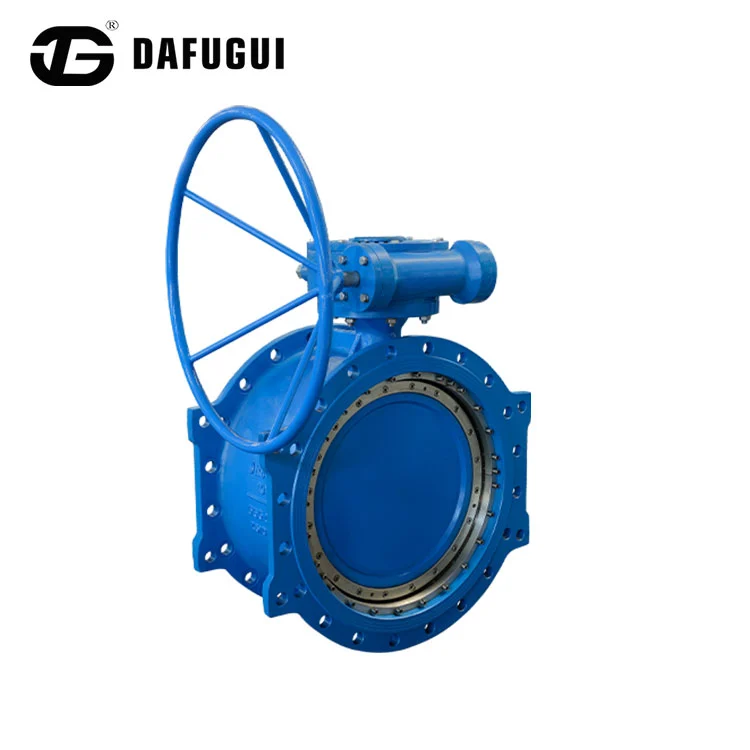
Pre-Installation Checklist – What to Inspect Before Bolting
Before bringing the Elastic Seat Butterfly Valve near the pipeline, verify these five items. Skipping any of them is the number one cause of seat damage during installation.
| Inspection Item | Acceptance Criteria | Action if Not Met |
|---|---|---|
| Flange face condition | No pitting, radial scratches, or weld spatter | Grind smooth or replace flange |
| Flange gasket surface | Flat within 0.5 mm per meter | Resurface or shim |
| Pipe concentricity | Offset ≤ 1.5 mm | Realign pipe supports |
| Bolt hole alignment | All holes match within 1 mm | Re-drill or use adjustable flanges |
| Seat visual check | No cuts, swelling, or debris | Clean with soft cloth; replace seat if damaged |
Dafugui recommends always dry-fitting the valve between flanges without bolts first. If the valve does not sit naturally between the flange faces with a uniform gap on both sides, do not force it—forced installation creates uneven compression that will permanently deform the Elastic Seat Butterfly Valve’s sealing element.
Step-by-Step Installation Procedure (Flange-to-Flange)
Follow this sequence exactly. Each step protects the elastic seat from the two biggest killers: over-compression and shear stress.
Step 1 – Set the Disc to the Correct Position
The disc must be slightly open (5°–10°) during flange alignment. A fully closed disc can catch on the flange inner edge when sliding the valve between flanges. Dafugui engineers emphasize that this simple habit reduces seat scuffing by over 80%.
Step 2 – Insert the Valve Centrally
Slide the Elastic Seat Butterfly Valve evenly between the two flanges. Ensure the seat’s outer diameter does not rub against the flange bore. If resistance is felt, stop and check flange concentricity.
Step 3 – Introduce Bolts Hand-Tight Only
Insert all bolts and tighten them by hand in a star pattern until the flange faces just touch the valve’s seat face. Do not use tools at this stage.
Step 4 – Torque in Three Incremental Passes
This is where most installations go wrong. Use a calibrated torque wrench and follow this three-pass schedule:
| Pass | Torque (% of Full Value) | Pattern |
|---|---|---|
| 1st | 30% | Star (cross) pattern |
| 2nd | 70% | Star (cross) pattern |
| 3rd | 100% | Sequential clockwise |
For a Dafugui Elastic Seat Butterfly Valve in DN150 with PN16 flanges, the final torque per bolt is typically 80–100 Nm (refer to the specific data sheet). Never exceed the recommended torque—over-torquing extrudes the elastic seat into the flange bore, causing immediate leakage and premature failure.
Step 5 – Verify Gap Uniformity
After full torque, measure the gap between the two flanges at four quadrants. The variation should be less than 0.3 mm. Uneven gaps indicate misalignment or uneven bolt tension—re-loosen and repeat Step 4.
Common Mistakes That Ruin the Elastic Seat
-
Using lubricant on flange bolts without reducing torque – Lubrication increases actual clamping force; reduce torque by 15–20%.
-
Installing with pipe strain – A misaligned pipe exerts bending loads that deform the seat asymmetrically. Always install the valve after pipe supports are set.
-
Forgetting flange gaskets – The Elastic Seat Butterfly Valve is a wafer design; it requires full-face gaskets (not ring-type) to distribute compression evenly over the seat’s wide face.
FAQ – Frequently Asked Questions About Elastic Seat Butterfly Valve Installation
Q1: Can I reuse an Elastic Seat Butterfly Valve that has been in service after removing it from between flanges?
A: Reuse is possible only if the seat shows zero compression set, no cuts, and no swelling. Measure the seat’s free outer diameter and compare it to the factory specification—if it has expanded more than 2% or lost more than 1 mm in thickness, replace the seat. Dafugui advises against reusing any Elastic Seat Butterfly Valve that has been under full rated pressure for over 5 years, as the elastomer’s memory deteriorates even if visual inspection passes.
Q2: What torque should I apply if my flanges are made of stainless steel instead of carbon steel?
A: Stainless steel flanges have lower thread friction and higher galling risk. For a Dafugui Elastic Seat Butterfly Valve mounted between stainless flanges, reduce the recommended carbon-steel torque by 20% and apply anti-seize compound only on the bolt threads (never on the nut face or flange surface). Always perform a leak test at 1.5× working pressure before putting the line into service—this confirms that the lower torque still achieves a seal.
Q3: How do I know if the seat has been damaged during installation before pressurizing the system?
A: Perform a simple low-pressure air test at 0.5 bar with the disc closed and the downstream flange blanked. Apply soapy water around the seat perimeter and flange gasket area. If bubbles appear, the seat is compromised. Additionally, rotate the disc from fully closed to fully open by hand—if you feel a rough spot or hear a squeaking noise, the seat may have been sheared or folded. Dafugui offers a portable seat inspection tool that measures indentation depth; contact our team for details.
Final Verification After Full Torque
Once the Elastic Seat Butterfly Valve is fully bolted, perform these final checks before pressurization:
-
Disc operation – The disc must rotate 90° smoothly with no more than 5% variation in operating torque across the full stroke.
-
Flange bolt stretch – Use a dial gauge to ensure all bolts have elongated uniformly (within 0.05 mm of each other).
-
Leak test – Hydrotest at 1.1× maximum working pressure for 15 minutes with the disc in closed position.
Why Choose Dafugui for Your Elastic Seat Butterfly Valve Needs?
Dafugui manufactures each Elastic Seat Butterfly Valve with precision-molded EPDM, NBR, or PTFE seats that are factory-tested for concentricity and compression memory. Every valve ships with a custom torque card specific to your flange rating and bolt size—eliminating guesswork. Our technical support team provides on-site installation audits and remote video guidance for critical projects.
Contact Us
Proper installation is only half the story—choosing the right Elastic Seat Butterfly Valve for your pressure, temperature, and media is equally critical. Dafugui offers free flange compatibility checks, seat material selection guides, and lifetime technical support. Reach out to our engineering desk today with your line size, working pressure, and fluid type—we will respond within 4 business hours with a tailored installation protocol and a no-obligation quote. Contact Dafugui now to secure your valve’s performance from the first bolt to the last turn.