

How Do I Test an LPG Safety Valve to Confirm It Is Still Functioning Properly
2026-06-16
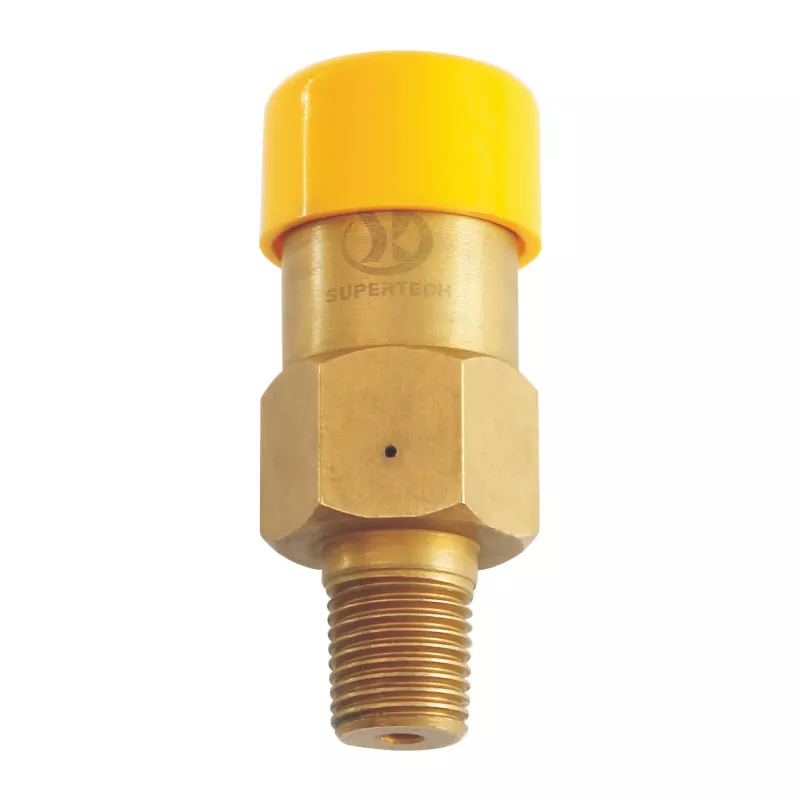
For any facility using liquefied petroleum gas, the LPG Safety Valve is your last line of defense against overpressure events. A malfunctioning valve can turn a manageable pressure spike into a catastrophic rupture. At Supertech, we have engineered and tested thousands of these critical devices across industrial, commercial, and domestic installations. This guide provides a step‑by‑step field‑testing protocol that meets international standards, helping you verify that your LPG Safety Valve will perform exactly when needed.
Pre‑Test Preparation (Do Not Skip)
Before touching the valve, complete these mandatory checks:
| Step | Action | Purpose |
|---|---|---|
| 1 | Isolate the valve from the gas source (close the cylinder or main line valve). | Prevent uncontrolled gas release during handling. |
| 2 | Depressurize the downstream side slowly using a bleed port. | Avoid sudden pressure shock to the valve seat. |
| 3 | Visually inspect the valve body for corrosion, cracks, or foreign debris. | Identify external damage that compromises structural integrity. |
| 4 | Confirm the set‑pressure tag (stamped on the valve) matches your system’s maximum allowable working pressure (MAWP). | Testing at the wrong set point invalidates results. |
| 5 | Wear appropriate PPE (face shield, gloves, flame‑resistant clothing). | Standard safety practice for any LPG Safety Valve work. |
The Three‑Step Functional Test Protocol
Step 1 – Pop‑Test (Bench or In‑Situ)
Using a calibrated pressure source (hand pump or nitrogen cylinder), gradually raise the inlet pressure to 90 % of the valve’s set pressure. Hold for 30 seconds – no audible or measurable leakage should occur. Then increase pressure slowly (≤ 5 % per second) until the valve “pops” open. Record the pop‑pressure. A properly functioning LPG Safety Valve must open within ± 3 % of its stamped set pressure. If it opens early or late, the spring or seat is degraded.
Step 2 – Blow‑Down & Reseat Test
After the pop, reduce the inlet pressure gradually. The valve should reseat fully (close) when the pressure drops to 85‑90 % of the set pressure (blow‑down range). Observe the gauge – if the valve continues to simmer or fails to close completely, internal debris or seat damage is present. Supertech recommends recording both pop and reseat pressures on a log sheet for trend analysis.
Step 3 – Leak‑Tightness Verification (Bubble Test)
With the valve reseated, apply a soap‑solution or specialized leak‑detection fluid to the outlet and any threaded joints. Pressurize the inlet to 10‑15 % below set pressure (a typical system operating pressure). Watch for bubble formation over 2 minutes. Zero bubbles indicate a tight seat. Any continuous bubble stream means the LPG Safety Valve requires immediate replacement or re‑lapping.
Interpreting Test Results (Decision Matrix)
| Observation | Diagnosis | Recommended Action |
|---|---|---|
| Pop pressure > +3 % of set | Spring fatigue or inlet blockage | Replace valve – do not re‑adjust |
| Pop pressure < -3 % of set | Weak spring or seat wear | Replace with new Supertech unit |
| Reseat > 92 % of set (too high) | Seat galling or debris | Clean and retest; if persists, replace |
| Reseat < 82 % of set (too low) | Damaged spring or guide | Immediate replacement |
| Continuous bubbles at outlet | Seat or O‑ring failure | Disassemble, inspect, or install new valve |
| No pop even at 110 % of set | Seized stem or frozen mechanism | Critical failure – replace before re‑pressurizing |
Frequently Asked Questions About LPG Safety Valve Testing
Q: How often should I perform this functional test on my LPG Safety Valve?
A: Industry best practice (per API RP 576 and EN 14129) mandates a full pop‑test at least once every 12 months for stationary installations. For mobile applications (e.g., LPG tankers or forklifts), reduce the interval to 6 months. Additionally, perform a visual and bubble test after any over‑pressure event or system modification. Supertech provides color‑coded test tags that attach directly to the valve, making your annual schedule visible at a glance.
Q: Can I test the LPG Safety Valve while the system is under full operating pressure?
A: No – this is extremely dangerous and yields unreliable readings. The valve must be isolated and depressurized on the downstream side. However, you may conduct a “in‑service” proof test using a separate auxiliary pressure source connected upstream of the valve, provided the main line is blocked and vented. For most field conditions, we strongly advise removing the valve and testing it on a dedicated bench with a calibrated gauge. Supertech offers portable test kits that include adapters for all common thread sizes, allowing safe bench testing without disconnecting piping.
Q: What should I do if my LPG Safety Valve passes the bubble test but fails the pop‑pressure check?
A: This scenario indicates that the seat seal is intact, but the spring force has drifted – typically due to creep or thermal cycling. A failed pop‑test is a mandatory replacement trigger; you cannot “adjust” the spring to compensate because that voids the manufacturer’s certification. Record the deviation, tag the valve as “out of service,” and install a new Supertech LPG Safety Valve with the exact same set‑pressure and flow capacity (AOR). After installation, re‑test the new unit on‑site before returning the system to normal operation.
Recordkeeping & Documentation
Every test must be documented with:
-
Valve serial number and set pressure
-
Test date and technician name
-
Pop pressure, reseat pressure, and bubble‑test result
-
Next scheduled test date
Supertech provides complimentary digital log templates with every valve purchase – these help you meet OSHA and local regulatory audit requirements without extra effort.
Final Verification – When to Call a Professional
If your LPG Safety Valve fails any of the three steps, do not attempt field repairs beyond cleaning external debris. Internal spring adjustment, lapping, or re‑certification requires specialized equipment and certified personnel. Supertech operates a fully accredited repair and calibration workshop, with turnaround times under 48 hours for most standard models.
Contact Us Today
Your LPG Safety Valve is too critical to leave to guesswork. For replacement units, portable test kits, or scheduled on‑site testing services, reach out to the Supertech technical team. We provide same‑day quotations, application‑sizing guidance, and emergency support. Contact us via our website’s live chat, or call our hotline – we are ready to help you maintain a zero‑failure safety culture. Let Supertech be your trusted partner in every pressure‑relief decision.