

How Do Butterfly Valves Handle Bi-Directional Flow in Pumped Storage Hydro Plants?
2026-09-23
A pumped storage hydro plant is not a conventional hydro plant. It operates in two directions: generating power when water flows downhill, and pumping water uphill when excess grid capacity is available. The Butterfly Valve that isolates the pump-turbine unit must therefore seal in both directions. It must also withstand the rapid flow reversals that occur during the transition between generating and pumping modes. In a typical installation, the valve may be opened and closed twice per day, every day, for 40 years. That is nearly 30,000 operating cycles, each involving a full flow reversal. This guide explains how butterfly valve design addresses the specific challenges of bi-directional flow in pumped storage applications.
1. What Happens to a Standard Butterfly Valve During Flow Reversal?
A standard Butterfly Valve is designed for unidirectional flow. The seat is typically a resilient material that is compressed by the disc when the valve closes. The upstream pressure assists the sealing by pushing the disc against the seat. When the flow reverses, the pressure now acts on the opposite side of the disc. If the seat is not designed for bi-directional sealing, the disc may be pushed away from the seat, causing leakage. In a pumped storage plant, this leakage is not acceptable because it allows water to bypass the unit, wasting energy and potentially causing damage. The table below shows the sealing performance of a standard valve compared to a bi-directional valve during flow reversal.
| Condition | Standard butterfly valve leakage | Bi-directional butterfly valve leakage |
| Forward flow, closed | Zero (pressure assisted) | Zero (pressure assisted) |
| Reverse flow, closed | 0.5 – 2.0% of rated flow | Zero (pressure assisted in both directions) |
| After 10,000 cycles | Seat wear, leakage increases | Seat wear minimal, leakage remains zero |
| Emergency closure (reverse flow) | Disc may slam, seat damage | Controlled closure, no damage |
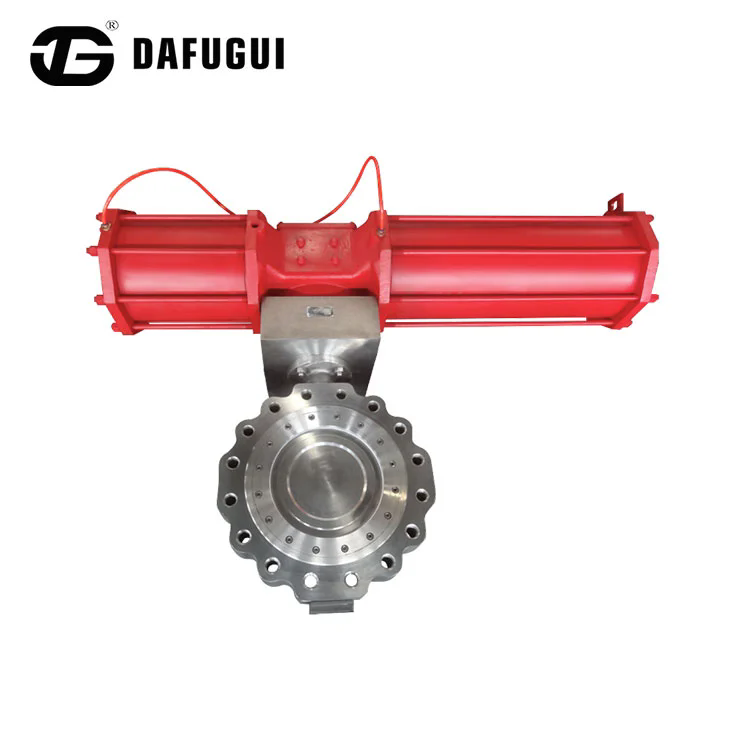
In our factory, we manufacture Butterfly Valve units with a double-offset design that provides bi-directional sealing. The double-offset geometry means that the disc moves away from the seat as it rotates, which eliminates rubbing and wear. The seat is a metal-to-metal design that is energized by the pressure in both directions. This design has been validated in pumped storage plants with over 20,000 operating cycles.
2. How Does the Double-Offset Geometry Achieve Bi-Directional Sealing?
The double-offset Butterfly Valve has two offsets: the shaft is offset from the centerline of the disc, and the shaft is offset from the sealing plane. The first offset ensures that the disc does not rub against the seat during rotation. The second offset ensures that the disc contacts the seat with a wedging action when the valve closes. The combination of these two offsets creates a seal that is effective in both flow directions. When the valve is closed, the disc is wedged into the seat. The upstream pressure, whether from the forward or reverse direction, pushes the disc more tightly into the seat. The table below shows the key design parameters of our double-offset butterfly valve for pumped storage applications.
| Parameter | Typical value for pumped storage | Significance |
| Nominal diameter (DN) | 800 – 3000 mm | Matches penstock size |
| Pressure rating (PN) | 16 – 40 bar | Handles static head |
| Seat type | Metal-to-metal, bi-directional | Zero leakage in both directions |
| Disc material | Stainless steel 16CrNi4 or duplex | Corrosion resistance, strength |
| Seat material | Stellite overlay on stainless steel | Wear resistance, high cycle life |
| Operating torque | 50 – 200 kNm (depending on size) | Determines actuator size |
| Cycle life | > 30,000 cycles | 40 years of daily operation |
Dafugui Pipe Valve Co., Ltd. manufactures double-offset butterfly valves for pumped storage applications. Our factory uses a precision machining process that ensures the disc and seat are matched to within 0.02 mm. This tolerance is critical for achieving zero leakage in both directions.
3. What Are the Special Requirements for the Operating Mechanism?
The operating mechanism of a Butterfly Valve in a pumped storage plant must handle two special conditions. The first is the rapid closure that is required during an emergency. In a pumped storage plant, a power failure or a runaway condition may require the valve to close in 30 to 60 seconds. The actuator must be sized to overcome the dynamic torque of the flowing water. The second is the frequent operation. The valve may be opened and closed twice per day, which means the actuator must be designed for high cycle life. The table below shows the requirements for the operating mechanism in different operating modes.
| Operating mode | Closing time requirement | Torque requirement | Actuator type |
| Normal open/close | 60 – 120 seconds | 1.5x rated torque | Electric motor + gearbox |
| Emergency closure | 30 – 60 seconds | 2.5x rated torque | Hydraulic accumulator + counterweight |
| Maintenance isolation | Manual (slow) | 1.0x rated torque | Manual handwheel |
In our factory, we design the operating mechanism to meet the specific requirements of each plant. The actuator is sized based on the maximum differential pressure and the required closing time. We also provide a counterweight system that ensures the valve closes even if the power fails. The counterweight is sized to provide enough torque to close the valve against the maximum flow velocity.
4. How Is the Valve Tested to Verify Bi-Directional Performance?
Before shipment, every Butterfly Valve for pumped storage is tested in our factory. The test includes three parts. First, a hydrostatic test at 1.5 times the rated pressure to verify the structural integrity of the body and the seat. Second, a bi-directional leakage test. The valve is closed, and water is applied to the upstream side. The leakage is measured. Then the water is applied to the downstream side, and the leakage is measured again. The acceptable leakage is zero for both directions. Third, a cycle test. The valve is opened and closed 100 times to verify the repeatability of the sealing. The table below shows the test parameters and acceptance criteria.
| Test | Test pressure/condition | Acceptance criteria |
| Hydrostatic test | 1.5x PN | No leakage from body or seat |
| Forward leakage test | 1.0x PN, closed | Zero visible leakage |
| Reverse leakage test | 1.0x PN, closed | Zero visible leakage |
| Cycle test (100 cycles) | 0.5x PN, open/close | Leakage remains zero |
Field verification tip: After installation, perform a bi-directional leakage test at the site before commissioning. This test can be performed by closing the valve and measuring the leakage from the drain port on each side of the disc. Any leakage indicates that the seat is not properly engaged or that the actuator is not providing enough torque.
Frequently Asked Questions About Butterfly Valves in Pumped Storage Plants
Summary for Hydro Engineers
Butterfly Valves in pumped storage hydro plants must handle bi-directional flow, frequent operation, and emergency closure. The double-offset design provides bi-directional sealing by wedging the disc into the seat with pressure assistance from both directions. The operating mechanism must be sized for the dynamic torque and the required closing time. The valve must be tested for zero leakage in both directions before shipment. Dafugui Pipe Valve Co., Ltd. has been manufacturing butterfly valves for hydro applications for over 20 years and supplies to pumped storage plants worldwide.
Dafugui Pipe Valve Co., Ltd. manufactures double-offset Butterfly Valve units with metal-to-metal seats, bi-directional sealing, and high cycle life for pumped storage applications. We provide full test reports and maintenance documentation for all of our products.