

How Do Automation And Control Valves Improve Industrial Efficiency and Process Reliability?
2026-02-11
Article Abstract
Automation And Control Valves play a critical role in modern industrial systems by regulating flow, pressure, temperature, and fluid direction with high precision. As industries pursue higher efficiency, safety, and operational stability, the demand for intelligent and reliable valve solutions continues to grow. This article provides a structured and practical overview of Automation And Control Valves, focusing on common customer challenges, functional principles, selection criteria, and real-world applications. It is designed to help decision-makers and engineers clearly understand how these valves contribute to long-term operational value.
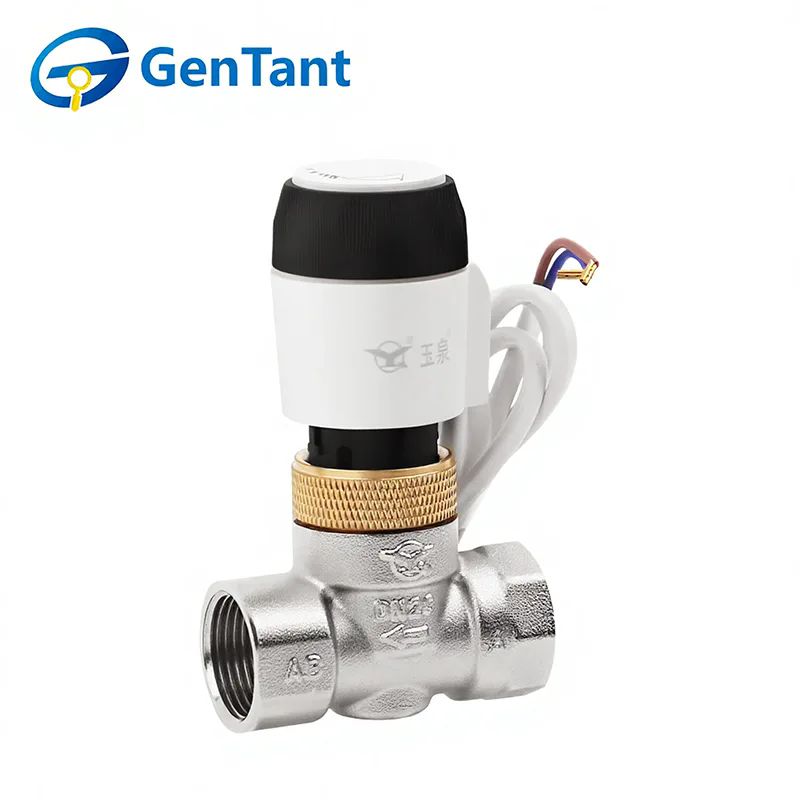
Table of Contents
- Article Outline
- Key Customer Pain Points
- What Are Automation And Control Valves?
- Core Components and Working Principles
- Common Types of Automation And Control Valves
- How to Select the Right Valve Solution
- Typical Industrial Applications
- Operational Benefits for End Users
- Frequently Asked Questions
- Conclusion and Contact Information
Article Outline
- Understanding operational challenges in automated flow control
- Technical definition and scope of Automation And Control Valves
- Main components and control mechanisms
- Valve classifications and functional differences
- Selection methodology based on process requirements
- Industry-specific application scenarios
- Performance, safety, and cost-efficiency advantages
Key Customer Pain Points
Industrial users often encounter recurring issues when managing fluid control systems. These challenges directly impact productivity, safety, and operating costs.
- Inconsistent flow control leading to unstable process output
- High maintenance frequency caused by improper valve selection
- Manual operation limitations in complex or hazardous environments
- Integration difficulties with existing automation systems
- Energy losses due to inefficient flow regulation
What Are Automation And Control Valves?
Automation And Control Valves are engineered devices designed to automatically regulate fluid flow within a system based on control signals. These signals are typically generated by controllers, sensors, or distributed control systems. Unlike manual valves, automated valves respond dynamically to changing process conditions, ensuring precise and repeatable control.
They are widely used in systems involving liquids, gases, steam, or corrosive media, where accuracy and reliability are essential to maintaining process integrity.
Core Components and Working Principles
A standard automated valve system consists of several integrated components that function together to achieve controlled operation.
| Component | Function |
|---|---|
| Valve Body | Provides the main flow passage and pressure containment |
| Actuator | Converts control signals into mechanical movement |
| Positioner | Ensures accurate valve positioning based on input signals |
| Control Interface | Connects the valve to automation systems or controllers |
When a control signal is received, the actuator adjusts the valve position accordingly, allowing precise modulation of flow or pressure in real time.
Common Types of Automation And Control Valves
Different process conditions require different valve designs. The most commonly used types include:
- Ball valves for fast on-off control and tight sealing
- Butterfly valves for large-diameter and low-pressure applications
- Globe valves for accurate throttling and flow regulation
- Gate valves for full-flow isolation
- Control valves designed specifically for continuous modulation
How to Select the Right Valve Solution
Selecting suitable Automation And Control Valves requires a systematic evaluation of process parameters and operational goals.
- Fluid characteristics such as viscosity, temperature, and corrosiveness
- Operating pressure and flow rate requirements
- Control accuracy and response time expectations
- Compatibility with existing automation infrastructure
- Maintenance accessibility and lifecycle cost considerations
A well-matched valve solution not only improves performance but also significantly reduces downtime and long-term operational risk.
Typical Industrial Applications
Automation And Control Valves are widely deployed across multiple industries due to their versatility and reliability.
- Oil and gas production and refining processes
- Chemical and petrochemical manufacturing
- Water treatment and wastewater management
- Power generation and energy systems
- Food, beverage, and pharmaceutical processing
Operational Benefits for End Users
Implementing automated valve systems delivers measurable benefits throughout the production lifecycle.
- Improved process consistency and product quality
- Enhanced safety through remote and automated operation
- Reduced labor and maintenance costs
- Higher energy efficiency and resource utilization
- Scalability for future system upgrades
Frequently Asked Questions
Q1: Are Automation And Control Valves suitable for harsh environments?
Yes. With appropriate material selection and actuator protection, these valves can operate reliably in high-temperature, high-pressure, or corrosive conditions.
Q2: Can automated valves be integrated into existing systems?
Most modern Automation And Control Valves are designed to be compatible with common industrial control protocols, allowing seamless integration with existing systems.
Q3: How often do automated valves require maintenance?
Maintenance intervals depend on operating conditions and valve type, but proper selection and installation significantly extend service life and reduce intervention frequency.
Conclusion and Contact Information
Automation And Control Valves are foundational components in achieving efficient, safe, and reliable industrial operations. By addressing key customer challenges such as control accuracy, system integration, and operational stability, these valves enable industries to meet increasing performance demands while controlling costs.
GenTant specializes in providing robust and application-focused Automation And Control Valve solutions tailored to diverse industrial needs. To explore suitable options for specific projects or to receive technical guidance, GenTant encourages interested parties to contact us and discuss customized valve solutions with experienced professionals.