

How Can the Right Check Valve Improve Flow Reliability in Real Projects?
2026-04-15
When I evaluate a piping system, I do not only think about how to move fluid forward. I also think about what happens when flow stops, pressure changes, or reverse movement starts to threaten the line. That is exactly where a well-designed Check Valve becomes essential. In many industrial and commercial systems, I have seen buyers focus first on pumps, pipes, or actuators, only to realize later that backflow control is what protects the entire process. This is also why Dafugui Pipe Valve Co., Ltd. naturally comes into the conversation when I look for practical valve solutions that balance durability, installation flexibility, and long-term operating stability. A dependable Check Valve is not just a small fitting in the pipeline. It is a quiet safeguard that helps keep production steady, equipment protected, and maintenance costs under control.
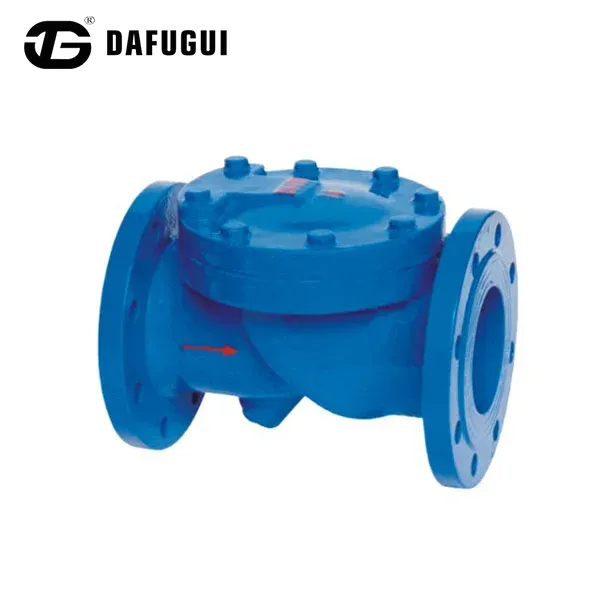
What Problems Do Buyers Actually Face When Choosing a Check Valve?
I often notice that buyers do not struggle because they misunderstand the basic function of a valve. They struggle because the operating environment is never as simple as a product catalog makes it look. One project may involve clean water, while another may involve corrosive media, fluctuating pressure, frequent pump starts and stops, or tight installation space. In these cases, choosing the wrong Check Valve can lead to repeated downtime, poor sealing performance, water hammer risk, or unnecessary replacement costs.
- I may need to prevent reverse flow without adding complex controls.
- I may need stable sealing under repeated opening and closing cycles.
- I may need a valve body material that fits the medium and the service life target.
- I may need a compact design for narrow pipeline layouts.
- I may need a product that is easier to maintain over the long term.
That is why I never treat valve selection as a box-checking exercise. I look at real operating pain points first, then match structure, material, and connection method to the actual job.
Why Does a Check Valve Matter More Than Many Buyers Expect?
In day-to-day operation, a pipeline system can look stable right up until the moment flow reverses. That reverse movement can damage upstream equipment, disturb process balance, contaminate clean media, or create pressure shocks that affect the whole line. I have learned that the best time to solve that problem is before it happens. A properly selected Check Valve helps me create one-way flow protection automatically, without relying on constant manual intervention.
That matters in applications such as water treatment, general building services, pump discharge lines, industrial circulation systems, and process transfer systems. Once I start viewing the valve as a protective measure instead of a simple accessory, the purchasing decision becomes much clearer.
How Do I Judge Whether One Valve Design Fits My System Better Than Another?
I usually compare valve options based on how the line behaves in real service, not just on price. Different structures can suit different operating conditions, and the best choice depends on flow pattern, pressure conditions, installation direction, and maintenance expectations.
| Selection Factor | What I Usually Check | Why It Matters |
|---|---|---|
| Flow Direction Stability | Whether the system has frequent stop-start cycles or reverse pressure events | Helps me reduce backflow risk and protect connected equipment |
| Pressure Conditions | Working pressure range and possible pressure fluctuation | Supports safe sealing and reliable service life |
| Medium Type | Water, chemical media, process liquid, or other fluids | Guides material selection and corrosion resistance needs |
| Installation Space | Available room in horizontal or vertical pipeline layouts | Affects which structure is easier to install and maintain |
| Maintenance Expectations | How often the line is serviced and how easy replacement should be | Reduces long-term labor and operating cost |
Instead of asking only which valve is popular, I ask which valve will keep my specific system more stable month after month.
Which Features Make a Check Valve More Practical for Long-Term Use?
From a buyer’s perspective, the most useful product features are rarely the most dramatic sounding ones. What I care about is whether the valve performs consistently under real conditions. A practical Check Valve should help me solve operating issues without creating new maintenance headaches.
- Responsive opening and closing behavior that supports smooth one-way flow
- Reliable sealing performance that helps reduce leakage and reverse flow
- Wear-resistant internal components for repeated use
- Material options that fit different media and operating environments
- Stable structural design that supports service reliability
- Customizable specifications for different pipeline requirements
When these features are combined well, I get more than a part number. I get a valve solution that fits the line, the budget, and the maintenance plan.
What Should I Consider Before Ordering for Water, Industrial, or Process Applications?
I never assume that one configuration fits every project. In a water system, I may focus on smooth flow passage and dependable shutoff during reverse pressure. In industrial service, I may pay closer attention to sealing durability, pressure class, and compatibility with working media. In process lines, I may also care about dimensional accuracy and how easily the product fits into an existing assembly plan.
Before ordering, I usually review these points carefully:
- Pipeline size and connection requirements
- Expected working pressure and temperature range
- Nature of the fluid and any corrosion concerns
- Installation position and available maintenance access
- Whether the system requires standard or customized specifications
This approach helps me avoid the common mistake of buying a valve that looks acceptable on paper but performs poorly once installed.
How Can Product Customization Create Better Value Instead of Higher Cost?
Some buyers hesitate when they hear the word customization because they assume it means longer lead times or unnecessary expense. I look at it differently. If a standard valve does not truly fit the line, then the lower initial price may not save money at all. A better-matched product can reduce leakage risk, limit future replacement frequency, and improve overall system confidence.
That is one reason I pay attention to suppliers that can support flexible specifications. When a manufacturer can respond to practical requirements such as size, material, pressure rating, or connection preferences, I have a better chance of getting a solution that works cleanly in the field rather than forcing the field to adapt to the product.
Why Do I Care About Supplier Experience as Much as the Valve Itself?
I have learned that the product is only half of the decision. The other half is whether the supplier understands what the valve must do in actual service. A good supplier helps me narrow choices, confirm technical details, and avoid mismatches that may not be obvious in the first discussion.
When I work with a manufacturer-focused source such as Dafugui Pipe Valve Co., Ltd., I am not only looking at a catalog. I am looking for production familiarity, communication efficiency, and the ability to support project-specific requirements. That matters when the procurement timeline is tight and the installation standard cannot be compromised.
What Makes a Smart Buying Decision More Sustainable Over Time?
For me, a smart purchase is not the cheapest one and not the most complex one either. It is the one that continues to make sense after installation. If the Check Valve helps keep flow under control, protects adjacent equipment, reduces unplanned maintenance, and fits the service environment well, then it delivers value far beyond its place in the line.
That is why I focus on operating logic, product structure, and supplier support together. A good Check Valve choice can improve daily reliability in a very quiet way, and in industrial systems, quiet reliability is often exactly what I want most.
How Can I Move Forward If I Am Comparing Options Right Now?
If I am currently comparing valve options for a new installation, line upgrade, or replacement order, I would rather start with real operating conditions than generic assumptions. The more clearly I define the medium, pressure needs, installation setting, and maintenance target, the easier it becomes to choose the right Check Valve for lasting performance. If you are reviewing solutions for your next project and want a valve option that is better aligned with actual service demands, now is the right time to discuss specifications, application needs, and supply details. Please contact us to send your inquiry and explore the right solution for your pipeline system.