

How Can a Steel Flat Flange Reduce Risk and Improve Pipeline Reliability?
2026-04-10
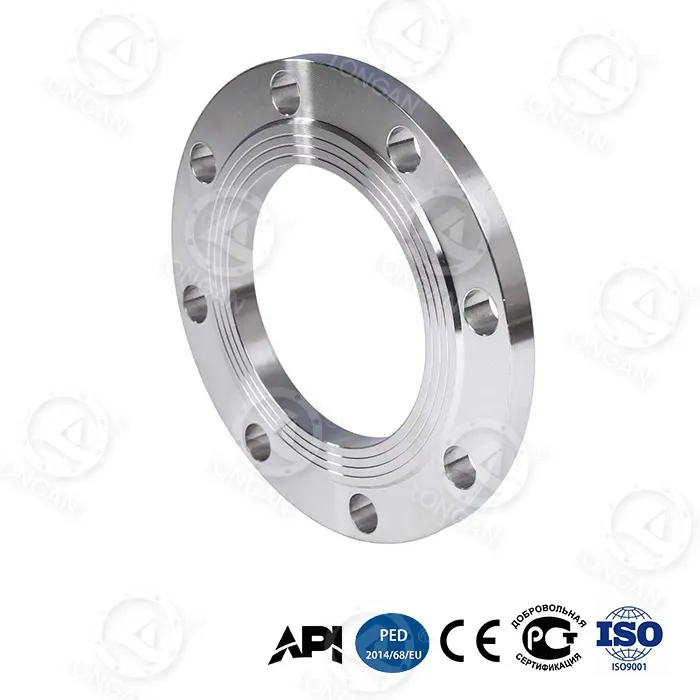
When I evaluate flange options for industrial piping, I do not just look at the drawing or the unit price. I look at sealing stability, installation tolerance, maintenance frequency, and how the part behaves once the system is actually under pressure. That is why, while reviewing solutions from Wenzhou Longan Flange Co., Ltd., I found it useful to focus on what a well-made Steel Flat Flange can really do in demanding applications. Instead of treating it as a basic connector, I see it as a practical component that helps control leakage risk, supports alignment, and improves long-term operating efficiency. For buyers who need dependable performance rather than vague promises, choosing the right Steel Flat Flange can make a measurable difference.
In many projects, the real problem is not whether a flange can be installed. The real question is whether it can continue to perform after pressure cycles, vibration, temperature changes, and repeated shutdowns. I have seen buyers struggle with premature sealing failure, bolt loosening, surface wear, and unexpected maintenance costs. A properly selected Steel Flat Flange addresses those pain points by offering a balanced combination of structural strength, connection stability, and serviceability.
Why Do Buyers Often Run Into Trouble When Choosing Flanges?
I think many sourcing mistakes happen because flanges are treated as interchangeable. On paper, several products may appear similar. In operation, they are not. The wrong choice can increase downtime, create sealing problems, or force repeated replacements that cost far more than the initial purchase price.
- I often see buyers focus too much on upfront price and too little on lifecycle value.
- I notice that some projects overlook installation conditions such as vibration, misalignment, or pressure fluctuation.
- I find that inconsistent machining quality can lead to uneven sealing contact and more difficult assembly.
- I also see many maintenance teams paying for the hidden cost of frequent shutdowns and rework.
That is exactly where a dependable Steel Flat Flange becomes valuable. It is not only about connecting pipes. It is about protecting the whole system from avoidable operational inefficiencies.
What Makes a Steel Flat Flange a Practical Choice for Industrial Systems?
From my perspective, the appeal of a Steel Flat Flange lies in its balance. It offers a straightforward connection design, broad application flexibility, and the structural confidence that industrial buyers expect. In water treatment, petrochemical transfer, process piping, equipment connections, and general industrial lines, this kind of flange is often chosen because it supports efficient assembly and stable sealing when matched correctly with the system requirements.
I also like that the product category is easy to integrate into both replacement projects and new installations. For procurement teams, that matters. A component does not help much if it creates sourcing confusion, compatibility issues, or complicated field installation. A good Steel Flat Flange simplifies procurement while supporting dependable use in real operating conditions.
| Buying Concern | What Buyers Usually Want | How a Quality Steel Flat Flange Helps |
| Connection reliability | Stable sealing under pressure | Provides a solid, consistent joining surface for dependable system performance |
| Installation efficiency | Faster assembly with fewer issues | Supports practical field installation and easier alignment in many piping layouts |
| Maintenance cost | Less rework and fewer shutdowns | Reduces the chance of recurring service problems when correctly selected and installed |
| Application flexibility | Suitable for multiple industrial environments | Fits a wide range of pipeline and equipment connection needs |
| Procurement confidence | Consistent quality and clear specifications | Makes sourcing easier when supplied by an experienced flange manufacturer |
How Does the Right Flange Help Me Control Long-Term Costs?
I always remind buyers that the cheapest flange is not necessarily the lowest-cost flange. Real cost shows up later through labor, maintenance, line stoppages, product loss, and safety concerns. If a sealing face wears too quickly or if the connection becomes unreliable under pressure changes, the replacement cycle gets shorter and the total ownership cost climbs fast.
A durable Steel Flat Flange can help control those long-term expenses in several ways. It can reduce the need for repeated maintenance interventions. It can support more stable operation. It can also reduce the indirect cost of unplanned downtime, which is often much more painful than the purchase order itself.
- I save time when installation goes smoothly the first time.
- I save labor when maintenance teams do not need to revisit the same joint repeatedly.
- I protect production when leakage risk is reduced.
- I improve planning when spare-part life becomes more predictable.
That is why I see a Steel Flat Flange as a value decision, not merely a hardware decision.
Which Product Features Matter Most Before I Place an Order?
Before I approve a flange supplier, I look beyond the catalog title. I want to know whether the product has been manufactured with consistency and whether the supplier understands application demands. The more serious the industrial environment, the less room there is for guesswork.
Here are the factors I would review before choosing a Steel Flat Flange:
- Material suitability for the intended medium and operating environment
- Dimensional accuracy for proper fit-up and sealing performance
- Machining quality of the sealing face
- Pressure and service compatibility with the system design
- Surface condition and resistance to wear or corrosion exposure
- Supplier manufacturing capability and quality consistency
- Communication speed and technical support during inquiry and ordering
When these factors are handled well, the Steel Flat Flange becomes much easier to trust in actual service.
Can a Better Supplier Make My Procurement Process Easier?
Absolutely. I think many buyers underestimate how much the supplier experience affects the final result. Even a good product category can become a headache if specifications are unclear, production control is inconsistent, or communication is slow. On the other hand, an experienced manufacturer can make the whole process more efficient by providing clearer product details, better production discipline, and faster support when technical questions come up.
That is one reason companies like Wenzhou Longan Flange Co., Ltd. attract attention from industrial buyers. When I source flanges, I prefer working with manufacturers that focus on flange production, understand industrial use cases, and can support practical purchasing decisions instead of offering generic sales language. A serious supplier helps me compare options more accurately, shorten decision time, and reduce the risk of ordering the wrong part.
| Supplier Evaluation Point | Why I Care About It | Business Impact |
| Manufacturing specialization | I want a supplier that understands flange production in depth | Better consistency and clearer recommendations |
| Technical communication | I need prompt answers on specifications and application fit | Fewer delays and less procurement uncertainty |
| Quality control awareness | I want confidence in repeat orders | Lower risk of field problems and customer complaints |
| Delivery coordination | I need practical support, not confusion | Smoother project scheduling |
How Can I Tell Whether a Steel Flat Flange Fits My Application?
I usually start by asking what the flange must survive, not just what it must connect. The medium, pressure pattern, operating temperature, vibration level, installation space, and maintenance cycle all matter. A flange used in a stable utility line may have very different demands from one used in a harsher industrial setting.
If I am choosing a Steel Flat Flange for a serious project, I consider these practical questions:
- What fluid or gas will pass through the system?
- Will the line face frequent pressure cycling or pulsation?
- Is corrosion resistance an important concern in the environment?
- How important is quick maintenance access?
- Will the connection be exposed to vibration, movement, or alignment challenges?
- Do I need long service life to reduce shutdown frequency?
When I answer those questions first, it becomes much easier to choose a flange solution that supports performance rather than creating future problems.
Why Does Stronger Application Thinking Lead to Better Purchasing Results?
Because good purchasing is not only about finding a product. It is about solving an operational problem before it becomes expensive. A well-chosen Steel Flat Flange helps me think in terms of leakage prevention, maintenance reduction, installation efficiency, and total system reliability. That approach is far more useful than comparing price tags alone.
In my experience, buyers get better results when they work backward from performance needs. Once I know the operating conditions and the business priorities, I can judge whether a supplier and product are truly aligned with the project. That is the difference between buying a part and buying peace of mind.
Where Should I Go If I Want a Reliable Steel Flat Flange Supplier?
If you are comparing industrial flange options and want a product that supports dependable sealing, practical installation, and stronger long-term value, it is worth taking a closer look at what Wenzhou Longan Flange Co., Ltd. can provide. A carefully selected Steel Flat Flange can help you reduce maintenance pressure, improve connection confidence, and support smoother project execution from procurement to operation.
If you are ready to discuss specifications, applications, pricing, or supply details, contact us today and send your inquiry. The right flange choice starts with a clear conversation, and the sooner you share your project requirements, the sooner you can move toward a more reliable piping solution.