

How Are Stainless Steel Ball Valves Selected for Chemical Processing Pipelines?
2026-10-27
A piping materials engineer is reviewing a valve specification for a chemical plant expansion. The line carries 98 percent sulfuric acid at 60 degrees Celsius. The specification lists Stainless Steel Ball Valves with 316 body and PTFE seats. The engineer rejects the specification. The 316 alloy is not suitable for concentrated sulfuric acid at that temperature, and the PTFE seat will swell and degrade. The correct selection would be a higher alloy body with a PFA or glass-filled PTFE seat. This example shows why valve selection in chemical service cannot be based on the material name alone. The alloy, the seat, the port, the pressure class, and the end connection must all be matched to the specific medium. This guide explains the selection process for stainless steel ball valves in chemical processing pipelines.
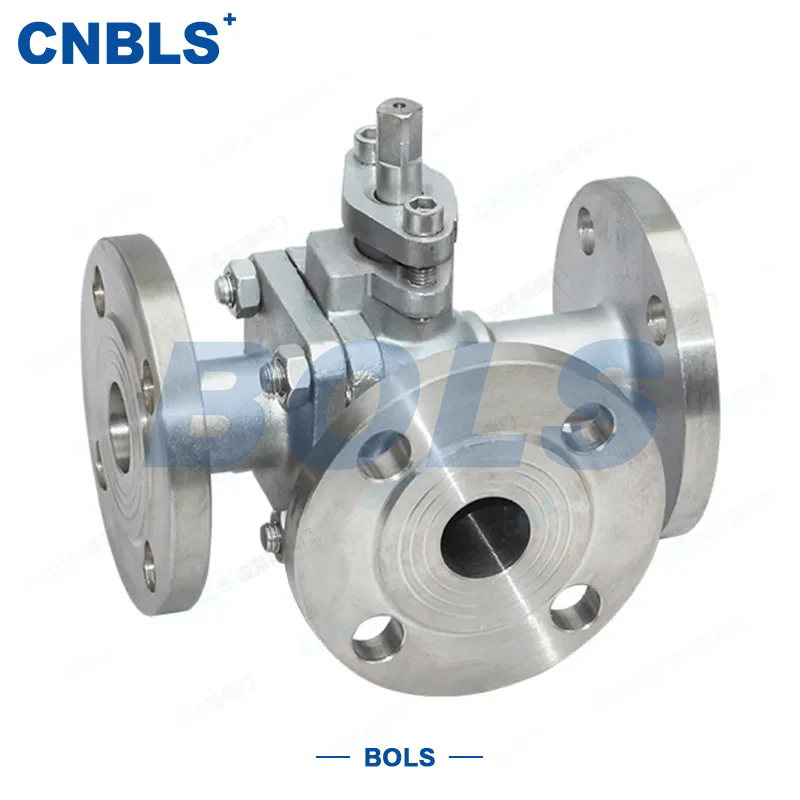
1. Why Does the Alloy Grade Matter More Than the Valve Type in Chemical Service?
The body and ball of a Stainless Steel Ball Valves are in direct contact with the process medium. If the alloy is not resistant to the medium, the valve will corrode regardless of its design. The three common stainless alloys are 304, 316, and 316L. The 304 alloy contains 18 percent chromium and 8 percent nickel. It is suitable for mild chemicals, water, and food products. The 316 alloy contains 16 percent chromium, 10 percent nickel, and 2 percent molybdenum. The molybdenum improves the resistance to chlorides and to reducing acids. The 316L alloy is a low-carbon version of 316 that resists sensitization during welding. For more aggressive media, duplex stainless steel or higher alloys such as Alloy 20 or Hastelloy may be required. In our factory, we manufacture Stainless Steel Ball Valves in 304, 316, 316L, and duplex grades. Zhejiang Bolaisi Valve Co., Ltd. has been manufacturing ball valves for over 12 years.
The selection must be based on the specific medium, concentration, and temperature. A valve that performs well in dilute sulfuric acid at room temperature may fail in concentrated sulfuric acid at 60 degrees Celsius. The engineer should consult a corrosion resistance chart and, for critical applications, request a material compatibility test from the valve manufacturer.
2. How Does the Seat Material Determine the Valve's Temperature and Chemical Limits?
The seat is the sealing element that contacts the ball. In a Stainless Steel Ball Valves, the seat is usually made from a polymer. The polymer determines the temperature limit and the chemical compatibility of the valve. The most common seat materials are PTFE, reinforced PTFE, PFA, and PEEK. The table below shows the properties and the recommended applications for each seat material.
| Seat material | Maximum temperature | Chemical resistance | Recommended application |
| PTFE | 200°C | Good for most acids and bases | General chemical service |
| Reinforced PTFE (glass-filled) | 230°C | Good, with better creep resistance | Steam, hot chemicals |
| PFA | 260°C | Excellent for aggressive chemicals | Concentrated acids, solvents |
| PEEK | 250°C | Good, with high mechanical strength | High-pressure, high-temperature |
| Metal (Stellite) | 500°C+ | Excellent for abrasive and high-temperature | Slurries, steam, high-temperature |
In our factory, we stock seats in all five materials. We recommend PFA for concentrated acids and solvents, reinforced PTFE for steam and hot chemicals, and metal seats for abrasive slurries and high-temperature service. Zhejiang Bolaisi Valve Co., Ltd. provides a chemical compatibility chart with every quotation.
3. What Port Configuration and Pressure Class Are Appropriate for Chemical Pipelines?
The port configuration determines the flow path and the pressure drop. A full port Stainless Steel Ball Valves has a bore equal to the pipe inside diameter. It provides unrestricted flow and minimal pressure drop, but it is larger and more expensive. A reduced port valve has a smaller bore and a higher pressure drop, but it is more compact and less expensive. For chemical pipelines where pressure drop affects pumping cost, the full port configuration is usually preferred. The pressure class must be selected to match the pipeline rating. The common classes are Class 150, Class 300, and Class 600. The table below shows the recommended port and pressure class for common chemical services.
| Service condition | Recommended port | Recommended pressure class | Typical size range |
| Low-pressure chemical transfer | Full port | Class 150 | 1/2 to 4 inch |
| Medium-pressure process line | Full port | Class 300 | 1/2 to 6 inch |
| High-pressure chemical feed | Full port or reduced port | Class 600 | 1/2 to 4 inch |
| Viscous or slurry service | Full port | Class 300 | 1 to 6 inch |
Piping engineer's note: The pressure class must be selected for the maximum operating pressure and temperature, not the nominal line pressure. A Class 150 valve that is rated for 19 bar at ambient temperature may be rated for only 13 bar at 200 degrees Celsius. The engineer should verify the pressure-temperature rating of the selected valve before finalizing the specification. In our factory, we provide the pressure-temperature chart for each valve model. Zhejiang Bolaisi Valve Co., Ltd. also provides the flow coefficient data so that the pressure drop can be calculated.
4. Why Do End Connections and Certification Requirements Matter in Chemical Plants?
The end connection must match the pipeline connection. The common options are threaded, flanged, and welded. Threaded connections are used for small sizes and low pressure. Flanged connections are used for larger sizes and where the valve may need to be removed for maintenance. Welded connections are used for high-pressure or leak-tight service. The certification requirements depend on the plant's quality system. Chemical plants often require a material certificate, a pressure test certificate, and a fire-safe certificate. Some plants also require a fugitive emission certificate. In our factory, we provide all four certificates with every Stainless Steel Ball Valves. Zhejiang Bolaisi Valve Co., Ltd. is certified to ISO 9001 and provides API 607 fire-safe testing for our valves.
We also recommend that the engineer verify the end connection dimensions against the pipeline flanges. A mismatch in the flange drilling or the thread standard can cause installation delays and leaks. Our technical team can review the piping and instrument diagram and recommend the correct end connection for each valve.
5. How Should Engineers Verify a Stainless Steel Ball Valve Before Installation?
The verification should include five checks. The first is the material certificate review. The certificate should show the alloy grade, the heat number, and the mechanical properties. The second is the pressure test. The valve should be tested at 1.5 times the rated pressure for the shell and at 1.1 times for the seat. The third is the seat leak test. The valve should be tested in both directions to verify that the seat seals. The fourth is the dimensional check. The face-to-face dimension and the flange drilling should match the specification. The fifth is the operation check. The valve should open and close smoothly with the specified torque. In our factory, we perform all five checks before shipment and provide the test report with each valve. Zhejiang Bolaisi Valve Co., Ltd. also offers a third-party inspection service for critical projects.
We recommend that the engineer verify the valve marking after installation. The marking should include the alloy grade, the pressure class, the size, and the manufacturer's name. The marking allows the maintenance team to identify the correct spare parts and to verify the material during future inspections.
Frequently Asked Questions About Stainless Steel Ball Valves for Chemical Pipelines
Summary for Piping Materials Engineers
Stainless Steel Ball Valves for chemical processing pipelines must be selected by matching the alloy grade, the seat material, the port configuration, and the pressure class to the specific medium and operating conditions. The alloy must be resistant to the medium at the operating temperature and concentration. The seat must be compatible with the medium and the temperature. The port and pressure class must match the flow and pressure requirements. The end connection and the certification must meet the plant's standards. The verification before installation should include the material certificate, the pressure test, the seat leak test, the dimensional check, and the operation check. Zhejiang Bolaisi Valve Co., Ltd. has been manufacturing Stainless Steel Ball Valves for over 12 years and provides full selection and verification support for chemical processing projects.