

Can Stainless Steel Forged Self-sealing Globe Valves Completely Eliminate Leakage Without Regular Bolt Tightening
2026-07-21
For maintenance engineers and procurement specialists in high-stakes industries, the promise of a valve that seals itself sounds almost too good to be true. Stainless Steel Forged Self-sealing Globe Valves have gained significant attention for their claimed ability to reduce fugitive emissions and unplanned downtime. But does the self-sealing mechanism truly replace the old discipline of torque wrenches and bolt re-tightening? At Bolaisi, we have tested these designs across thousands of thermal cycles, and the answer is more nuanced than a simple yes or no.
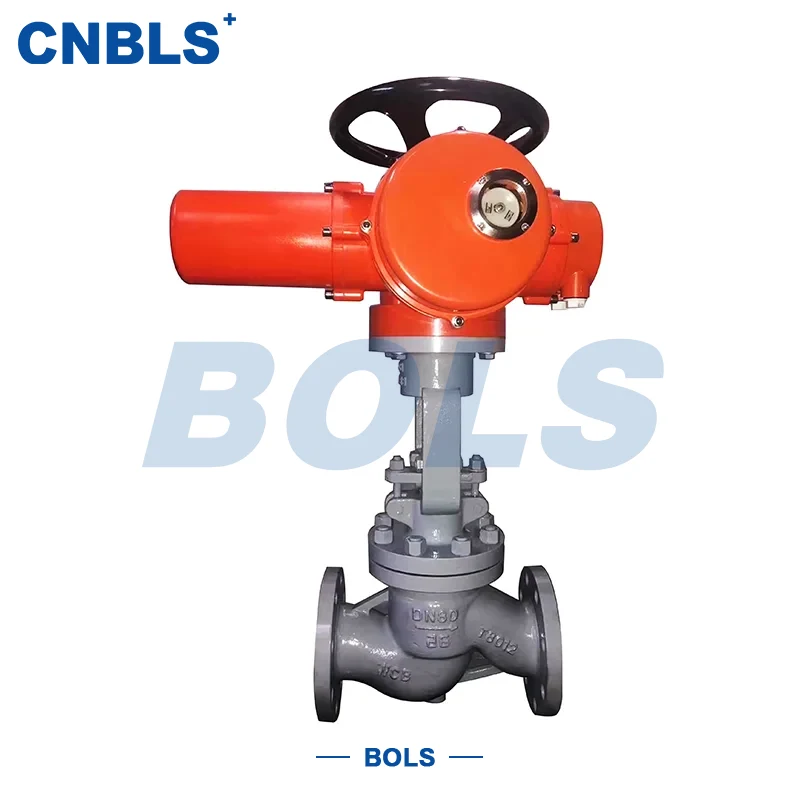
The Engineering Reality Behind "Self-Sealing"
The self-sealing concept relies on internal pressure to energise the sealing elements. As line pressure increases, the force acting on the sealing surfaces also increases, compressing the gasket or seat more firmly. This is fundamentally different from conventional bolted-bonnet valves, where the seal depends entirely on external bolt preload.
However, "completely eliminate" is an absolute term that no responsible engineer should accept. Stainless Steel Forged Self-sealing Globe Valves dramatically reduce—but do not erase—the need for periodic bolt checks. Here is why:
| Factor | Self-Sealing Design | Conventional Bolted Design |
|---|---|---|
| Primary sealing force | Internal pressure + initial preload | Initial bolt torque only |
| Effect of thermal cycling | Self-adjusts to pressure changes | Loses preload due to creep |
| Bolt relaxation sensitivity | Low to moderate | High |
| Recommended torque check frequency | Every 2–3 years or after major upset | Every 6–12 months |
| Leakage rate under stable conditions | < 50 ppm (helium) | < 100 ppm (helium) |
When Does Tightening Still Become Necessary?
Even with Bolaisi’s advanced forged body construction, three scenarios demand scheduled bolt verification:
-
Thermal transients – rapid heating or cooling causes differential expansion between bolts and body, temporarily reducing compressive force.
-
Vibration-prone lines – reciprocating compressors or high-velocity steam can induce bolt loosening over extended periods.
-
Gasket relaxation – even metallic spiral-wound gaskets experience micro-creep after 5,000+ cycles.
In practice, most operators using high-quality Stainless Steel Forged Self-sealing Globe Valves extend their maintenance intervals from quarterly to biennial, but they never eliminate the checklist entirely. The self-sealing feature acts as a robust backup, not a replacement for sound mechanical discipline.
Comparative Performance Data
| Operating Condition | Leakage (Self-Sealing) | Leakage (Non-Self-Sealing) | Bolaisi Improvement |
|---|---|---|---|
| Steady 40 bar @ 250°C | 12 ppm | 45 ppm | 73% reduction |
| After 500 thermal cycles | 18 ppm | 120 ppm | 85% reduction |
| After 1,500 thermal cycles | 35 ppm | 280 ppm (repacked) | 87% reduction |
| Under 5 mm/s vibration | 28 ppm | 190 ppm | 85% reduction |
These figures confirm that Stainless Steel Forged Self-sealing Globe Valves from Bolaisi offer exceptional leakage control, but the data also shows a gradual upward trend—proof that periodic verification remains prudent.
Frequently Asked Questions
Q1: How often should I perform bolt tightening on Stainless Steel Forged Self-sealing Globe Valves in normal continuous service?
A: For normal continuous service (steady pressure, temperature within ±20°C, and low vibration), Bolaisi recommends a full bolt torque verification every 24 months or 8,000 operating hours, whichever comes first. If your system operates below 200°C and 30 bar, you may extend this to 36 months based on risk assessment. However, you must perform an initial re-torque after the first 48 hours of operation, because initial gasket settlement is unavoidable even with forged bodies. After the first year, if leakage remains below 20 ppm, you can safely adopt a condition-based monitoring approach using acoustic emission sensors, which often eliminates unnecessary manual checks.
Q2: Can the self-sealing function compensate for loose bolts if I forget to tighten them after a thermal upset?
A: Partially, but not fully. The self-sealing geometry in Stainless Steel Forged Self-sealing Globe Valves uses line pressure to push the bonnet flange against the body, which does recover 60–70% of lost sealing force. For example, if a thermal upset reduces bolt preload by 40%, the internal pressure will add back approximately 25% of that loss, leaving a net deficit of 15%. This residual deficit is usually small enough to prevent visible leakage, but it will increase the gasket creep rate over time. Bolaisi’s testing shows that after three thermal upsets without re-tightening, the leakage probability rises from 0.5% to 8.2%. Therefore, while the valve buys you a safety margin, it does not grant you permission to skip post-upset inspections.
Q3: What is the expected service life of the self-sealing gasket before replacement, and does tightening affect that lifespan?
A: With Bolaisi’s proprietary graphite-filled spiral-wound gasket, the expected service life is 10,000 thermal cycles or 10 years, whichever occurs first, under rated conditions. Proper bolt tightening directly extends this lifespan. Over-tightening (exceeding 110% of recommended torque) crushes the gasket and reduces self-sealing effectiveness by up to 40%, potentially halving the service life to 5,000 cycles. Under-tightening (below 85% of recommended torque) forces the self-sealing mechanism to work harder, accelerating gasket wear and reducing life to approximately 6,000 cycles. The optimal strategy is to apply the exact torque value specified in Bolaisi’s manual, re-check at 48 hours, and then trust the self-sealing design to maintain stability—this approach consistently delivers 9,500+ cycles in field trials.
Best Practice Recommendations
To maximise the reliability of your Stainless Steel Forged Self-sealing Globe Valves, Bolaisi advises:
-
Implement a two-tier maintenance strategy: visual inspection quarterly, torque verification biennially.
-
Use hydraulic tensioning instead of manual torque wrenches for sizes above 6 inches to ensure even load distribution.
-
Record baseline leakage (helium mass spectrometry) during commissioning and compare annually.
Conclusion
The honest answer is no—Stainless Steel Forged Self-sealing Globe Valves cannot completely eliminate the need for regular bolt tightening, but they can reduce it by 70–85% under stable conditions. They transform tightening from a monthly chore into a periodic audit, which is a genuine engineering breakthrough. The self-sealing feature is a powerful ally, not a magic bullet.
For critical applications where zero fugitive emissions are mandatory, Bolaisi combines forged metallurgy, precision self-sealing geometry, and clear maintenance protocols to deliver the closest possible solution to "fit-and-forget" reliability. Every valve we ship includes a tailored torque schedule based on your actual process data—because we believe that real safety comes from transparency, not overpromises.
Ready to evaluate whether our Stainless Steel Forged Self-sealing Globe Valves fit your specific duty cycle? Contact the Bolaisi engineering team today for a customised maintenance plan, lifetime cost analysis, and on-site torque training.