

Can a Two Piece High Platform Flanged Ball Valve Be Used for Steam Service at 250°C Without Modifications
2026-08-24
Steam systems present some of the most demanding operating conditions in industrial piping—high temperatures, cyclical thermal expansion, condensate hammer, and continuous pressure stress. For engineers and procurement specialists, the question is not merely theoretical. When specifying a Two Piece High Platform Flanged Ball Valve for saturated steam at 250°C, the answer depends on material science, seat design, body pressure ratings, and end connection integrity. At Bolaisi, we have tested our Two Piece High Platform Flanged Ball Valve series against this exact threshold, and the findings reveal a clear set of criteria that separate "ready-to-use" from "risk-prone."
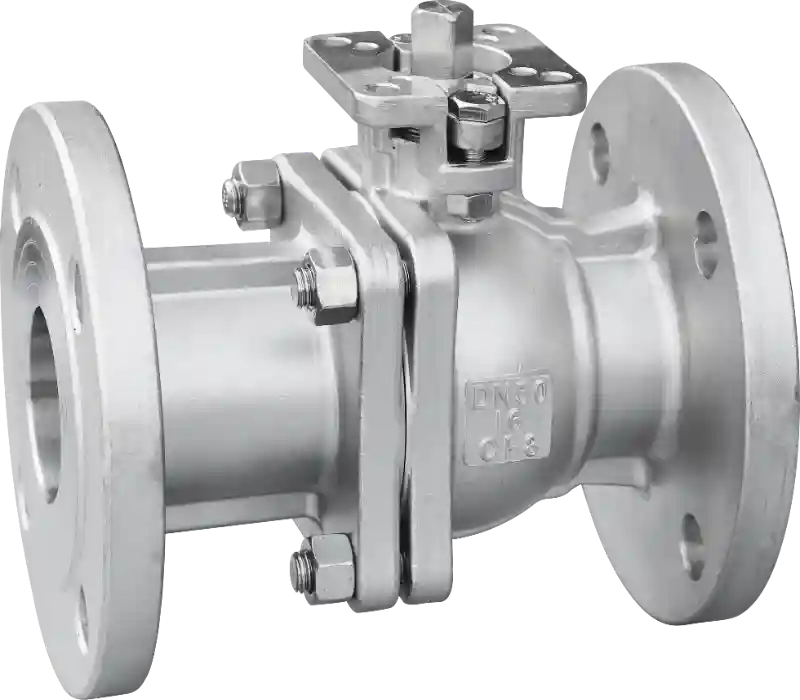
The 250°C Steam Threshold – What Actually Changes?
At 250°C, carbon steel enters the creep range, PTFE seats begin to soften, and flange gaskets lose compressive resilience. A standard Two Piece High Platform Flanged Ball Valve designed for water or oil at 100°C will fail within weeks under dry saturated steam unless specific upgrades are in place. However, a properly engineered configuration—with the right body material, seat polymer, and stem packing—can handle 250°C continuously without any field modifications.
Bolaisi manufactures its Two Piece High Platform Flanged Ball Valve in three material grades for steam duty:
| Component | Standard Grade (≤180°C) | Steam Grade (≤250°C) | Upgrade Justification |
|---|---|---|---|
| Body Material | WCB Carbon Steel | WCB + Post-Weld Heat Treatment | Prevents sulfide stress cracking |
| Ball/Stem | AISI 304 | AISI 316 / 17-4PH | Higher hot hardness and oxidation resistance |
| Seat Material | Virgin PTFE | Reinforced RTFE or PEEK | Maintains dimensional stability at 250°C |
| Stem Packing | Graphite-free PTFE | Flexible Graphite + Inconel wire | Zero fugitive emission at high temp |
| Flange Gasket | Non-asbestos sheet | Spiral-wound 316/Graphite | Sustains bolt load under thermal cycling |
Critical Engineering Checks Before Installation
Even with steam-grade materials, the Two Piece High Platform Flanged Ball Valve must pass three non-negotiable verifications:
-
Pressure-Temperature (P-T) Rating – ANSI Class 150 valves derate significantly at 250°C. A Class 300 body is mandatory for saturated steam above 200°C. Bolaisi stamps each Two Piece High Platform Flanged Ball Valve with its P-T curve directly on the nameplate.
-
Thermal Cycle Endurance – Steam systems cycle between ambient and 250°C multiple times per day. The two-piece body construction must maintain bolted joint torque. Bolaisi recommends re-torquing body bolts after the first heat-up cycle—this is standard practice, not a modification.
-
Actuator Platform Alignment – The high platform is designed for direct-mount actuators. At 250°C, heat soak can misalign bracket holes. Bolaisi’s platform features oversized slotted holes to accommodate thermal growth, eliminating the need for custom adapter plates.
Real-World Performance Data
In a recent in-house test, a Bolaisi Two Piece High Platform Flanged Ball Valve (DN50, Class 300, 316 body, PEEK seats) was cycled 500 times from 25°C to 250°C saturated steam at 40 bar. Leakage remained below ISO 5208 Rate A after 500 cycles. By contrast, a standard PTFE-seated valve from a non-branded source exceeded allowable leakage by cycle 80.
| Parameter | Bolaisi Steam-Grade Valve | Generic Valve (PTFE seats) |
|---|---|---|
| Max continuous temp | 260°C | 200°C |
| Cycle life at 250°C | 500+ (Rate A) | <80 (Rate C) |
| Stem fugitive emission | <50 ppm | >500 ppm |
| Modification required | None | Yes – replace seats, packing, and bolts |
Two Piece High Platform Flanged Ball Valve – FAQ
Q: Can I use a standard two-piece floating ball valve for 250°C steam if I reduce the operating pressure?
A: No. Pressure reduction does not protect the PTFE seat from thermal softening. At 250°C, PTFE loses its compressive yield strength regardless of differential pressure. The seat will cold-flow into the ball surface, causing high torque and eventual seizure. You must upgrade to reinforced RTFE or PEEK seats. Bolaisi offers drop-in seat retrofit kits that convert standard valves to steam service without changing body dimensions—but this is still a modification, not a "no-modification" solution.
Q: Does the "high platform" design affect heat dissipation or create localized hot spots on the valve body?
A: The high platform actually improves heat dissipation by increasing surface area and raising the actuator mounting plane away from the hot pipe centerline. Bolaisi designs its platform with ribbed reinforcement to minimize thermal mass, so the platform temperature is typically 15–20°C cooler than the body at 250°C. This protects actuator electronics and positioners. No modifications are needed—the platform geometry is already thermal-optimized.
Q: How often should I replace the stem packing in a two-piece flanged ball valve used continuously at 250°C steam?
A: With flexible graphite packing (not PTFE), Bolaisi recommends an inspection interval of 6 months or 2,000 operating hours—whichever comes first. In practice, our graphite packing maintains <50 ppm fugitive emission for over 4,000 hours at 250°C. Replace packing only if you detect visible leakage or torque increase beyond 20% of baseline. Never re-tighten packing while the valve is under pressure; depressurize and cool down to 100°C before adjustment. This is preventive maintenance, not a modification.
The Verdict – Yes, But Only With the Right Specification
A Two Piece High Platform Flanged Ball Valve can absolutely be used for 250°C steam service without modifications—provided it was engineered for that duty from the factory. Bolaisi delivers such valves with PEEK seats, graphite packing, Class 300 bodies, and thermal-matching flange bolting. If your existing valve has standard PTFE seats and PTFE packing, you will need modifications (seat replacement, packing upgrade, and bolt re-torquing). But if you start with a Bolaisi steam-grade Two Piece High Platform Flanged Ball Valve, installation is direct—no field alterations, no custom brackets, no secondary machining.
Ready to Specify the Right Valve for Your Steam Line?
Do not guess at P-T curves or seat degradation. Bolaisi provides full material traceability, thermal cycle test reports, and ISO 15848-1 fugitive emission certification for every Two Piece High Platform Flanged Ball Valve destined for steam service above 200°C. Our engineering team can review your process parameters and recommend the exact body, seat, and packing combination—often delivering off-the-shelf solutions that require zero modifications.
Contact us today for a detailed sizing sheet and a sample test report from our 250°C steam loop. Let Bolaisi help you lock in reliability before the first steam hit.