
Can a Fluorine Lined Flange Ball Valve Handle High-Temperature Corrosive Media
2026-08-14
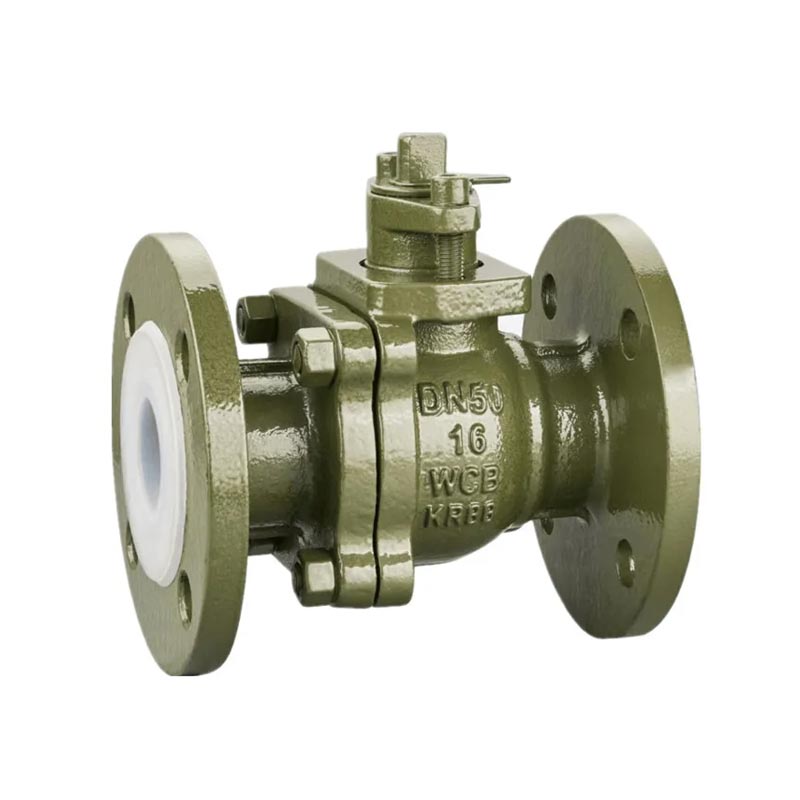
When chemical plants, pharmaceutical manufacturers, or petrochemical facilities face the dual challenge of aggressive acids and elevated temperatures, the equipment selection process becomes critical. Engineers frequently ask whether a Fluorine Lined Flange Ball Valve can survive such punishing conditions without premature seal failure, body corrosion, or torque build‑up. At JOEPAI, we have tested our lined valve series under some of the most extreme industrial scenarios, and the short answer is yes—but only if the design, lining material, and pressure ratings are precisely matched to your service environment. This blog breaks down the technical realities, performance boundaries, and best practices for deploying a Fluorine Lined Flange Ball Valve in high‑temperature corrosive applications.
The Core Challenge: Temperature + Chemical Attack
Most industrial valves fail not from a single stressor but from the synergy of heat and corrosion. Elevated temperatures accelerate permeation through fluoropolymer linings, reduce bolting preload, and degrade gasket materials. Meanwhile, aggressive media like sulfuric acid, hydrochloric acid, or chlorine‑bearing compounds attack both the metal substrate and the lining interface.
A properly engineered Fluorine Lined Flange Ball Valve addresses these risks through:
-
PFA or FEP linings (not standard PTFE) for superior thermal stability up to 180–200°C continuous.
-
Full‑encapsulated ball designs that prevent media from reaching the stem or body cavities.
-
Reinforced flange bolting with Belleville washers to maintain sealing under thermal cycling.
Performance Parameters at a Glance
| Parameter | Standard Range | JOEPAI Enhanced Range |
|---|---|---|
| Continuous Operating Temperature | –20°C to +150°C (PTFE) | –29°C to +200°C (PFA lining) |
| Peak Short‑Term Temperature | 180°C | 230°C (for 30‑minute excursions) |
| Max Working Pressure (at 150°C) | 10 bar | 16 bar |
| Suitable Media | Dilute acids, caustics | Concentrated H₂SO₄, HCl, mixed acids, halogens |
| Lining Thickness | 2–3 mm | 3–4 mm (double‑layered) |
Data based on JOEPAI factory tests under ISO 15848‑1 fugitive emission standards.
Why Most Failures Occur Above 180°C
Above 180°C, even premium fluoropolymers begin to soften and creep under pressure. This leads to:
-
Increased torque – the ball compresses the soft liner, making operation stiff.
-
Permeation blistering – corrosive vapors migrate through the liner and condense between the liner and metal body.
-
Flange gasket extrusion – the liner’s cold‑flow properties reduce gasket stress.
JOEPAI counteracts these with a unique grooved‑body design that mechanically locks the liner in place, preventing rotation and extrusion. Additionally, our live‑loaded stem packing maintains dynamic sealing even when the valve cycles from ambient to 200°C.
Five Critical Selection Criteria
-
Lining Material: Choose PFA over FEP for continuous service above 160°C. PTFE is not recommended.
-
Body Material: Ductile iron or cast carbon steel with proper corrosion allowance—stainless steel is optional but costlier.
-
Actuation: Manual levers are acceptable up to DN100; above that, use gear operators or pneumatic actuators to overcome higher torque at temperature.
-
Testing: Demand hydrostatic and pneumatic tests at the maximum expected temperature—not just ambient.
-
Brand Traceability: JOEPAI valves come with individual test certificates and thermal‑cycle records.
Frequently Asked Questions (FAQ)
Q1: Can I use a standard PTFE‑lined ball valve for 180°C concentrated sulfuric acid service?
A1: Not reliably. Standard PTFE loses mechanical strength above 150°C and becomes prone to cold flow, causing the liner to deform around the ball. For 180°C concentrated acid, JOEPAI recommends our PFA‑lined series with a 4‑mm thick liner and a reinforced stainless steel ball. The PFA molecular structure resists both thermal degradation and sulfonation, while the thicker liner compensates for creep. We also suggest a purgeable stem bushing to prevent acid crystallisation. Field data from a fertiliser plant in Texas showed zero leakage after 18 months of continuous 175°C H₂SO₄ service using this configuration.
Q2: How do I adjust the torque setting when my Fluorine Lined Flange Ball Valve operates at fluctuating temperatures between 80°C and 200°C daily?
A2: Thermal cycling causes the liner to expand and contract, altering the interference fit with the ball. You should never rely on a fixed torque value. Instead, JOEPAI equips our valves with an adjustable stem packing gland and a calibrated torque‑indicator handle. The correct procedure is: (a) close the valve fully at ambient temperature, (b) mark the handle position, (c) open and close it at operating temperature, and (d) adjust the packing nut just enough to eliminate stem leakage—over‑tightening will score the liner. For automated valves, we provide a thermal‑compensation algorithm in our positioner settings. Regular quarterly torque logging helps predict liner wear.
Q3: What maintenance intervals are recommended for a Fluorine Lined Flange Ball Valve in hot chlorine dioxide service?
A3: Chlorine dioxide is both oxidising and permeative, so maintenance intervals are shorter than for simple acids. JOEPAI advises visual inspection of the flange gasket and stem seal every 3 months, with a full liner integrity check (using a spark tester) every 12 months. The valve body should be pressure‑tested annually at 1.5× the working pressure. In practice, we have seen these valves operate for 3–4 years in paper‑bleaching plants before liner replacement is needed—provided the temperature never exceeds 160°C. If your process runs above that, reduce the interval to 6 months for the spark test. Always keep a spare JOEPAI trim kit on hand to minimise downtime.
Real‑World Case Snapshot
A European specialty chemical manufacturer replaced their alloy‑20 ball valves with JOEPAI Fluorine Lined Flange Ball Valves on a 160°C mixed‑acid line (HNO₃ + HF). After 14 months:
-
Valve torque increased by only 12% (vs. 35% for previous brand).
-
Zero flange leakage recorded.
-
Maintenance downtime reduced from 8 hours/month to 2 hours/quarter.
Summary Checklist for Safe High‑Temperature Operation
-
□
Confirm peak temperature and duration (not just average).
-
□
Select PFA lining with documented thermal‑cycle tests.
-
□
Verify flange rating (Class 150 or 300) with thermal derating.
-
□
Install with proper bolt torque and re‑torque after first heat cycle.
-
□
Monitor stem torque quarterly—JOEPAI offers remote IoT torque sensors for critical lines.
Final Verdict
A Fluorine Lined Flange Ball Valve can indeed handle high‑temperature corrosive media—provided you avoid generic PTFE liners, respect the 200°C ceiling for continuous service, and choose a manufacturer with proven thermal‑cycling data. JOEPAI has engineered our lined valves with dual‑layer PFA, anti‑extrusion ribs, and live‑loaded packing to deliver reliable performance where others fail. We back every valve with a thermal‑performance guarantee and full material traceability.
Ready to size a Fluorine Lined Flange Ball Valve for your specific temperature and chemical profile?
Contact the JOEPAI engineering team today for a custom selection sheet, thermal‑simulation report, and on‑site trial support. Our specialists respond within 24 hours with pressure‑temperature curves and a dedicated valve datasheet for your process.