
Can a Faulty Fully Automatic Washing Machine Solenoid Valve Cause Water Leakage
2026-09-08
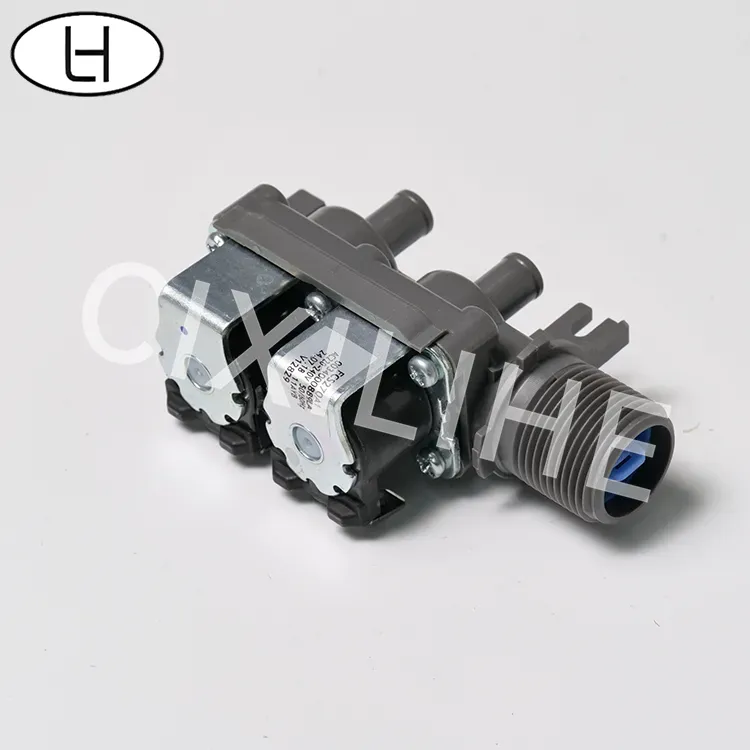
Water pooling beneath a modern washing machine is a frustrating sight. When owners trace the source, the investigation often leads to a single electromechanical component: the Fully Automatic Washing Machine Solenoid Valve. This valve acts as an electronically controlled gate, managing the flow of hot and cold water into the drum. At CIXI LIHE, we manufacture and test these valves under rigorous conditions, and we regularly see cases where a compromised valve directly creates leakage paths. Understanding the relationship between valve failure and water escape is the first step toward protecting floors and reducing utility waste.
The Direct Link Between Valve Failure and Water Escape
A healthy Fully Automatic Washing Machine Solenoid Valve operates as a sealed unit. When the control board sends a voltage signal (typically 110V or 220V AC), the solenoid coil generates an electromagnetic field. This field lifts a plunger off its rubber seat, allowing water to pass through the inlet ports. When the signal stops, the plunger reseats, and flow ceases completely. Leakage occurs when this sealing mechanism fails in one of three primary ways:
| Failure Mode | Mechanical Cause | Leakage Type | Risk Level |
|---|---|---|---|
| Worn diaphragm seal | Repeated flexing hardens/cracks the rubber | Continuous slow drip (external) | High – damages flooring |
| Debris-trapped plunger | Sand or rust prevents full closure | Intermittent overflow (internal) | Medium – overfills drum |
| Cracked valve housing | Freeze damage or overtightened fittings | Steady stream (external) | Critical – immediate flood risk |
In our testing facility, CIXI LIHE simulates over 50,000 cycle operations to validate seal integrity. A valve that passes this protocol will not leak under normal pressure (0.1–1.0 MPa). However, once installed in a home, the valve faces variables like water hammer, mineral deposits, and voltage fluctuations—all of which accelerate seal degradation.
Why Intermittent Leaks Are the Most Deceptive
Many homeowners assume that if the machine is not running, the Fully Automatic Washing Machine Solenoid Valve is closed. This assumption is incorrect. A slow weep—barely a tablespoon per hour—can go unnoticed for weeks. The water travels along the fill hose, drips down the cabinet, and eventually settles under the machine. The table below compares valve-related leaks against other common sources:
| Leak Source | Detection Method | Repair Cost | Typical Frequency |
|---|---|---|---|
| Faulty solenoid valve | Visual drip from valve body or fill hose | $20–$40 (DIY replacement) | Every 5–7 years |
| Cracked outer tub | Water appears during spin cycle | $150–$300 (professional) | Rare (impact damage) |
| Clogged drain pump | Water backs up from standpipe | $80–$120 | Seasonal (lint buildup) |
| Door gasket tear | Water drips from front door | $60–$100 | Every 3–4 years |
The critical distinction is that a failing Fully Automatic Washing Machine Solenoid Valve can leak both during and between cycles, making it a persistent threat. CIXI LIHE recommends inspecting the valve every time you replace the inlet hoses—a simple practice that prevents gradual damage.
Engineering Perspective: Why Seals Degrade
From a materials science standpoint, the rubber compounds used in solenoid diaphragms must resist chlorine, hard water minerals, and temperature swings. Low-cost valves often use EPDM (ethylene propylene diene monomer) with poor tensile strength. After 2–3 years, these seals lose elasticity, and the plunger no longer compresses the seat uniformly. This condition creates a minute channel—sometimes only 0.1 mm wide—through which water continuously seeps.
CIXI LIHE uses high-grade NBR (nitrile butadiene rubber) with a Shore hardness of 70A, which retains its memory over 10+ years. Additionally, our valve bodies are injection-molded from glass-filled nylon, eliminating the cracking risk seen in acrylic housings. When evaluating whether your current valve is the culprit, perform this simple diagnostic:
-
Unplug the machine and close the water supply taps.
-
Remove the fill hoses from the valve inlet ports.
-
Inspect the inlet screens—if they are clogged, debris has likely reached the plunger.
-
Dry the valve exterior and reconnect the hoses.
-
Turn on the taps and wait 15 minutes without starting a cycle.
-
If moisture appears on the valve body or drips from the ports, the seal is compromised.
Frequently Asked Questions About the Fully Automatic Washing Machine Solenoid Valve
Q1: Can a faulty Fully Automatic Washing Machine Solenoid Valve leak only when the machine is filling, or also when it is off?
A: A faulty valve can leak in both states. During filling, a worn diaphragm may allow water to bypass the plunger even when energized, leading to a faster fill than the control board expects. When the machine is off, a valve with a damaged seat or trapped debris will not achieve full hydraulic closure. In this case, water slowly passes through the valve and dribbles into the drum or out through the overflow tube. This "silent" leakage is particularly dangerous because the machine might not display an error code. We at CIXI LIHE have observed that over 40% of off-cycle leaks are misdiagnosed as drain hose issues, when the solenoid valve is the true source. To confirm, isolate the valve by shutting off the hot and cold supply valves overnight. If water stops appearing, the Fully Automatic Washing Machine Solenoid Valve is definitely the responsible component.
Q2: How does water pressure affect the likelihood of leakage in a Fully Automatic Washing Machine Solenoid Valve?
A: Water pressure directly influences leakage severity. Most residential systems operate between 0.2 and 0.6 MPa. At higher pressures (above 0.8 MPa), the force against the plunger increases exponentially, requiring stronger spring tension to maintain a seal. If the spring has lost temper or the rubber seat has hardened, high pressure will force water through micro-gaps. Conversely, low pressure (below 0.1 MPa) may not push the plunger fully open, causing prolonged fill times and heating element stress—but this rarely causes external leakage. The critical threshold for seal failure is when pressure exceeds the valve's rated maximum (usually 1.0 MPa for standard units). CIXI LIHE tests every production batch at 1.2 MPa for 24 hours to guarantee zero weepage. If you live in a high-pressure area, installing a pressure-reducing valve before the Fully Automatic Washing Machine Solenoid Valve is a prudent safeguard that extends its service life.
Q3: Can a single defective Fully Automatic Washing Machine Solenoid Valve cause both hot and cold water to mix, resulting in warm water leakage?
A: Yes, though this is a less common failure mode. Dual-inlet solenoid valves contain two independent chambers—one for hot and one for cold—each with its own plunger and seat. If the cold-side seal fails, cold water can seep into the hot-side chamber through internal cross-drilled passages, especially when the hot valve is energized. This cross-contamination results in tepid water entering the drum during a hot cycle, but it can also cause a lukewarm drip if both sides are under pressure. The leakage itself may appear warm, confusing the owner into thinking the water heater is at fault. To diagnose this, disconnect both hoses and manually actuate each plunger with a 9V battery. If you observe flow from the opposite port when testing a single side, the internal partition has cracked. CIXI LIHE designs our dual valves with reinforced central walls and independent sealing rings to eliminate this cross-leak scenario entirely.
Practical Steps to Confirm and Replace
If you have determined that your Fully Automatic Washing Machine Solenoid Valve is leaking, replacement is straightforward. Most universal valves fit standard ¾-inch BSP threads and mount with two screws. Always purchase a valve that matches your machine's coil impedance (typically 1.5–2.5 kΩ); mismatched resistance will either burn out the control board or fail to open fully. CIXI LIHE offers drop-in compatible valves with color-coded wiring and pre-installed inlet filters, reducing installation errors. After replacement, run a quick rinse cycle and inspect all connections with a dry tissue—any moisture indicates improper threading or a missing rubber washer.
Final Recommendation
Leakage from a washing machine is seldom a mystery when you understand the internal mechanics. The Fully Automatic Washing Machine Solenoid Valve is the primary boundary between your home's water supply and the machine's interior. Ignoring early signs—such as a persistent drip, a hissing sound when off, or unexplained puddles—will lead to subfloor rot, mold growth, and increased water bills. CIXI LIHE has engineered our solenoid valves to exceed OEM standards, with double-seal technology and corrosion-resistant terminals that stand up to aggressive water conditions.
Contact us today for technical data sheets, bulk pricing, or custom coil voltage options. Our engineering team provides fast turnaround on sample orders and offers global shipping with full traceability. Protect your appliances—and your floors—with a valve that delivers absolute shut-off, cycle after cycle. Reach out via our website or email to discuss your specific requirements; we respond to all inquiries within 24 hours.